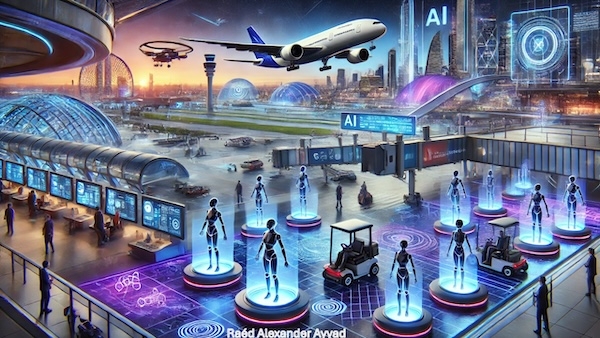
Artificial Intelligence is reshaping the aviation and tourism industries, revolutionizing the way airlines, airports, hotels, and travel experiences operate. From streamlining airport operations to personalizing tourism experiences, AI is paving the way for a smarter, more efficient, and highly connected travel ecosystem. Companies that embrace AI are set to lead the future of travel, unlocking new efficiencies and enhanced user experiences.
AI in Airlines & Airports: Enhancing Passenger Experience
Seamless Check-Ins & Smart Security
AI-powered facial recognition and biometric boarding are expediting passenger processing, reducing wait times, and enhancing security. Airlines like Delta are already implementing biometric kiosks to create a frictionless experience. This technology not only improves efficiency but also strengthens airport security by accurately verifying traveler identities without manual intervention.
Smart Assistants & Personalized Travel
Virtual assistants and AI chatbots, such as KLM’s “BlueBot,” are providing real-time flight updates, booking assistance, and personalized recommendations, making travel planning more convenient and efficient. These AI-powered systems learn from passenger preferences and behavior, offering tailored recommendations for in-flight entertainment, meal options, and even post-travel suggestions.
Predictive Maintenance & Air Traffic Optimization
AI is revolutionizing airline operations with predictive maintenance, minimizing aircraft downtime and ensuring safety. AI-driven air traffic control (ATC) systems are optimizing flight paths to reduce congestion and fuel consumption, leading to smoother and more sustainable flight operations. Airlines and airports that deploy AI-driven predictive analytics can significantly cut operational costs and improve scheduling reliability.
AI in Baggage Handling & Tracking
Lost luggage has long been a concern for travelers, but AI-powered RFID tracking and smart baggage handling systems are improving logistics. AI-driven predictive analytics help airlines determine the optimal routing for baggage, reducing delays and mishandled luggage. British Airways and other major airlines have begun integrating AI-enhanced baggage systems to provide passengers with real-time updates on their luggage status.
AI in Hospitality & Tourism: Next-Level Guest Experiences
Smart Hotels & AI-Powered Concierge Services
Hotels are integrating AI-driven chatbots and virtual concierges to handle guest inquiries, room service, and booking modifications. Marriott and Hilton are leading the way with smart hotel rooms controlled by AI assistants. These smart hotel systems allow guests to control lighting, temperature, and entertainment with voice commands or mobile apps, enhancing convenience and comfort.
AI-Powered Travel Planning & Booking
AI-driven travel assistants analyze user preferences to recommend customized itineraries, best hotel deals, and eco-friendly travel options. Google and Hopper are leveraging AI to predict flight and hotel price trends, enabling travelers to book at optimal times. AI's ability to process vast amounts of travel data ensures that travelers receive the best deals and seamless experiences.
Augmented Reality & Virtual Reality in Tourism
AI-powered VR tours allow travelers to explore destinations virtually before booking, while AR-based travel guides provide interactive experiences at tourist attractions. The Louvre Museum, for instance, has introduced AI-powered AR experiences that offer historical insights and real-time guided tours. The integration of AI in VR and AR enhances the engagement and decision-making process for travelers.
Business Opportunities & Strategic AI Implementation
Key Steps for AI Adoption
Businesses must identify key inefficiencies, partner with AI tech providers, and implement AI in phases to maximize impact. Ensuring staff training and customer education is crucial for seamless integration. Companies looking to stay ahead should invest in AI-powered customer engagement tools, operational automation, and personalized service solutions.
Challenges & Solutions
While AI adoption faces challenges such as data security, high implementation costs, and resistance to change, leveraging cloud-based AI solutions and emphasizing data privacy compliance (GDPR, CCPA) can mitigate risks. Businesses should also focus on AI solutions that deliver measurable ROI, ensuring they remain competitive while securing consumer trust.
Future Trends in AI for Aviation & Tourism
Conclusion: AI-Driven Travel Is Here
AI is no longer a futuristic concept—it’s the driving force behind the transformation of aviation and tourism. Companies that invest in AI today will lead the travel experiences of tomorrow, benefiting from greater efficiency, enhanced personalization, and improved security. The question is no longer whether AI will shape the future of travel, but rather—how will your business adapt to this AI revolution?