



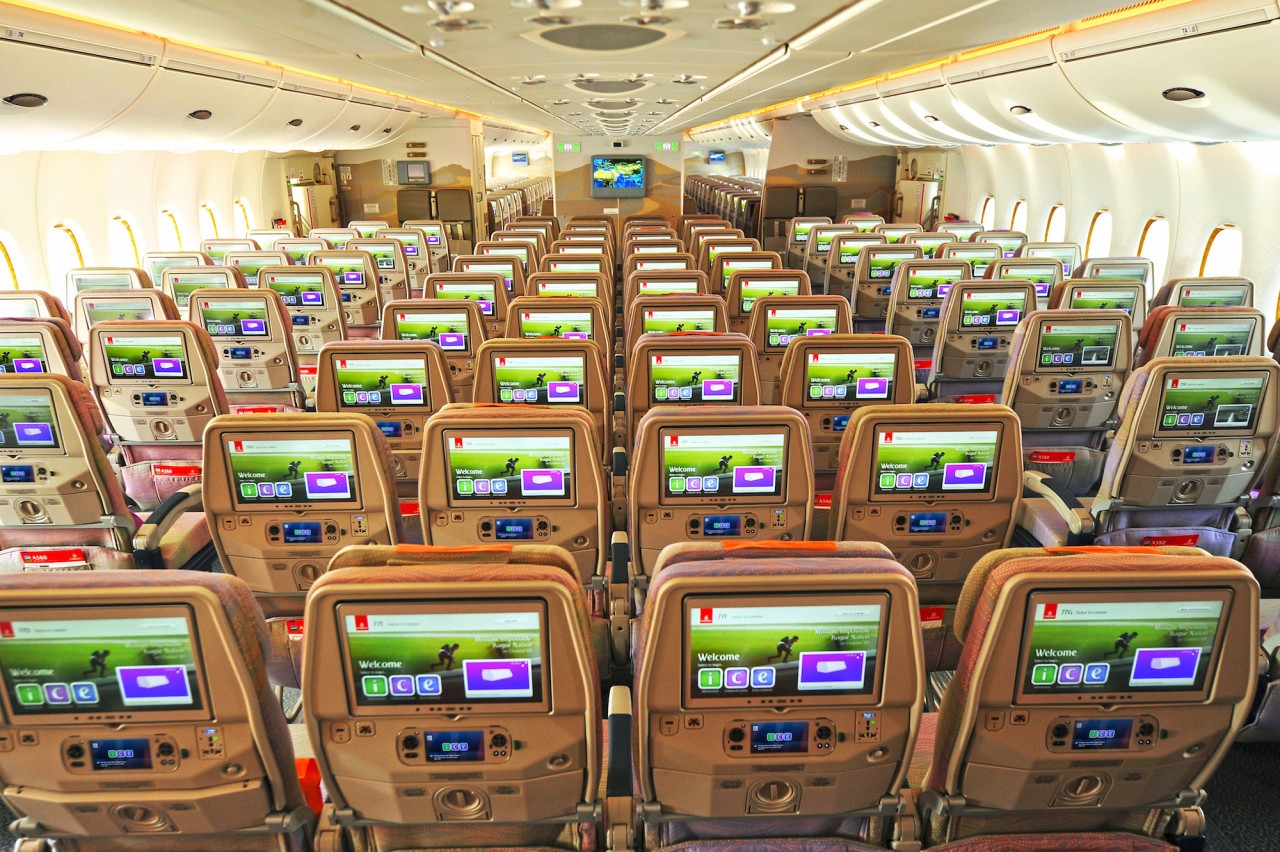
Air travel might be a hassle, at times, but in many important ways it’s getting better.Really.We found ten innovative trends that reveal a better future for the industry, and are set to make air travel more pleasant for passengers in 2016 and beyond.
1. Launch of A350 Aircraft and 787-9 Dreamliners
While we don’t want to go all avgeek on you, there’s no flying without planes, and new aircraft designs are loaded with innovations and improvements which improve the passenger experience onboard. Airlines have also lavished a lot of love on their new toys introducing beautiful new interiors, and new in-flight entertainment technology.
More importantly, we need new aircraft to limit aviation’s CO2 footprint. Airlines that invest in new aircraft are also investing in the future of our planet. With double the amount of flyers expected by 2034 (up to 7 billion) more efficient aircraft are welcome.
We’re look forward to what airlines will do with Boeing’s ambitious 777X, and to the possibility of new greener and more passenger-friendly aircraft designs in years to come.
2. Rise of Biometric Kiosks and Passport Apps at Airports
It’s hard to decide which is a greater pain point of travel: an uncomfortable cabin or a tedious check-in and transfer process. Actually, SITA ran a study on that and found that just trying to get on the plane in the first place is the worst part of air travel for many. That’s why we celebrate the rise of Biometric Kiosks and Passport Apps. Automation and self-help processes are top trends for the future of air travel, and they can’t come soon enough.
3. Improved Onboard Wi-Fi and Streaming Entertainment
If there’s one comfort weary U.S. passengers can take in their flying experience it’s that they’re far more likely to find quality Wi-Fi in flight than their global counterparts—and it’s getting better. Higher-speed and capacity connections are also bringing streaming entertainment to the skies including popular subscription services. Fortunately, for the rest of the world, satellites are being launched and global in-flight Wi-Fi coverage is on the horizon.
4. Apple Watch and Apps
Some tech gurus are tepid on the Apple Watch, though it has accomplished great things for air travel, at least getting airlines to take a second look at their apps and mobile technology with dramatic improvements. The gadgets we use when traveling will certainly change in coming years, but digital and mobile travel is here to stay. Who remembers paper tickets?
Are there too many airline apps? Star Alliance CEO says maybe yes.
5. Bag Tracking Technology
Thanks to an initiative by the International Air Transport Association, Resolution 753, we’re going to see great improvements in baggage tracking in the coming years. Both airlines and airports are working hard to automate the baggage-check process and ensure our bags waiting for us when we land.
6. The Rise of Premium Economy
As airlines have introduced unparalleled luxury at the front of the plane, and tighter density at the back of the plane, they’ve been building up a pressure point of resentment for those passengers who are willing to pay a little more for something better. A few have tried to fill that middle market product gap simply by adding a few inches of legroom and a couple of perks to what is effectively the same product they have in the Economy cabin.
Other airlines are taking a more ambitious approach and catering to the needs of entrepreneurs, economy business travelers, and more affluent leisure travellers, by introducing a true, differentiated, Premium Economy class. While doing the latter requires product design and new seats, it is an investment that we believe will ultimately pay-off on long-haul service.
7. Expansion of CBP Pre-Clearance Program
Standing in line—especially in the long crowded lines at immigration—is one of the greatest nuisances of air travel. The U.S. Customs and Border Patrol pre-clearance program avoids the pile-up, and also ensures better security by pre-screening travelers before they even get on the plane to their U.S. destination. The further expansion of this program this year was welcome progress.
8. Beacons and Internet of Things
Beacons and the Internet of Things have evolved this year from abstract buzzwords to somewhat more concrete buzzwords.
In plain terms, they are the building blocks for a digital world that is aware of and responds to our movements, our preferences and our needs. To some, that might be scary, but it’s really no more outlandish than the idea of being always online—something from which (for the most part) we’ve benefited greatly over the past twenty years.
Just as some of us suffer from FOMO (Fear of Missing Out) on aircraft without Wi-Fi today, we’ll likely suffer from AWDS (Annoyance with Dumb Systems) tomorrow.
This year aviation got smarter about digital, made clear the advantages of IoT, and set out on ambitious programs to ensure our travel environment of tomorrow recognizes us wherever we go, avoiding many of the hassles of today’s legacy analogue processes.
Sure, the concept is about as alien to us now as computers were to our great grandparents, but we’re far more sophisticated about technology. Right?
9. Mobile and Personalization
Add the building blocks from Beacons and IoT infrastructure, to better digital and mobile platforms and improved Big Data management, and the opportunities available to airlines and airports to tailor our travel experience increase exponentially.
For many of us, these are all big concepts to wrap our heads around today, but visionaries in the industry did a whole lot better job at highlighting opportunities.
Ambitious programs were launched which will make tomorrow’s air travel a much more personalized experience.
Being treated by our airlines and airports like a person, instead of just another anonymous flyer, among thousands in a crowd, is welcome progress.
10. Even Better In-flight Entertainment
Boredom is one of the great pain-points of the passenger experience, especially on long-haul flights, but the in-flight entertainment (IFE) sector is has made great progress this year.
Of course, there’s still a long way to go to improve the passenger experience. The industry faces many challenges before some of the more ambitious aims of aviation can move forward.
But we’ve seen some progress and we expect more to come. Airlines and airports are already working on new introductions for 2016 and beyond.
A new travel industry coalition is urging EU policymakers to adopt a balanced and proportionate approach to biometric travel, ensuring passengers can benefit from secure and seamless journeys while ma...
UH-60 Black Hawk helicopters operated by Helicopter Alliance played a vital role in combating wildfires across Central and Southern Europe during the aerial firefighting season that has now concluded....
PAL-V has signed a Memorandum of Understanding with AVION, a specialist in advanced flight training devices, and FLYVE, a developer of FlyDrive ecosystems for professional and government operator...
For the fourth consecutive year, Corsair is reaffirming its commitment to the fight against breast cancer by partnering with the association "Les Hôtesses de l’Air cont...

