



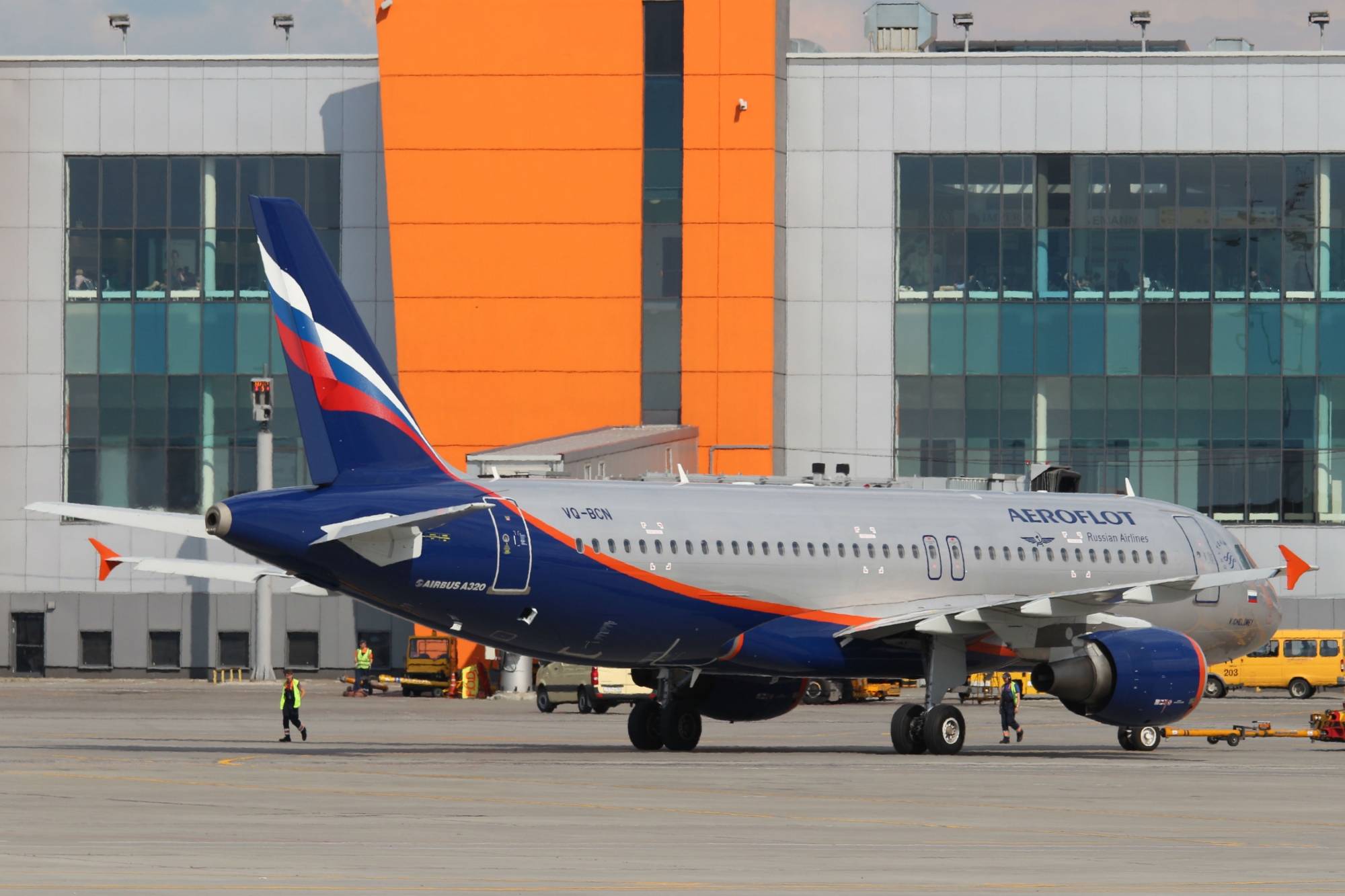
Aeroflot PJSC (Moscow Exchange ticker: AFLT) today announces operating results for Aeroflot Group (“the Group”) and Aeroflot – Russian Airlines (“the Company”) for September and the first nine months of 2017.
January–September 2017 Operating Highlights
In the first nine months of 2017, Aeroflot Group carried 38.3 million passengers, up 16.8% year-on-year. Aeroflot airline carried 24.8 million passengers, a year-on-year increase of 14.2%.
Group and Company RPKs increased by 18.0% and 11.6% year-on-year, respectively. ASKs rose by 16.2% year-on-year for Aeroflot Group and by 10.6% for Aeroflot airline.
The passenger load factor increased by 1.3 p.p. year-on-year to 83.7% for the Group and by 0.8 p.p. year-on-year to 82.8% for the Company.

September 2017 Operating Highlights
In September 2017, Aeroflot Group carried 4.8 million passengers, up 14.8% year-on-year. Aeroflot airline carried 3.0 million passengers, a year-on-year increase of 11.9%.
Group and Company RPKs increased by 14.4% and 8.4% year-on-year, respectively. ASKs rose by 15.0% year-on-year for Aeroflot Group and by 10.2% for Aeroflot airline.
On domestic routes, Group passengers carried and RPKs grew by 8.4% and 8.6% year-on-year, respectively. ASKs grew by 10.2% year-on-year. Company passengers carried and RPKs on domestic routes were up 10.2% and 4.4% year-on-year, respectively. ASKs grew by 7.2%.
In September 2017, the number of passengers carried on the Group’s international routes increased by 23.6% year-on-year. RPKs increased by 19.2%, while capacity grew by 18.8%. The number of passengers carried by Aeroflot airline on international routes increased by 13.6%. RPKs increased by 10.7% and ASKs by 11.8%. Growth in the international segment was driven by stable demand in the context of a strengthening ruble, increased flight frequencies and the launch of flights to new international destinations, as well as the development of Rossiya’s partnerships with tour operators and of Pobeda’s international route network.
The passenger load factor decreased by 0.5 p.p. year-on-year to 85.4% for the Group. For the Company the passenger load factor decreased by 1.4 p.p. year-on-year to 84.0%. Passenger load factor normalisation due to high base effect was primarily driven by domestic routes (in September 2016, Group total passenger load factor reached 85.9%, up 4.6 p.p. year-on-year).
Fleet Update
In September 2017, the Group added eight aircraft: four Airbus A320, two SSJ100, one Boeing 737-800 and one Airbus A321. Overall, since the start of the year the Group fleet increased by 23 aircraft, bringing the total fleet to 308 aircraft as of 30 September 2017 (excluding one An-24 which was leased out and six An-148 which were subleased).
In September 2017, Aeroflot airline added eight aircraft: four Airbus A320, two SSJ100, one Boeing 737-800 and one Airbus A321. Overall, since the start of the year the fleet of Aeroflot airline increased by 21 aircraft, bringing the total fleet to 210 aircraft as of 30 September 2017.
Tecnam has announced a landmark strategic partnership aimed at accelerating the growth of its P2012 aircraft family across the United States. Under the agreement, Finnoff has been appointed the exclus...
PAL-V has signed a Memorandum of Understanding with AVION, a specialist in advanced flight training devices, and FLYVE, a developer of FlyDrive ecosystems for professional and government operator...
A new travel industry coalition is urging EU policymakers to adopt a balanced and proportionate approach to biometric travel, ensuring passengers can benefit from secure and seamless journeys while ma...
Rising production rates and the launch of new aircraft programs are driving increased demand for manufacturing capacity across the aerospace industry. To support this growth, FACC plans to i...

