



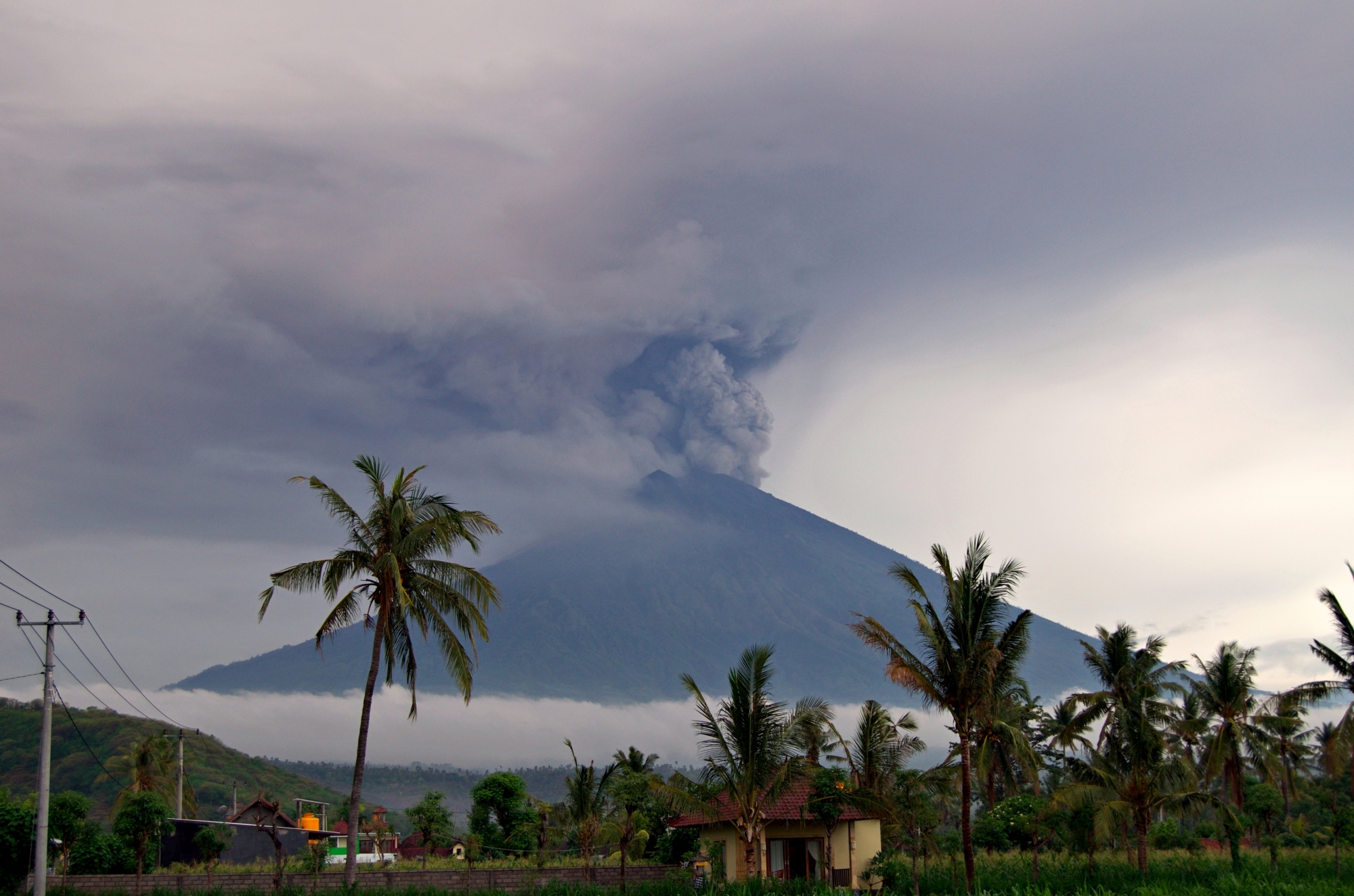
Hundreds of flights have been delayed or grounded and Denpasar International Airport was shut down due to Volcano eruption in Bali. Despite the fact that the airport has now been reopened, the ongoing cancellations affect approximately 27,000 travelers worldwide.
Following the airport reopening, the disruptions continue – the cancelled flights of Virgin Australia remain cancelled, while other operator’s flights may be subject to change. According to Bali authorities, the volcano poses no threat to habitants of the island, however, a small 4 kilometer exclusion zone around Mt Agung has been set and activities around the volcano have been stopped.
This is the second time in the past year that Mt Agung has erupted – in November 2017, the volcano stranded 59 000 travelers, causing approximately $5 million loss in revenue for the 42 airlines that fly there. Flight disruptions had a lasting impact for a few weeks.
“It is really no surprise that cancelations, even for a few days, have a lasting impact,” shares AviationCV.com CEO Skaiste Knyzaite. “We have to take into account not only the canceled flights themselves, but the impact it has on connecting flights, delayed flights and the pressure airlines experience to bring back tourists; especially now, when the airport has been reopened”.
The main reason for flight cancellations is the fact that volcanic eruptions form ash clouds. They pose a threat to aircraft because the ash particles cool engines and form a glassy coating, which can cause engines to stall or fail completely.
One of the most notable natural disaster the aviation industry dealt with in the past years was Eyjafjallajökull eruption in Iceland in 2010, that shut down most of airspace in Europe for a week. The industry then suffered a major $1.7 billion loss and almost every country with an international airport experienced some disruptions due to flights to or from Europe being canceled.
“So far the disruption is nowhere near the massive one caused in 2010, and if the airport remains open, the ripple effect of the cancelations should not be too massive,” said Ms. Knyzaite.
Indonesia is the world's most active volcanic region and lies on the Pacific "Ring of Fire" where tectonic plates collide, causing frequent volcanic and seismic activities.
A new travel industry coalition is urging EU policymakers to adopt a balanced and proportionate approach to biometric travel, ensuring passengers can benefit from secure and seamless journeys while ma...
Rising production rates and the launch of new aircraft programs are driving increased demand for manufacturing capacity across the aerospace industry. To support this growth, FACC plans to i...
Dutch flag carrier KLM, part of the Air France-KLM Group, has welcomed its first Airbus A350-900, marking a significant step in the airline’s long-haul fleet modernization strategy. The arrival...
British Airways has unveiled the next phase of its Heathrow lounge transformation programme, marking the beginning of a significant investment aimed at modernising every lounge across the airport in t...

