



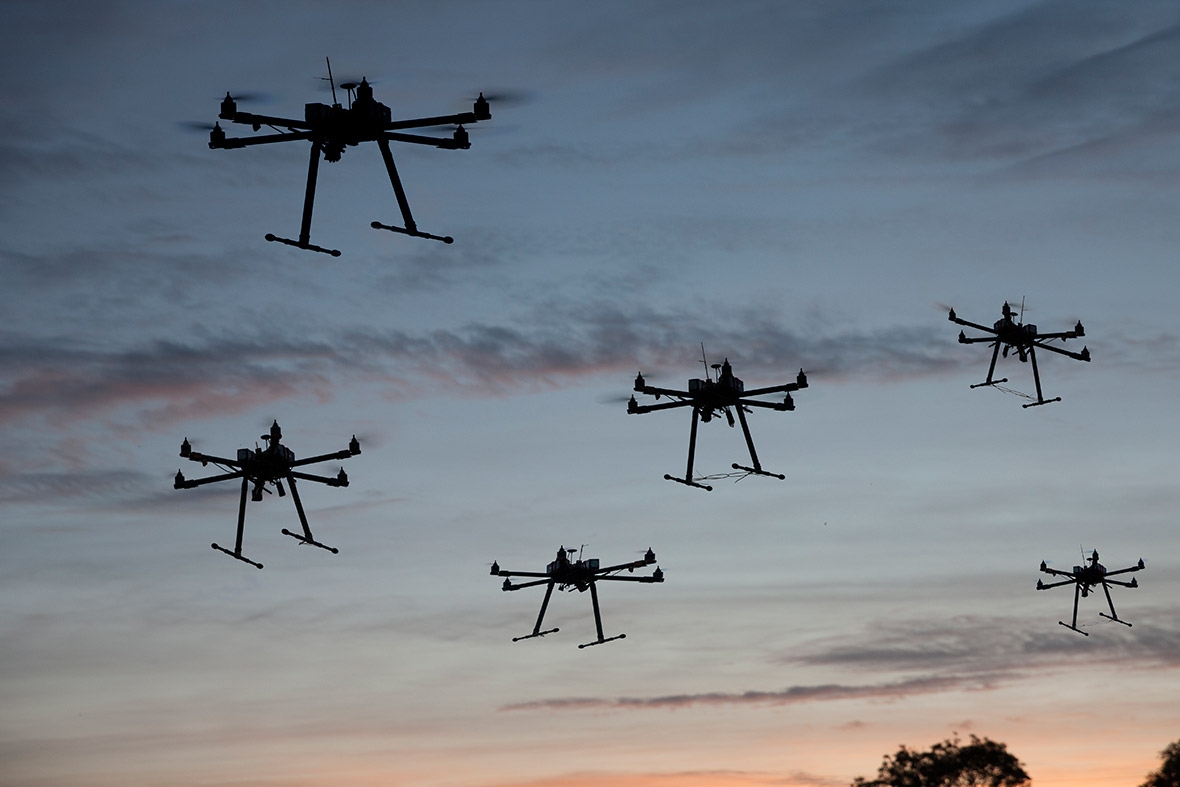
The European Aviation Safety Agency (EASA) published yesterday a Technical Opinion on the safe use of drones in Europe’s civil airspace. The EASA Technical Opinion sets the direction to be followed for all future work to be done to ensure unmanned aircraft are operated safely and interact safely with other airspace users. The aim is to provide a framework that is proportionate to the activity, ensuring safety and at the same time enabling this innovative industry to continue to grow.
The opinion also serves as guidance for the European Union Member States that have no rules for small unmanned aircraft or plan to modify their existing ones, to ensure consistency as much as possible with the intent of the future EU rules. It also provides a roadmap presenting the steps to be taken in the future.
‘Unmanned aircraft and the technological innovations they bring, are changing quickly the landscape for aviation. The Agency proposals ensure safety remains a priority while allowing proportionality and flexibility for new innovations‘, said Patrick Ky, EASA Executive Director.
The opinion includes 27 concrete proposals for a regulatory framework for operating all unmanned aircraft irrespective of their mass. The proposals focus more on how the drones will be used rather than their physical characteristics. The proposal establishes 3 categories of operation: ‘Open’, ‘Specific’ and ‘Certified’ with different safety requirements for each, proportionate to the risk. Most of the drone usage will belong to the ‘Open’ category which is foreseen for operations with limited safety risk, requiring a minimum amount of safety rules, overseen by law enforcement agencies. One of the key measures for this category will be limitation ‘Zones’, geographical areas in which use of drones will be limited or not allowed at all. To prevent unintended flight in restricted flight zones, a functionality automatically generating geographical limitations is also foreseen (i.e. geo-fencing). The more complex and risky the operation is, the more stringent the requirements will be. For example the requirements for ‘Certified’ operations are similar to those for manned aviation.
The Technical Opinion follows the principles established by the European Commission in the Aviation Strategy published on 7 December 2015.
EASA will now work on the most appropriate set of tools - development of rules, guidance material or safety promotion – depending on what is more appropriate to each category in order to meet the overall objective to ensure safety while letting innovation develop.
For more information on the EASA Opinion and to watch the safety video on the use of drones please visit www.easa.europa.eu/drones
For the fourth consecutive year, Corsair is reaffirming its commitment to the fight against breast cancer by partnering with the association "Les Hôtesses de l’Air cont...
Dutch flag carrier KLM, part of the Air France-KLM Group, has welcomed its first Airbus A350-900, marking a significant step in the airline’s long-haul fleet modernization strategy. The arrival...
A new travel industry coalition is urging EU policymakers to adopt a balanced and proportionate approach to biometric travel, ensuring passengers can benefit from secure and seamless journeys while ma...
flyadeal, the fast-growing low-cost carrier of Saudia Group and one of the GCC's largest budget airlines, has expanded its presence in India with the launch of non-stop flights between Riyadh and...

