



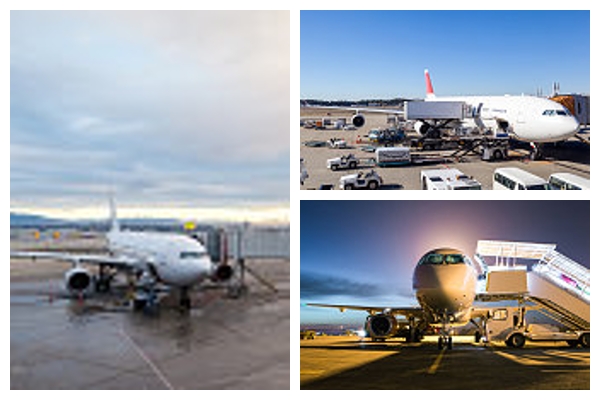
EASA published the first-ever proposal to regulate ground handling across European Union airports, to increase the safety, cybersecurity and consistency of all the actions that happen on the ground before and after a flight, delivering benefits to passengers and their airlines. This Opinion, for the first time, proposes a regulation that will affect approximately 300 000 workers in the ground handling industry, one of the largest groups of aviation employees. The regulation will also ensure that ground handling is covered by Regulation (EU) 2022/1645 on cybersecurity.
Ground handling encompasses any activity that occurs on the ground to prepare an aircraft and its passengers for departure or arrival. This includes:
Until now, this major area of aviation has been largely self-regulated. In most cases, operational arrangements, including those impacting safety, are captured only in bilateral service agreements between ground handling service providers and the aircraft operators to whom they provide services.
EASA Acting Executive Director Luc Tytgat, commented: “Aviation safety starts on the ground. This entirely new proposal fills an important gap in the overall regulation of aviation operations in the European Union, which means that we will now have an end-to-end approach to ensuring aviation safety and cybersecurity,” said EASA Acting Executive Director Luc Tytgat. “For passengers and their airlines this will provide increased certainty that ground handling operations are being carried out safely and consistently in all major airports across the EASA Member States.Today, a large ground handling organisation operating at 100 stations may be subject to over 600 audits from external stakeholders in a year, entailing almost 5 000 hours of work. In future, air operators will be able to rely on the results of oversight performed only once by the competent authority and reduce their own audits only to the necessary additional aspects. This will reduce costs and free up resources to focus on more critical operations."
The Opinion proposes an efficient approach on the oversight of ground handling organisations by competent authorities. This is expected to avoid multiple verifications of the same activities and organisational aspects and gradually reduce the significant number of audits performed mostly by aircraft operators. This way, organisations should be able to better allocate their resources from auditing to managing the safety of their operations. As now, aircraft operators will retain overall responsibility for aircraft safety and flight safety.
Ground handling processes grew organically as commercial aviation grew, without a central regulation. While ground handling plays a huge role in ensuring the safety of flights, it can also create safety issues. Most of the vehicles that move around on the airport apron, for example, are also part of the ground handling function – moving passengers or baggage, placing stairs next to aircraft, or helping the aircraft itself to leave the parking stand.
The new ground handling Regulation would require ground handling organisations and self handling aircraft operators performing commercial air transport operations with aeroplanes to self declare that they comply with the EU requirements. This can be either by applying operational procedures developed by themselves or industry standards and good practices developed and continually improved by industry during the past decades. Organisations will need to prove that they have a management system in place, proportionately aligned to the complexity of their operations. This includes a safety management system, training for staff, a maintenance programme for ground support equipment and defined operational procedures together with a robust safety culture, where any safety issues are reported without penalty to the reporter, swiftly addressed, and used as a lesson to further improve safety in the provision of services.
Oriens Aviation has appointed Narine Melkumjan as Sales Manager for the Netherlands, strengthening its presence in the Dutch market following its designation as Tecnam’s exclusive dealer in the...
Airbus 2026 Cargo Global Market Forecast, unveiled at the Cargo Facts Symposium, predicts that the global fleet of dedicated freighter aircraft will expand by 46%, rising from 2,360 aircraft in 2026 t...
The U.S. Federal Aviation Administration has certified the Boeing 737-10, the newest and largest member of the 737 MAX family, paving the way for Boeing [NYSE: BA] to begin customer deliveri...
Air Baltic Corporation AS , Latvia’s national airline and the leading carrier in the Baltic States, announced that airBaltic and its subsidiaries participating in the voluntary Ch...

