



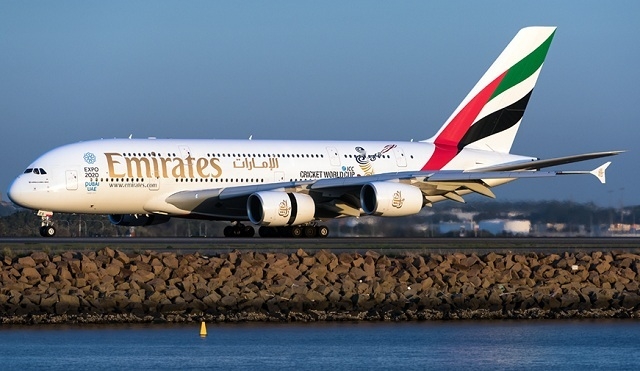
Emirates, the world’s biggest long-haul airline, said it’s unhappy with performance shortfalls afflicting $6.1 billion’s worth of Rolls-Royce Holdings Plc engines ordered to power a batch of 50 Airbus Group SE A380 superjumbos.
Feedback on the Trent 900 powerplants indicates “technical issues” that need to be resolved before the first plane is delivered to Emirates next month, Tim Clark, the Dubai-carrier’s president, said Friday in Frankfurt.
“We have a new engine coming on and there are some issues with that at the moment,” Clark said at a media briefing. “We want the engines as promised in the contract.”
Emirates last year ordered 217 Trent 900s -- sufficient to power the 50 four-engine A380s, plus spares -- after previously purchasing GP7000 powerplants from an alliance of General Electric Co. and Pratt & Whitney for its first 90 superjumbos. The deal with Rolls included unspecified “quality improvements.”
Clark said Emirates will “hopefully” still take the first Rolls-Royce powered plane on Dec. 2 as planned, adding that talks are underway with the manufacturer on resolving the performance problems and whether it should compensate the airline.
London-based Rolls-Royce said in an email that it is “working with Emirates and Airbus to meet the planned entry into service of the Trent-powered A380 within the Emirates fleet.”
Clark said that officially deferring delivery of the planes isn’t an option since doing so would impact the model’s entire supply chain. Emirates is due to take 25 Rolls-powered A380s between now and 2019, plus 25 more from 2021 on.
While the Trent 900 had its first test flight in 2004 and has a greater spread of A380 operators than the GE-Pratt model, it had previously been excluded from the world’s largest superjumbo fleet. Emirates switched supplier on the understanding that Rolls would help develop an upgraded and re-engined “Neo” version to help pare operating costs and extend the model’s lifespan.
A lack of interest in buying more double-deckers among other carriers has effectively killed off that plan, and Airbus is now planning to slow production to just one plane per month in 2018 to eke out the backlog and keep its options open in case demand revives.
Emirates took delivery of its 85th A380 this month and operates almost 250 aircraft in total, all of them either superjumbos or Boeing Co. 777s.
PAL-V has signed a Memorandum of Understanding with AVION, a specialist in advanced flight training devices, and FLYVE, a developer of FlyDrive ecosystems for professional and government operator...
A new travel industry coalition is urging EU policymakers to adopt a balanced and proportionate approach to biometric travel, ensuring passengers can benefit from secure and seamless journeys while ma...
Boeing and Ethiopian Airlines have announced a new cargo fleet expansion agreement, with the African carrier ordering eight 777-8 Freighters and two additional 777 Freighters. The investment will enab...
The International Aircraft Dealers Association (IADA) has released its 2026-2027 Current Market Portrait & Forecast, offering an in-depth analysis of the global preowned business av...

