



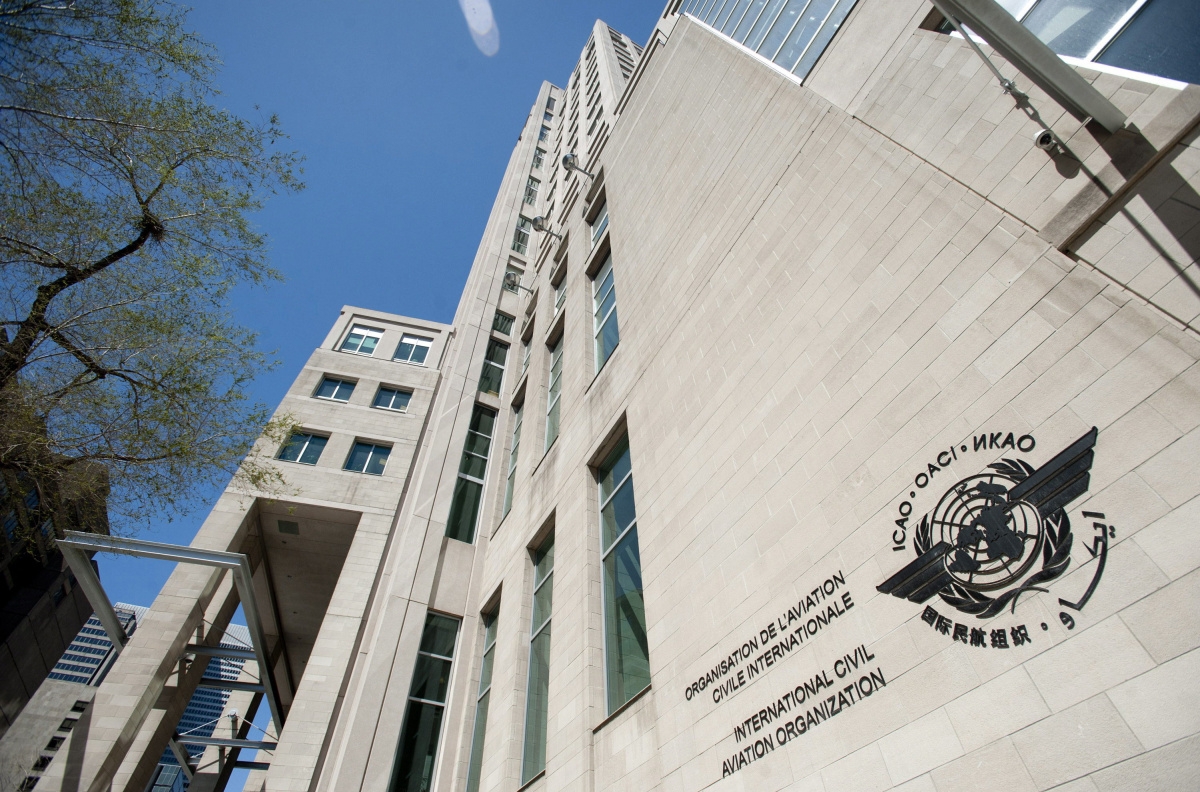
The International Civil Aviation Organization (ICAO) clarified the legal framework in place governing the roles and responsibilities of States, airlines and international organizations with respect to risks to civil aviation arising in national airspace.
The UN specialized agency for international civil aviation has issued the explanations subsequent to a number of misinterpretations which surfaced after the release of the MH17 Final Report.
Summary of Clarifications
- Under the Convention on International Civil Aviation (Chicago Convention), States and States alone maintain sovereign authority over their airspace.
- This authority carries with it the responsibility to issue risk advisories regarding any threats to the safety of civilian aircraft operating in their airspace. Said threats may include, but are not limited to, armed conflicts, ash clouds due to volcanic eruptions, missile tests and rocket launches, etc.
- States also have authority to close their airspace where certain safety threats may warrant that action.
- Aircraft and airline operators are responsible for assessing global airspace risks communicated by States, and/or third parties, before deciding where they fly.
- Under this international framework, ICAO does not possess the authority to over-ride sovereign States in order to close their airspace or reroute airline traffic.
- With respect to conflict zone risk specifically, recommendations to assist States and airlines with a more effective means of sharing risk information were already proposed by the 2014 conflict zone risk task force which ICAO established, immediately after the loss of MH17.
- These recommendations were later agreed to at ICAO’s High-level Safety Conference (191 Member States participating) in February of this year, and then were adopted formally by the ICAO Council. A keyrecommendation identified the need for an online risk information repository to be established, and ICAO launched that publicly-available tool in April of this year.
Rising production rates and the launch of new aircraft programs are driving increased demand for manufacturing capacity across the aerospace industry. To support this growth, FACC plans to i...
A new travel industry coalition is urging EU policymakers to adopt a balanced and proportionate approach to biometric travel, ensuring passengers can benefit from secure and seamless journeys while ma...
TRU Simulation + Training Inc. will showcase its Veris Virtual Reality Flight Training Device (FTD) for the Cessna Skyhawk at NBAA-BACE 2026, marking the simulator's first appearance at the indust...
British Airways has unveiled the next phase of its Heathrow lounge transformation programme, marking the beginning of a significant investment aimed at modernising every lounge across the airport in t...

