



By G.Ziemelis
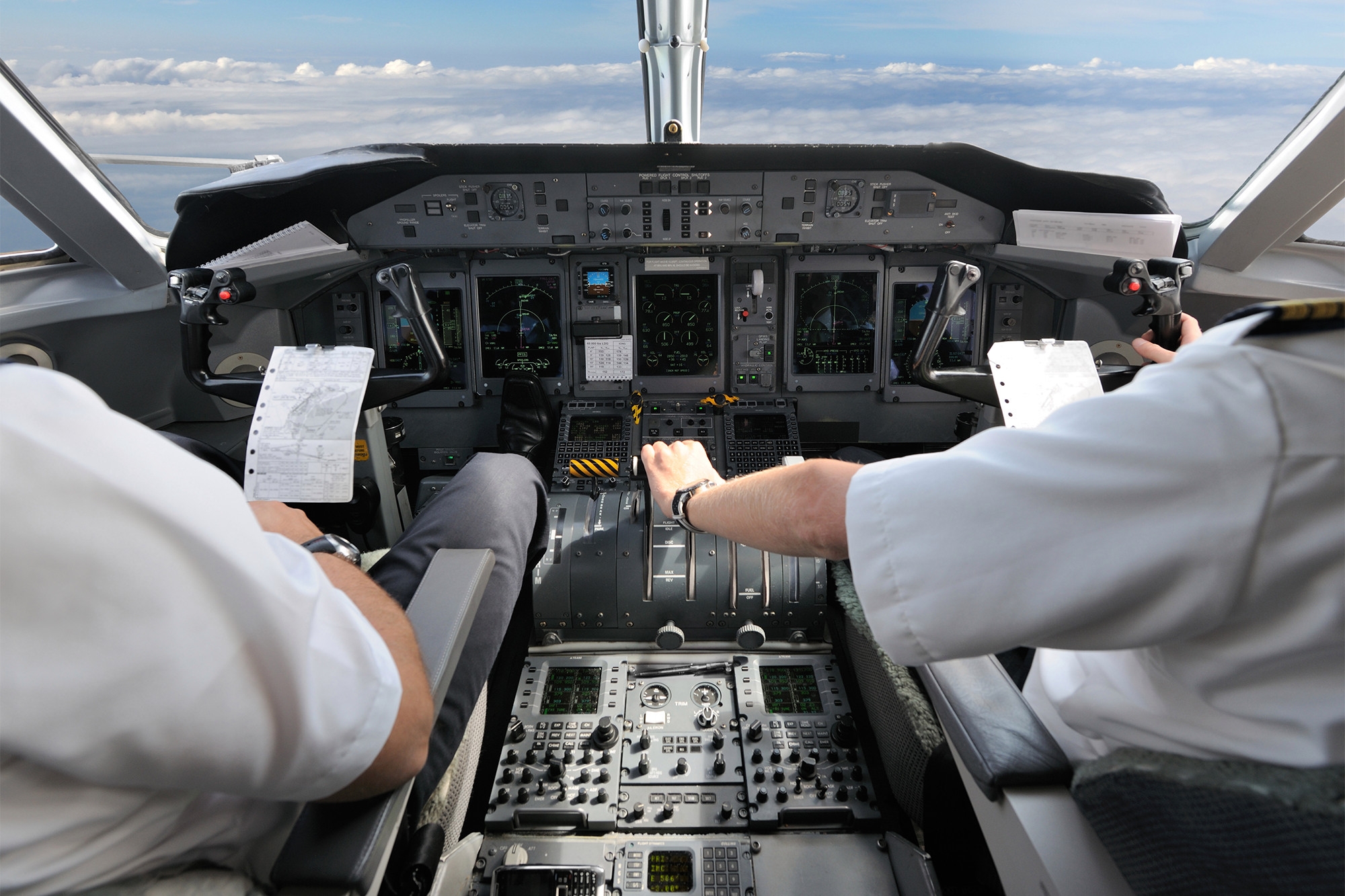
Aviation evolves and some things that were deemed as necessary are no longer needed. Regulations tend to lag behind technological developments, so it often takes time before capabilities are implemented, even when it is technically possible. Other times the paradigm is what lags and old methods stay because of public reception. The next in commercial aviation evolution will be the epoch when commercial flights only have one pilot in the cockpit, instead of today’s standard of two. But to make this a reality some technical and social hurdles need to be overcome.
While two pilots in the cockpit are the standard by today’s measure, it wasn’t always so. It wasn’t until the Boeing 757 came out in the early 1980s that in addition to the captain and first officer there was also a flight engineer on board to monitor and maintain the aircraft’s systems. Technological advancements and improvements to standard operating procedures made the flight engineer role obsolete and it was soon adopted as the industry standard. But just a few short years before the flight engineer was replaced by computers, they were an irreplaceable part of the crew. Even earlier in commercial aviation history, in addition to a flight engineer, many long-haul flights also included a navigator and radio operator. But these positions were also made irrelevant thanks to advances in technology.
Roadblocks to Overcome
It is almost inevitable that soon commercial aircraft will be a single pilot operation, much in the same way many private jets operate with only one pilot. The question then is not if but when. But before this can happen three main roadblocks need to be overcome, namely; safety redundancies, aircraft operational limitations, and public reception.
Safety redundancies
A big benefit of having two pilots in the cockpit is redundancy in case the captain was to become incapacitated. Sudden medical emergencies could put the captain out of commission and put the entire flight in danger if there is only one pilot on board. A proposed solution to eliminate this heightened risk is to have standby pilots on the ground in flight control centers to be able to pilot the aircraft remotely in the event the pilot on board the aircraft is unable to fly. Additionally, with the need for only one pilot the demand for that role will be significantly reduced increasing the competition between pilot candidates; so stricter medical requirements could be put in place for pilots to further reduce the risk of medical emergencies.
Aircraft operational limitations
Since the aircraft manufacturer dictates how many crew are required to operate an aircraft the manufacturers are the bottleneck when it comes to single pilot capabilities. There are currently no commercial aircraft on the market that could transition to single pilot operations overnight. NASA tested out the single pilot concept in Boeing 737 simulators and found the workload for a single pilot to be unacceptable in any conditions tested. For single pilot operations to even be feasible in the real world either completely new aircraft will need to be manufactured or current gen aircraft will need heavy overhaul to increase the amount of automated systems to reduce pilot load.
Public reception
The final of the primary roadblocks, public reception, is not one that can be overcome with new technology but rather time. It takes time for a paradigm shift to occur and it will likely be long after single pilot operations are the standard before passengers will be completely comfortable flying on an aircraft with only one pilot (in the cockpit that is). Like with most new technologies, the consumers will want the system to be proven before they adopt this new evolution of flying
The future, soon
St Aerospace, who is studying the feasibility of single pilot commercial flights, predicts it will be a couple of decades before this concept matures. However, what we will likely see is cargo aircraft being the first adopters of single pilot flying and will likely set the regulatory precedents that the commercial airlines will build from. Conversions of passenger jets to freighters capable of single pilot flights are already being drummed up and it is looking likely they will take off in the next 5 years or so. In the meantime, the airlines are watching carefully as this next step in the evolution could save them billions of Euros every year and drastically change the economics of flying in ways a new engine, or lighter aircraft never could.
Lufthansa Technik Engine Services (LTES) is significantly expanding its engine maintenance capabilities in Tulsa, Oklahoma, nearly doubling its operational capacity as part of its growth strategy acro...
Private jet catering requires an understanding of the journey as much as the passengers' preferences. SkyDine Jet Catering explores how flight duration, departure schedules, airport location, and...
Bombardier announced plans to further expand its presence across the United States, with the creation of 800 jobs supported by ongoing growth initiatives and strategic infrastructure investments. ...
Electra has successfully completed the takeoff and landing of its hybrid-electric Ultra Short aircraft at Downtown Skyport in Lower Manhattan, in what is believed to be the first time a fixed-wing air...

