



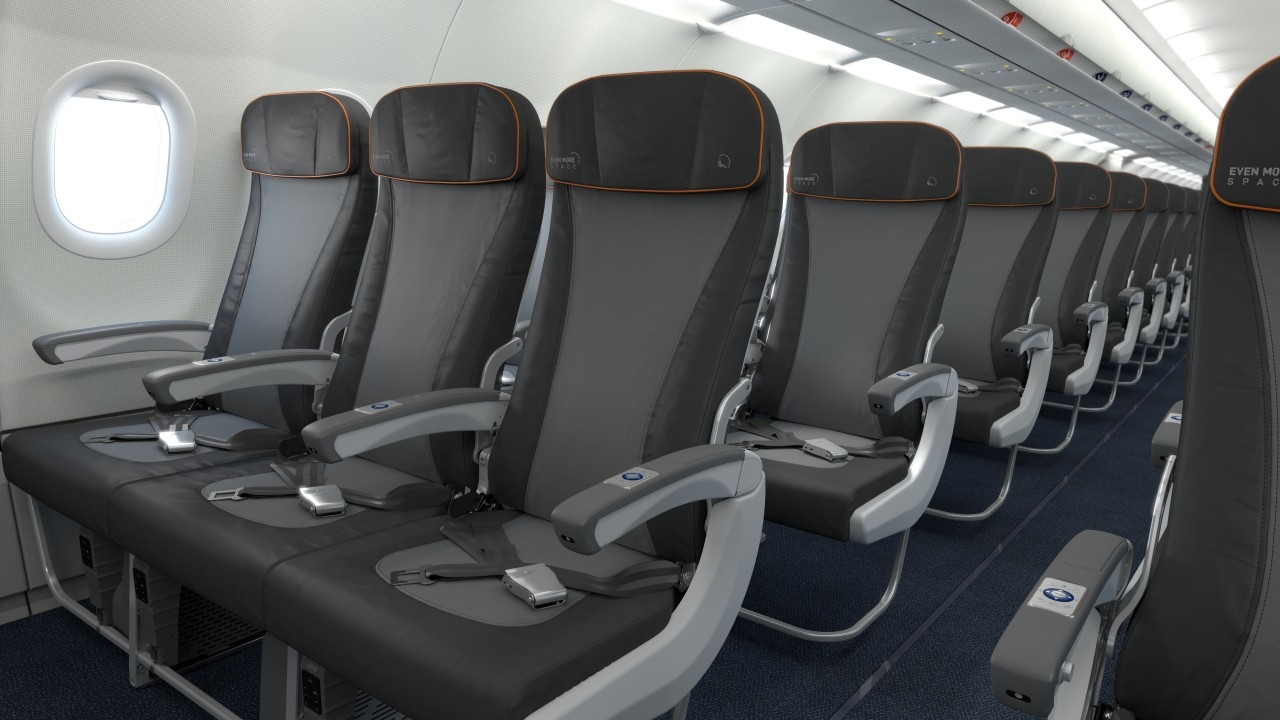
JetBlue officially got out of the cargo business about a week ago, and one of the factors leading to that business line’s cessation was the airline’s move to place — some would say cram — 15 additional seats into its fleet of Airbus A320 aircraft in the coach section starting in the second half of 2016.
The multiyear project to increase the A320 seat numbers to 165, up from 150, means seat pitch will decline an inch to around 33 inches, although JetBlue states it will still offer the most legroom in coach among U.S. carriers.
During JetBlue’s third quarter earnings call today, Marty St. George, executive vice president, commercial and planning, tied the seat “densification” to the decision to kills the airline’s cargo business.
The seat densification in the narrow-body A320, especially in markets such as Florida and the Caribbean where planes already fly with high load factors, stretched capabilities too thin, St. George said, adding that eliminating the airline’s cargo business will have a “deminimus” impact on the bottom line.
St. George said he’s “bullish” on the seat additions, which will have “terrific impact” on the airlines CASM (costs per available seat mile) structure.
JetBlue forecasts that the extra 15 seats would produce $100 million of incremental operational revenue by 2019.
That financial impact won’t be felt in a “significant way” until at least midway through 2017, according to St. George.
On the decision to get out of the cargo business, JetBlue CEO Robin Hayes said the airline would have needed to invest a significant amount capital to make the cargo business work and opted not to do so.
The International Aircraft Dealers Association (IADA) has released its 2026-2027 Current Market Portrait & Forecast, offering an in-depth analysis of the global preowned business av...
Emirates has officially inaugurated services to Helsinki, marking a significant milestone in connectivity between Finland and the United Arab Emirates. The new daily route is the only year-r...
Tecnam has announced a landmark strategic partnership aimed at accelerating the growth of its P2012 aircraft family across the United States. Under the agreement, Finnoff has been appointed the exclus...
A new travel industry coalition is urging EU policymakers to adopt a balanced and proportionate approach to biometric travel, ensuring passengers can benefit from secure and seamless journeys while ma...

