



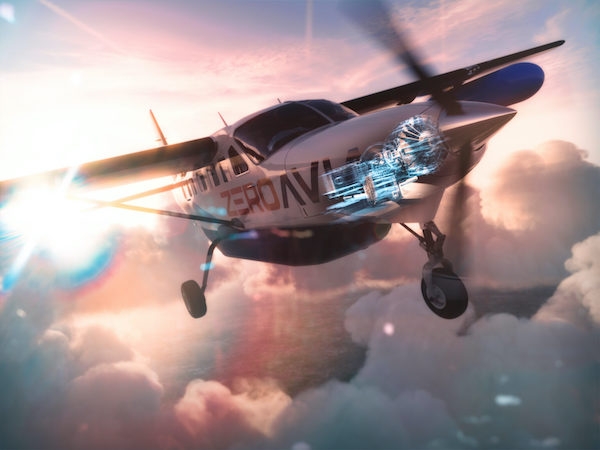
MEHAIR placed a conditional order for up to 20 ZA600 hydrogen-electric engines. The order adds to the over 2,000 engine pre-orders secured by ZeroAvia. MEHAIR has historically offered services across the Indian sub-continent, commencing with the Andaman and Nicobar Islands in 2011. The company now has ambitious plans to grow across a range of sub-regional routes across India with both amphibian and wheeled aircraft.
MEHAIR will explore a range of options for financing the acquisition and retrofit of the engines to its upcoming fleet of 10 Cessna Caravan aircraft , including working with potential leasing partners. The company already has a relationship with MONTE as its preferred ZA600 lessor partner. ZeroAvia and MEHAIR will also work together on establishing the fuel supply for the operator’s services across India. ZeroAvia plans to certify the ZA600 by the end of 2025 and is already working closely with the UK’s CAA as well as other regulators to ensure harmonization and rapid certification globally.
James Peck, Chief Customer Officer, ZeroAvia, commented: “The rapid increase in demand for flights will be a key driver of economic growth and social and cultural exchange, but clean flight technology will be essential to ensure it does not derail net zero progress. Hydrogen fuel cell propulsion can offer lower operating costs and zero-emission flight, driving a rapid increase in regional aviation and support dramatic expansion of MEHAIR’s operations.”
Siddharth Verma, Managing Director, MEHAIR, said: “Operating under the highly successful UDAN Scheme, Govt of India, amphibian and other small-wheeled aircraft can provide the much needed ‘last-mile’ connectivity by bringing in a seamless network of runways and waterways, all the while offering an exceptional experience for passengers and boosting local economies. Aligning with the Govt’s vision of sustainable aviation, we believe we need to find sustainable ways to power our operations in the future, and we’re excited by what ZeroAvia’s technology offers and the progress demonstrated so far. We hope to spearhead this new revolution in partnership with ZeroAvia and the Government of India.”
India has big aspirations to use hydrogen as a key enabler of its clean energy future, particularly in hard-to-abate sectors like aviation, and to deliver net zero by 2070. A target of reaching 5 million metric tons of hydrogen production per annum has been set for 2030.Aviation too is growing dramatically across the country, with passenger numbers more than doubling over the last decade and more than 500m passengers per annum predicted by 2030 according to CAPA, India.
Hydrogen-electric engines use hydrogen in fuel cells to generate electricity, which is then used to power electric motors to turn the aircraft’s propellers. The only emission is water.
UH-60 Black Hawk helicopters operated by Helicopter Alliance played a vital role in combating wildfires across Central and Southern Europe during the aerial firefighting season that has now concluded....
British Airways has unveiled the next phase of its Heathrow lounge transformation programme, marking the beginning of a significant investment aimed at modernising every lounge across the airport in t...
Azerbaijan Airlines (AZAL), part of AZCON Holding, has taken delivery of another Airbus A321neo, increasing its fleet to 31 aircraft as the carrier continues its long-term modernisation strategy. The...
Tecnam introduces the P2008JC NG to the United States market, bringing flight schools a certified, next-generation training aircraft designed to dramatically reduce operating costs while maximizing fl...

