



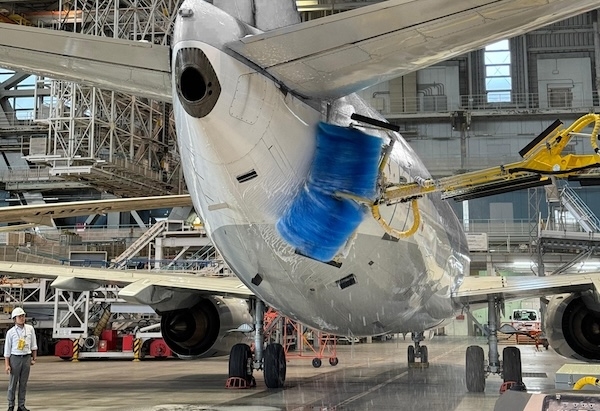
Safety and well-being are essential throughout the aviation industry, including the difficult task of ensuring the safety and well-being of ground personnel. Automated aircraft cleaning systems have revolutionized this aspect of the job, offering a safer, more efficient alternative to traditional methods that expose workers to multiple hazards. With controllers reminiscent of gaming consoles, systems like those from Nordic Dino can, with the training provided with every unit, seem a bit like playing a video game, instead of having to bend over backward under an aircraft’s tail to clean it manually with brushes.
Reducing strain and danger
Manual aircraft cleaning is physically demanding and inherently risky. Workers typically use cherry pickers or scaffolding to reach various parts of an aircraft, which increases the risk of accidents. Handling water and detergents in such positions further increases the chances of slips and falls, while repetitive movements can cause chronic musculoskeletal issues. A 2017 study conducted in the US found that the frequency of non-fatal accidents in ground handling is significantly higher than in other sectors of the aviation industry.
Veronika Andrianovaite, CCO of Nordic Dino Robotics AB, commented: "You are either working in a cherry picker or on platforms built around the aircraft. It's inherently risky. The slippery conditions due to water and detergents add to the danger.Our robots save time and reduce the number of people required for the washing process. Typically, one person with a remote control and a couple of helpers for hard-to-reach areas is sufficient. With robotic solutions, you're operating from a safe distance. There's no need to work at dangerous heights. What’s more, handling cleaning agents can be dangerous. Automated systems use a controlled mixture of 90% water and 10% detergent and minimize exposure to these substances. Enhancing safety also reduces potential legal and medical expenses."
Automated systems mitigate these risks by taking over the most strenuous tasks. Controlled remotely, these systems efficiently clean large sections of an aircraft, significantly reducing the need for workers to be in precarious positions. This not only reduces the risk of accidents but also alleviates chronic physical strain on workers. In addition to putting workers on solid ground to enhance safety and ease strain, automated systems offer several other advantages.
Lower risk and cost
Adopting automated systems also offers significant economic benefits. These systems enhance operational efficiency by reducing cleaning time, allowing airlines to allocate their workforce to more complex and engaging tasks, improving overall productivity. By reducing physical strain and hazardous conditions associated with manual cleaning, automated systems help lower the risk of injuries. This not only benefits workers directly but also reduces the likelihood of injury-related lawsuits, leading to substantial cost savings for airlines.
Automated aircraft cleaning systems represent a significant advancement in worker safety. By reducing manual labor, minimizing exposure to hazardous conditions, and offering intuitive training, these systems foster a safer and more efficient working environment. Embracing such innovative solutions is crucial for a safer, more sustainable future in the aviation industry.

In a landmark step towards next-generation regional aircraft manufacturing, Jungheinrich has delivered an advanced automated logistics centre to Deutsche Aircraft at Leipzig/Halle Airport. Supporting...
UH-60 Black Hawk helicopters operated by Helicopter Alliance played a vital role in combating wildfires across Central and Southern Europe during the aerial firefighting season that has now concluded....
For the fourth consecutive year, Corsair is reaffirming its commitment to the fight against breast cancer by partnering with the association "Les Hôtesses de l’Air cont...
Tecnam has announced a landmark strategic partnership aimed at accelerating the growth of its P2012 aircraft family across the United States. Under the agreement, Finnoff has been appointed the exclus...

