



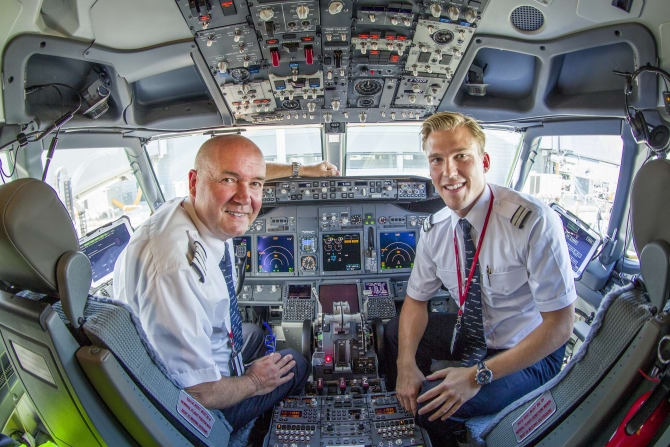
Following a successful test project, Norwegian will expand its cooperation with AVTECH Sweden AB to further reduce fuel consumption. A report by the Swedish Energy Agency, which partly financed the project, shows that fuel consumption was reduced by 22 kilos per flight. This equals an annual CO2 reduction of 16,000 tons - or a reduction of 5,000 tons of fuel per year, which in turn leads to reduced costs for Norwegian.
The new technology, Aventus Air™ weather service, provides Norwegian’s pilots with highly accurate wind and temperature information in accordance with their flight plan. Data is transferred to the aircraft’s systems, which makes it possible to optimise the flight path for improved fuel efficiency and reduced emissions.
"We work actively to reduce emissions. We have one of the youngest and most environmentally friendly fleets in the world, which has enabled us to reduce emissions by more than 30 percent since 2008. Our ambition is to continue to reduce emissions per passenger with fuel-efficient aircraft and with innovative technology. The AVTECH project demonstrates that fuel consumption can be further reduced by using advanced weather data. We are looking forward to establishing a permanent partnership that benefits both the environment and Norwegian's costs," says Tomas Hesthammer, Norwegian’s Director of Flight Operations.
About the report
The project has been partly financed by the Swedish Energy Agency, which has published a report on the test project. Data from a total of 29,000 flights completed in November and December 2017 have been analysed. The results show a reduction of 640 tons of fuel on Norwegian’s flights during this period. This corresponds to an annual CO2 reduction of 16,000 tons, or an annual reduction of 5,000 tons of fuel on Norwegian’s flights.
Norwegian actively works to reduce emissions
Reduced fuel consumption is crucial to reducing emissions. In anticipation of biofuel becoming commercially available and manufactured in large scale, new aircraft is the single most important measure an airline can take to reduce emissions.
In September this year, Norwegian was named the world's most fuel-efficient airline on transatlantic routes by the The International Council on Clean Transportation (ICCT). The ICCT’s analysis shows that Norwegian has a fuel consumption of 44 passenger kilometers per liter, which is 33 percent more fuel-efficient than the industry average.
Read more about Norwegian's environmental initiatives here:
https://www.norwegian.com/uk/about/company/corporate-responsibility/environment/
Britten‑Norman has reached a major production milestone as the first Islander to be fully manufactured in the UK since the company repatriated its assembly line to Bembridge has now commenced its grou...
United announced the largest international network expansion in company history with 10 new international cities and three new routes across Europe and Asia, and debuted the newest international aircr...
Thrust Flight announced a new partnership with Hampton University’s Department of Aviation to serve as the flight-training partner for the school’s Flight Education curriculum. T...
easyJet revealed that since first launching its initiative to recruit older workers in 2022, the number of cabin crew over the age of 50 has now more than doubled (up 127%) at the airline, with over 6...

