



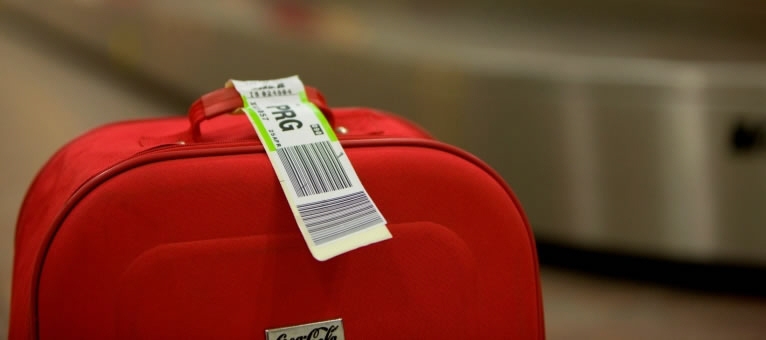

The global deployment of Radio Frequency Identification (RFID) technology, which can accurately track passengers' baggage in real time across key points in the journey, can enable the air transport industry to save more than US$3 billion over the next seven years.
Global IT provider SITA and the International Air Transport Association (IATA) revealed that the highly accurate tracking rates of RFID technology could reduce the number of mishandled bags by up to 25% by 2022, mainly through efficient tracking. The SITA/IATA business case, released today at the IATA World Passenger Symposium taking place in Dubai, outlines how this will provide a major saving for airlines and deliver more certainty for passengers. Initial deployments of RFID by airlines, such as Delta Air Lines, show a 99 percent success rate for tracking bags.
In particular, RFID will address mishandling during transfer from one flight to another, one of the key areas identified by SITA and IATA where the technology could help improve baggage handling rates. RFID technology will ensure that airports, airlines and ground handlers are able to keep track of bags at every step of the journey and ensure the right bag is loaded onto the correct flight. The technology also supports IATA’s Resolution 753 that requires by 2018 airlines keep track of every item of baggage from start to finish.
The deployment of RFID would build on the already significant savings delivered by the smart use of technology for baggage management. According to the SITA Baggage Report 2016, technology has helped reduce the number of mishandled bags by 50% from a record 46.9 million mishandled bags in 2007, saving the industry US$ 22.4 billion. This improvement comes despite a sharp rise in passenger numbers over the same period.
Jim Peters, chief technology officer at SITA, said: “The airline industry is at the brink of a revolution in baggage tracking. Deploying RFID globally will increase accuracy and reduce mishandling rates. This is a win-win situation – passengers will be happier, operations will run smoother and airlines will save billions of dollars.”
Andrew Price, head of global baggage operations at IATA said: “Over the past few years we have seen more work to help airlines introduce and reap the benefits of RFID technology through better oversight of their baggage operations. This has included trials and of course the Delta Air Lines implementation. The advances in the technology and the immense benefits it brings to the airline industry has prompted IATA to revisit and fully explore the benefits of RFID today.”
Initial deployments of RFID by airlines, such as Delta Air Lines, show a 99 percent success rate for tracking bags, helping further reduce the number of mishandled bags.
David Hosford, manager of baggage performance strategy at Delta Air Lines said: “We are investing in RFID to further improve our baggage handling rates and improve the customer experience. RFID technology provides us with more data and more precise tracking information throughout the baggage journey.
The SITA/IATA business case shows that the improvements in handling rates do not come at a great cost. RFID capabilities can be deployed for as little US$0.1 per passenger on average while generating expected savings of more than US$0.2 per passenger. With some big airlines and airports already introducing RFID technology, combined with the fact that it is compatible with existing barcode technology, adoption of RFID across all airports could provide a positive return for airlines, both in cost savings and passenger satisfaction.
SITA’s and IATA's assumptions are based on RFID being deployed in 722 airports (representing 95% of passenger numbers globally) over a six-year period between 2016 and 2021 while the savings are calculated over seven years. The figures for 2016 take into account the RFID infrastructure already deployed or about to be deployed at multiple induction points on the baggage journey.
SITA's research into RFID and baggage tracking is part of its ongoing investment in research for the benefit of the entire air transport community.
PAL-V has signed a Memorandum of Understanding with AVION, a specialist in advanced flight training devices, and FLYVE, a developer of FlyDrive ecosystems for professional and government operator...
Rising production rates and the launch of new aircraft programs are driving increased demand for manufacturing capacity across the aerospace industry. To support this growth, FACC plans to i...
Tecnam introduces the P2008JC NG to the United States market, bringing flight schools a certified, next-generation training aircraft designed to dramatically reduce operating costs while maximizing fl...
UH-60 Black Hawk helicopters operated by Helicopter Alliance played a vital role in combating wildfires across Central and Southern Europe during the aerial firefighting season that has now concluded....
