



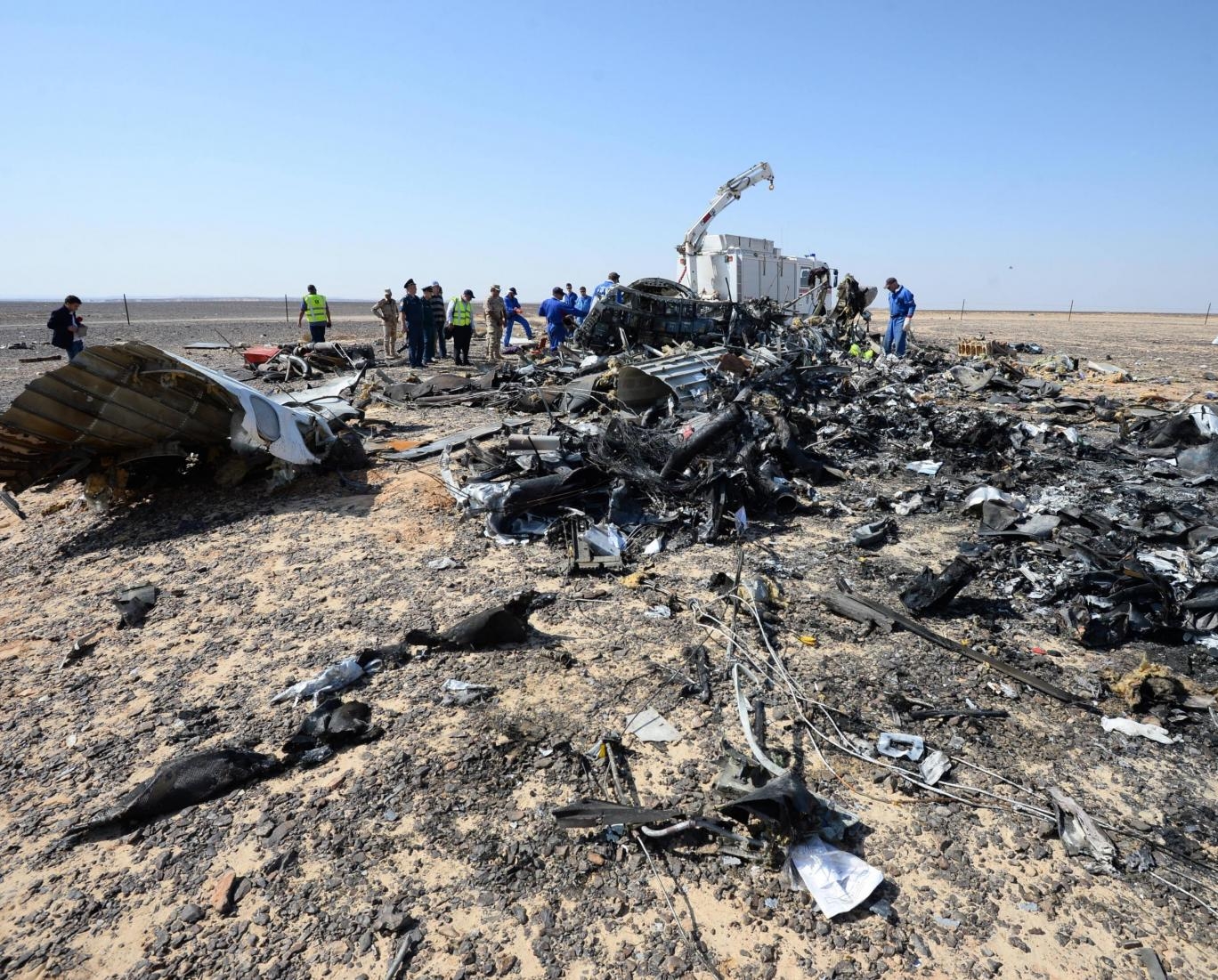
The Russian Airbus A321 plane crash could have occurred because a timed bomb was planted near the aircraft’s fuel line, media reports suggest.
Investigators have uncovered intelligence about a "two-hour timer," although it is not clear whether physical evidence to the effect has been found or the information comes from intercepted terrorist communications, Fox News reports citing an unanimous source.
However, it was not clear whether the lead about the timer came from intercepted communications between known terrorist operatives, or physical evidence, anonymous source identified as familiar with the investigation told Fox News in a report published on Thursday.
A second source, also speaking on condition of anonymity, said investigators were considering a theory that a bomb was placed at or near the fuel line or where it attaches to the engine, with the fuel burning off the explosive.
The report suggested this theory would account for the apparent lack of explosive residue in the wreckage.
The Airbus A321 plane crashed on its way from the Egyptian resort city of Sharm el-Sheikh to the Russian city of St. Petersburg on October 31, about 20 minutes into the flight. All 224 people on board, mostly Russians, were killed.
Emirates has officially inaugurated services to Helsinki, marking a significant milestone in connectivity between Finland and the United Arab Emirates. The new daily route is the only year-r...
Azerbaijan Airlines (AZAL), part of AZCON Holding, has taken delivery of another Airbus A321neo, increasing its fleet to 31 aircraft as the carrier continues its long-term modernisation strategy. The...
FL Technics Indonesia, the first MRO in Indonesia to be appointed as a GE Aerospace avionics support partner, has signed a service support agreement with GE Aerospace covering Boeing 737 and Airbus A3...
UH-60 Black Hawk helicopters operated by Helicopter Alliance played a vital role in combating wildfires across Central and Southern Europe during the aerial firefighting season that has now concluded....

