



A leading player in the engineering and operation of transport infrastructure, Edeis confirms its commitment to the ecological transition of the aviation sector.At Aix-les-Milles airfield, the group is actively supporting the emergence of carbon-free, silent aviation through a structured partnership with Fly Provence, a flight school focused on electric aviation and next-generation training.
Martin Meyrier, President of Edeis Airports and Ports commented: "Edeis is committed to preparing for the aviation of tomorrow, which will be quiet and carbon-free. Through the Aix-les-Milles aerodrome, and in partnership with Fly Provence, we are demonstrating that an operator can be a driving force for change and turn airport platforms into real laboratories for ecological transition. "
A demonstration airfield for the silent aviation of tomorrow
As the operator of the Aix-les-Milles airfield, Edeis is responsible for the development and day-to-day operations of the platform. The group is creating the technical, energy, and operational conditions necessary for the development of electric aviation: adapting facilities, integrating charging solutions, supporting usage, and structuring an innovative local ecosystem.
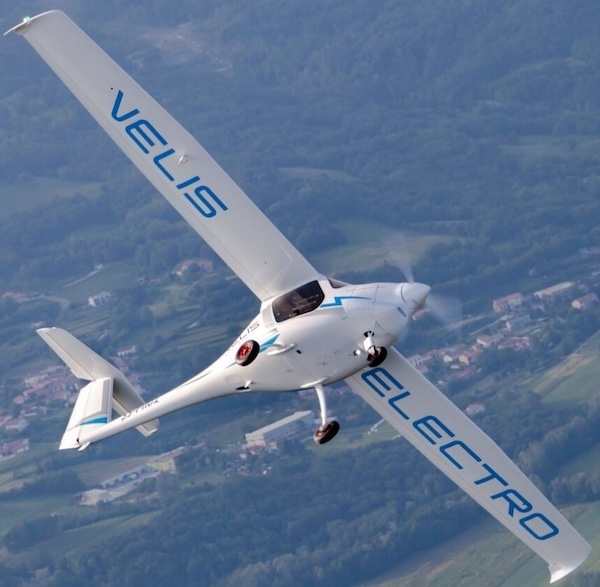
The partnership formed with Fly Provence illustrates this dynamic. The school has added the Pipistrel Velis Electro, a 100% electric two-seater aircraft designed for training, to its fleet. It is often presented as the first electric aircraft certified at European level. This choice positions the Aix-les-Milles airfield as one of the pioneering platforms for carbon-free aeronautical development and training.
More fuel-efficient and higher-performance aviation
Electric aviation is a concrete lever for reducing emissions. Electric motors are particularly energy efficient: nearly 98% of the available energy is converted into useful mechanical energy, compared to less than 30% for a combustion engine under comparable conditions.
In addition to the absence of local emissions during operation, this technology allows for mechanical simplification, optimized maintenance, and more fuel-efficient operation, which is particularly well-suited to the repeated cycles of flight training. By supporting this type of project, the group is helping to make aviation possible that combines operational performance, the gradual decarbonization of the sector, and the maintenance of existing practices.
Energy consistency achieved on site
The development of electric aviation is part of a broader approach to energy and mobility consistency. On the platform, a ground-mounted photovoltaic power plant already supplies all of the Fly Provence school building's energy needs. Based on a modular solution, without heavy foundations or permanent land development, this installation is a concrete demonstration of a sober and reproducible energy model. It highlights the link between local energy production and new uses, notably by enabling the recharging of electric aircraft.
Hervé Berardi, Founder and President of Fly Provence stated: “What we are showing here is very simple: modern aviation training must be based on a coherent infrastructure. Producing energy on site, organizing recharging, operating cleanly: this is how we make sustainable aviation credible, acceptable for the region, and reproducible elsewhere.”
Training pilots in an ecosystem of innovation
Beyond the environmental and acoustic benefits, electric aviation opens up major opportunities in terms of research, development, and training.
The integration of electric aircraft and latest-generation simulators at Fly Provence promotes modernized teaching methods focused on precise energy management, anticipation, and trajectory control. It also contributes to the development of local skills and the attractiveness of the Provençal aeronautical ecosystem.
For Edeis, supporting this dynamic means investing in the aviation of the future: a more innovative, more fuel-efficient aviation that creates value for the region.
A concrete response to noise pollution issues
One of the major benefits of electric aviation is the significant reduction in noise. Electric aircraft generate significantly less noise than thermal aircraft.
Tecnam has announced a landmark strategic partnership aimed at accelerating the growth of its P2012 aircraft family across the United States. Under the agreement, Finnoff has been appointed the exclus...
Azerbaijan Airlines (AZAL), part of AZCON Holding, has taken delivery of another Airbus A321neo, increasing its fleet to 31 aircraft as the carrier continues its long-term modernisation strategy. The...
Dutch flag carrier KLM, part of the Air France-KLM Group, has welcomed its first Airbus A350-900, marking a significant step in the airline’s long-haul fleet modernization strategy. The arrival...
UH-60 Black Hawk helicopters operated by Helicopter Alliance played a vital role in combating wildfires across Central and Southern Europe during the aerial firefighting season that has now concluded....

