



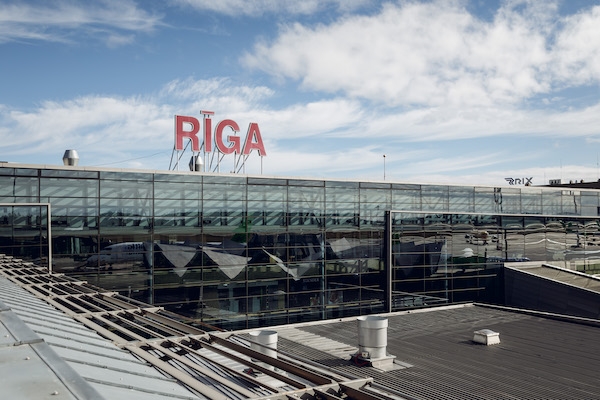
In preparation for the resumption of international passenger traffic after the end of the emergency situation, Riga Airport is working on additional preventive measures at the Airport terminal to protect employees and passengers and limit the spread of COVID-19, as well as planning the necessary personnel and infrastructure resources for a gradual increase of the number of flights.
In order to prepare its passenger terminal for the increase in passenger traffic, the Airport will introduce more extensive measures to protect its employees and passengers and to limit the spread of COVID-19. These include health safety measures to reduce the risk of spread of the disease in the check-in area, security controls, at boarding gates and on buses, as well as the provision of safety glazing at check-in desks and the provision of personal protective equipment for staff members. Intensified cleaning and disinfection measures are also planned in the terminal premises, equipment and buses; medical staff will be involved to monitor passenger health.

“Work at Riga Airport has continued also during the emergency situation, serving repatriation flights, cargo and business flights; therefore, from an operational point of view, the Airport is ready to handle passenger flights as soon as permission is given to resume them. However, we are aware that the Airport will have a particularly important role in curbing the spread of COVID-19 once flights resume, so it is our job to work with airlines and service providers to carefully and thoughtfully prepare infrastructure and implement safety measures in order to minimize the risks of infection and protect our employees, passengers and Airport guests,” says Laila Odiņa, Chairperson of the Board of Riga Airport.
The airline data available to the Airport on the resumption of planned flights after the lifting of the emergency situation shows that the resumption of flights will take place gradually, taking into account both travel and communication restrictions in Latvia and other countries, and changes in the habits of people. Many foreign markets will remain limited even after the crisis, and fewer flights to Riga are expected to take place for several years to come. The expected number of passengers by the end of this year could be around 1.6 million, and the next year - 4.6 million instead of the previously planned 8 million.
Based on these data and the forecasts of international aviation organizations, the Airport has developed three recovery scenarios, assuming a medium-rate recovery forecast as the baseline scenario. Under this scenario, infrastructure and staff resources are planned, so as to ensure that the Airport is prepared to respond flexibly to airline demand.
At the same time, the Airport continues to take measures to ensure company's long-term stability by reducing operating costs, optimizing staff resources and reviewing the investment programme.
As reported before, a state of emergency has been declared in the country to limit the spread of the novel coronavirus disease COVID-19 in Latvia, and international passenger carriage to and from Riga Airport has been terminated since 17 March this year.

For the fourth consecutive year, Corsair is reaffirming its commitment to the fight against breast cancer by partnering with the association "Les Hôtesses de l’Air cont...
UH-60 Black Hawk helicopters operated by Helicopter Alliance played a vital role in combating wildfires across Central and Southern Europe during the aerial firefighting season that has now concluded....
Tecnam has announced a landmark strategic partnership aimed at accelerating the growth of its P2012 aircraft family across the United States. Under the agreement, Finnoff has been appointed the exclus...
flyadeal, the fast-growing low-cost carrier of Saudia Group and one of the GCC's largest budget airlines, has expanded its presence in India with the launch of non-stop flights between Riyadh and...

