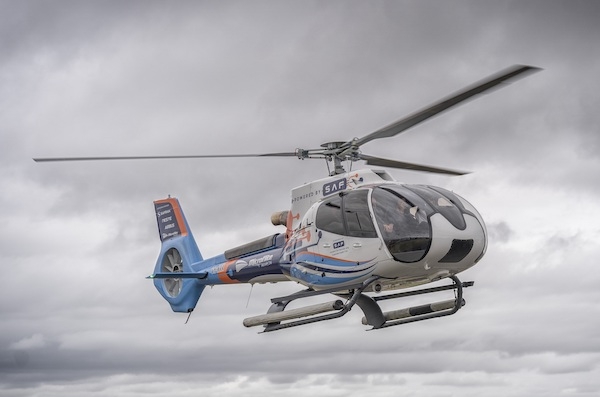
Airbus, Safran Helicopter Engines and leading Australian Microflite, have jointly operated country’s first helicopter demonstration flights on an Airbus H130 using blended sustainable aviation fuel supplied by Neste. The H130 took off from Moorabbin Airport and will be expected to fly for a total of 60 minutes over the next few days. The aircraft was fuelled with 200 litres of jet fuel, containing about 40% of SAF blended with Jet A-1, powering Safran Arriel 2D engine.
The Hon Catherine King MP, Minister of Infrastructure, Transport, Regional Development and Local Government commented: “Sustainable aviation fuels represent a tangible opportunity for the aviation sector to cut its emissions in the short to medium term and it is encouraging to see that happening first hand. Our Jet Zero council will work with industry so that we can see more initiatives like this across Australia.”
Stephen Forshaw, Airbus Chief Representative for Australia, New Zealand and the Pacific, said: “The use of SAF is one of Airbus’ levers to reduce carbon emissions, and we are proud to have achieved this milestone SAF flight with long-standing partners Safran and Microflite. This demonstration flight underscores Airbus’ commitment to help our customers achieve more sustainable operations. It is an important step in our journey towards decarbonisation, as we join like-minded industry partners for a wider adoption of SAF in flights.”
Microflite Chief Operating Officer Rodney Higgins stated: “As a young and dynamic aviation company with a strong vision to lead excellence in sustainable aviation, we have a fleet of over 20 aircraft conducting passenger, aerial work, and emergency services operations. Our 10-year strategy is to transition our entire fleet to either SAF or electrically powered flight. This Australian-first use of SAF in a rotary-wing aircraft has been achieved through a collaboration with our valued industry partners, and Microflite is proud of the commitment from Airbus, Safran and Neste to join us in leading a sustainable aviation industry.”
Sami Jauhiainen, Vice President APAC, Renewable Aviation at Neste commented: “We are pleased to support Airbus, Safran and Microflite on this demonstration flight, which involves the first ever delivery of Neste MY Sustainable Aviation Fuel to the Australian market. The fuel was delivered to Avalon with the support of our partner ITOCHU. With the expansion of our Singapore refinery starting operations at the end of the first quarter, we will be able to produce up to one million tons of SAF per annum, ready to support aviation in the Asia Pacific region and globally.”
“This is an important step in our roadmap for the large-scale deployment of SAF,” said Cedric Jochum, Managing Director of Safran Helicopter Engines Australia. “Safran Helicopter Engines turbine range is already certified to run on 50% SAF and our team is working to certify operations with 100% SAF. When a 100% incorporation level is achieved, SAF offers a potential reduction in CO2 emissions of 80%.”
All Airbus helicopters are today certified to fly with up to 50% blend of SAF mixed with kerosene, with the goal of reaching 100% SAF flights for future fleets. Airbus has launched a SAF User Group dedicated to the rotary-wing community, in a bid to drive the deployment of biofuels. The company has also started using SAF for helicopter training and test flights at its sites in France and Germany.
Archived
3 years ago

Bombardier announced plans to further expand its presence across the United States, with the creation of 800 jobs supported by ongoing growth initiatives and strategic infrastructure investments. ...
Lufthansa Technik Engine Services (LTES) is significantly expanding its engine maintenance capabilities in Tulsa, Oklahoma, nearly doubling its operational capacity as part of its growth strategy acro...
Airbus 2026 Cargo Global Market Forecast, unveiled at the Cargo Facts Symposium, predicts that the global fleet of dedicated freighter aircraft will expand by 46%, rising from 2,360 aircraft in 2026 t...
Private jet catering requires an understanding of the journey as much as the passengers' preferences. SkyDine Jet Catering explores how flight duration, departure schedules, airport location, and...