



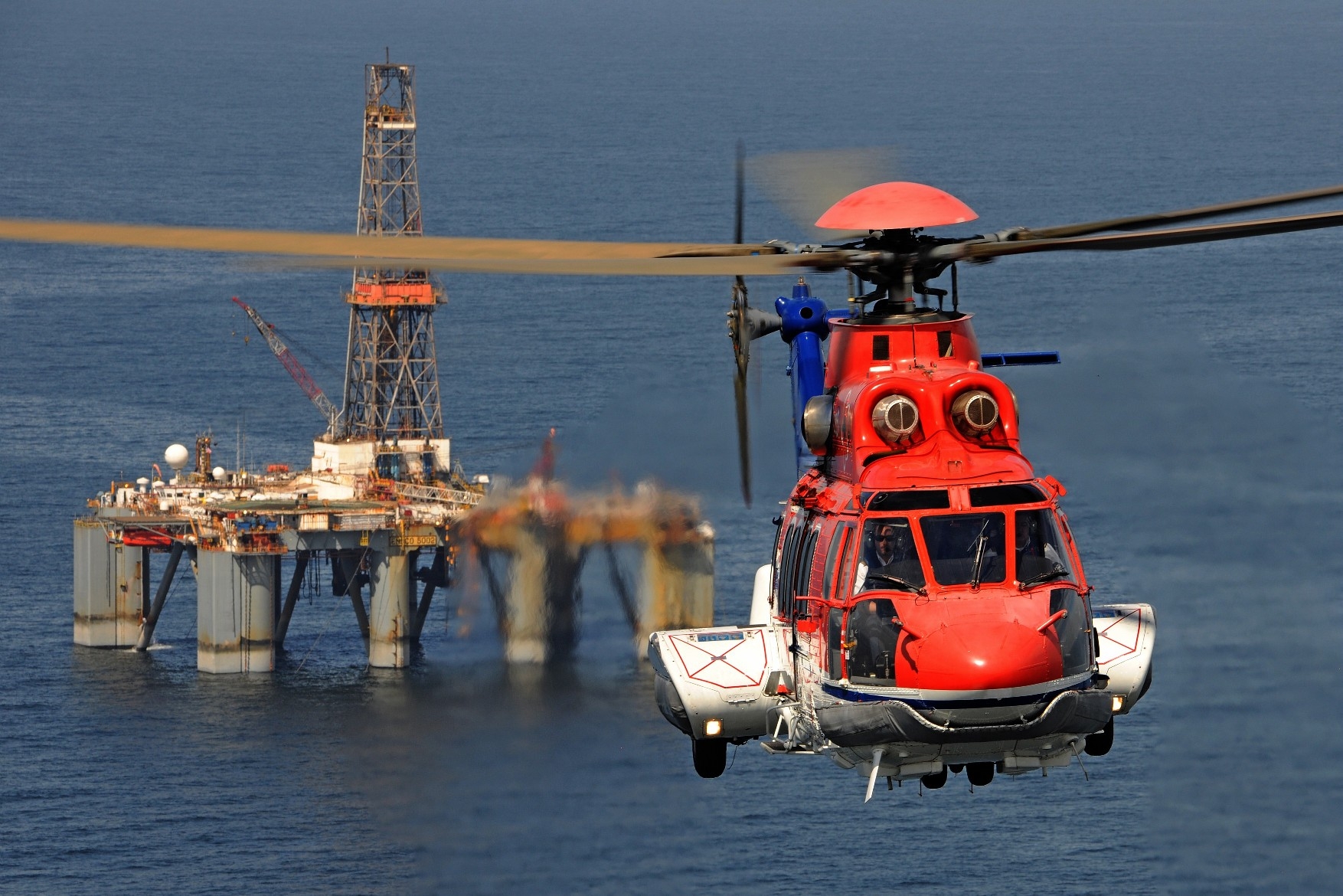
In late March the EASA issued a Notice of Proposed Amendment (NPA) aimed at improving certification rules for helicopters operating over water. At issue is the creation of realistic requirements about keeping the aircraft upright and easing passenger egress. Comments are due by June 23, and the agency expects to publish the new regulation in the third quarter.
According to the NPA, the existing CS-27 and CS-29 certification specifications contain “inadequacies.” In particular, the document points out, “Most fatalities occurred as a result of drowning because the occupants were unable either to escape rapidly from a capsized and flooded cabin, or to survive in the sea for sufficient time until rescue.”
The new ditching certification methodology sets a target probability of capsizing. The manufacturer must select sea conditions, such as a significant wave height of 6 meters (HS6, formerly referred to as SS6), and demonstrate that the helicopter resists capsizing for five minutes. For example, with serviceable floats, the probability must be demonstrated not to exceed 2.9 percent. With capsize mitigation, the required probability climbs to 29 percent.
For realism, models must be tested with irregular waves in a water tank. The model test facility must generate “long, non-repeating sequences of unidirectional (long-crested) irregular waves.” Model scale must be no smaller than one-fifteenth. Where it is likely that water would flood into the internal spaces after a ditching, the model should represent these spaces, as well as opened doors and windows.
Should the helicopter capsize before the passengers move to the emergency rafts, air should be available in the inverted cabin (the “air pocket” concept). Emergency breathing systems are not considered an alternative because of the variables in how passengers respond to an emergency.
Each emergency exit must admit a 19- by 26-inch ellipse. One pair of exits must be provided for every four passengers. The seat-to-exit ratio may be increased for exits large enough for the simultaneous egress of two passengers side by side.
Remote controls capable of deploying the life rafts must be located within easy reach of the survivors in the water or in the helicopter. Capsize mitigation is expected to provide the greatest safety improvement, saving an average of 2.3 lives per year.
Other proposed safety enhancements include automatic arming, disarming and deployment of the floats. A provision must be made for the rotorcraft to float with the largest flotation unit failed.
The jettisoning of fuel is no longer recommended. It would not add to the buoyancy of the helicopter but would likely raise the helicopter’s cg, according to the EASA.


Etihad Airways has signed an interline agreement with Nigerian airline Ibom Air, enabling travellers to connect seamlessly beyond Lagos and Accra to five destinations across Nigeria on a single t...
flyadeal, the fast-growing low-cost carrier of Saudia Group and one of the GCC's largest budget airlines, has expanded its presence in India with the launch of non-stop flights between Riyadh and...
Azerbaijan Airlines (AZAL), part of AZCON Holding, has taken delivery of another Airbus A321neo, increasing its fleet to 31 aircraft as the carrier continues its long-term modernisation strategy. The...
Tecnam has announced a landmark strategic partnership aimed at accelerating the growth of its P2012 aircraft family across the United States. Under the agreement, Finnoff has been appointed the exclus...

