



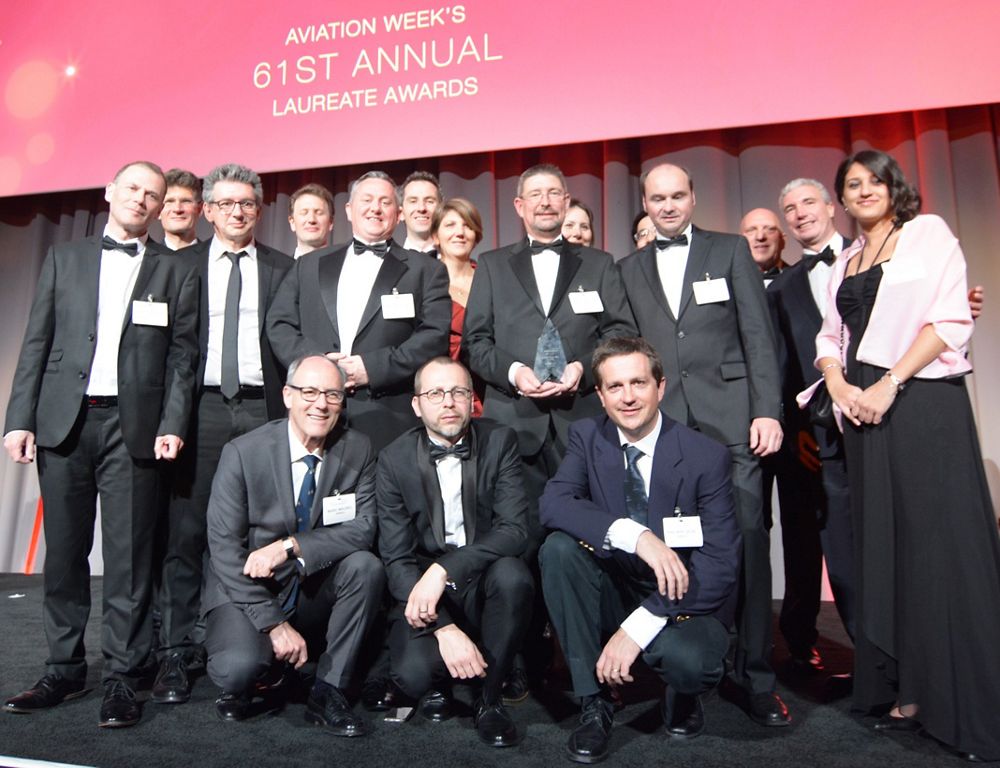
At a ceremony in Washington DC, Airbus’ BLADE demonstrator programme received the prestigious 2018 Aviation Week Laureates Award for Commercial, Technology. The panel of judges recognised the team for bringing to fruition the most extensive wing laminar flow demonstrator programme ever undertaken for commercial aviation. The BLADE project – which stands for “Breakthrough Laminar Aircraft Demonstrator in Europe” – is part of the EU-sponsored Clean Sky programme and is tasked with assessing the feasibility of introducing laminar flow wing technology on a large airliner. It aims to improve aviation’s ecological footprint, bringing with it a 50 percent reduction of wing friction and up to five percent lower CO2 emissions.
Axel Flaig, SVP of Research and Technology at Airbus said: “We are extremely honoured to receive Aviation Week’s Laureates award for Technology. I am also proud of what our BLADE teams in Airbus and in our partner companies in Clean Sky have achieved. Together we continue to lead the way for the efficient future of commercial aviation.”
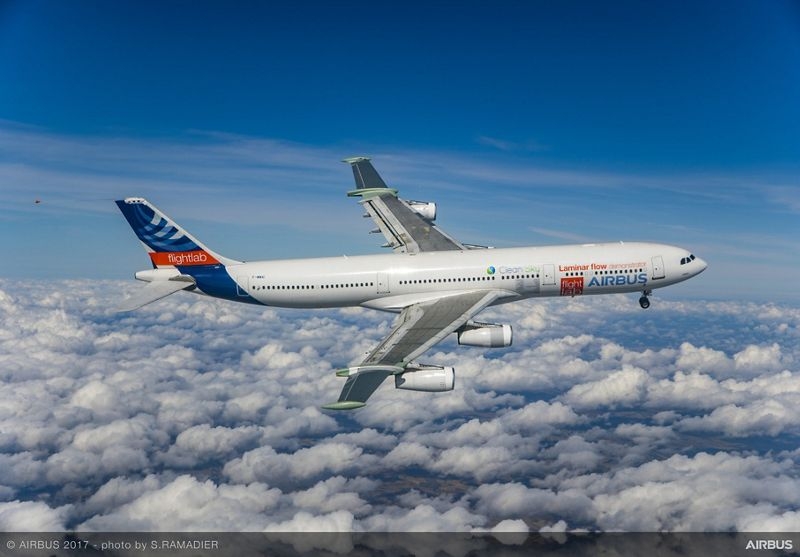
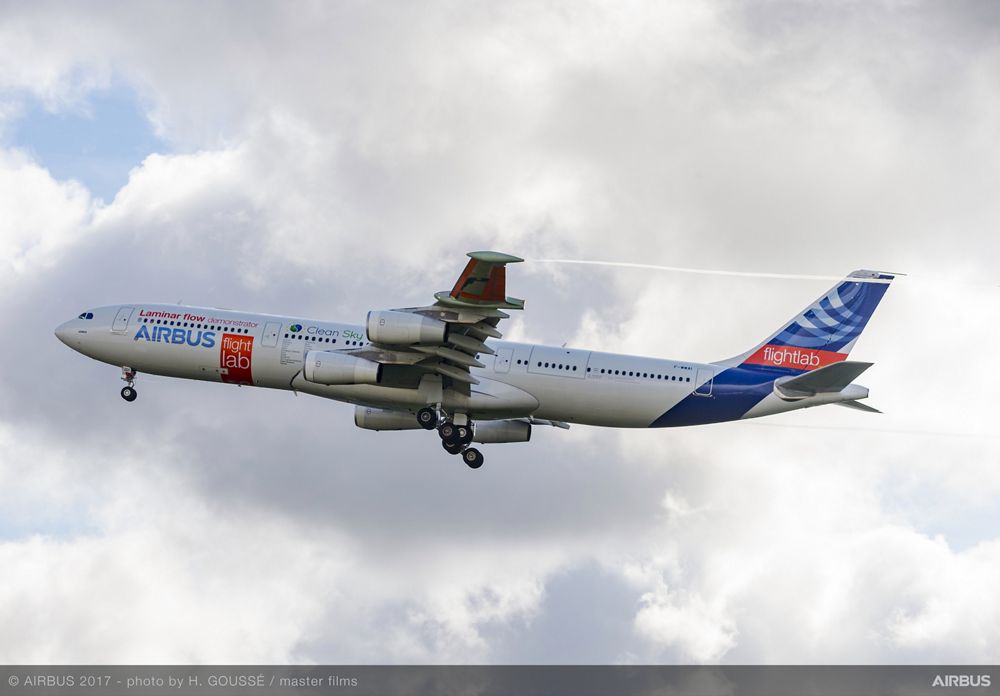
In September 2017 Airbus’ A340 laminar-flow “BLADE” test demonstrator aircraft (A340-300 MSN001) made its successful maiden flight and since then has been engaged in successful testing to explore the wing’s characteristics in flight. The aircraft, dubbed ‘Flight Lab,' is the first test aircraft in the world to combine a transonic laminar wing profile with a true internal primary structure.
On the outside, the aircraft is fitted with two representative transonic laminar outer-wings, while inside the cabin there is a highly complex specialist flight-test-instrumentation station. The extensive modifications to the A340-300 test-bed aircraft took place during the course of a 16-month working party in Tarbes, France, with the support of numerous industrial partners across Europe. In terms of the testing technology, notable ‘firsts’ included the use of infrared cameras to monitor the laminar flow transition points and the acoustic generator which measures the influence of acoustics on laminarity. Another first is the innovative reflectometry system which measures overall deformation in real-time during flight. To date, the Flight Lab has performed 66 flight hours.
Rising production rates and the launch of new aircraft programs are driving increased demand for manufacturing capacity across the aerospace industry. To support this growth, FACC plans to i...
UH-60 Black Hawk helicopters operated by Helicopter Alliance played a vital role in combating wildfires across Central and Southern Europe during the aerial firefighting season that has now concluded....
TRU Simulation + Training Inc. will showcase its Veris Virtual Reality Flight Training Device (FTD) for the Cessna Skyhawk at NBAA-BACE 2026, marking the simulator's first appearance at the indust...
British Airways has unveiled the next phase of its Heathrow lounge transformation programme, marking the beginning of a significant investment aimed at modernising every lounge across the airport in t...

