



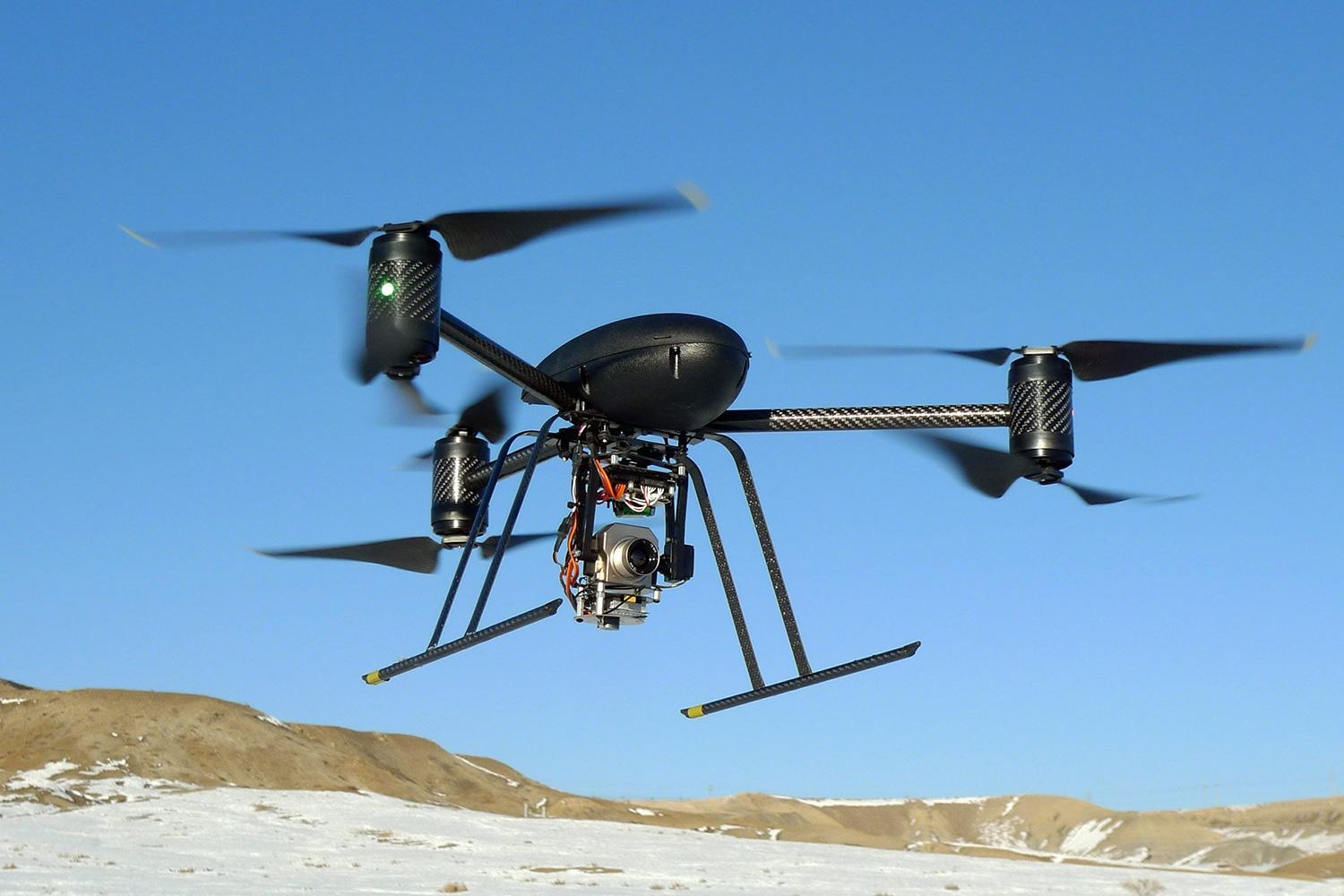
New risk-mitigating unmanned air vehicle regulations proposed by the European Aviation Safety Agency (EASA) will only serve to create a “grey area" in which users of smaller systems can carry out unregulated aerial work, an industry expert claims.
The most recent iteration of EASA’s revised UAV regulations – a technical opinion released on 18 December – offers what the agency describes as a proportionate approach to regulation. But Neil Williams, head of operations at Resource Group UAS, says that the risk-mitigating approach is making too many assumptions that small UAVs only pose a low level of risk.
The “open” category proposed by EASA would allow for users to operate UAVs weighing 25kg (55lb) or less for whatever purpose, so long as “safety is ensured through compliance with operational limitations, mass limitations as a proxy of energy, product safety requirements, and a minimum set of operational rules”.
Under current UK rules, for example, operators wishing to fly their UAVs commercially have to obtain permission from the Civil Aviation Authority. But if the new regulations are imposed, as long as the UAV weighs less than 25kg no official sanction is required.
Williams says that risk is about more than just size, weight and kinetic energy – the determining factors cited by EASA – and the operators should also be required to obtain other assurances.
“The implications of the open category is that you don’t need insurance or training,” Williams told Flightglobal at the SkyTech UAV show in London. “There is a whole area in the grey, but that is outside of the regulations.
“Just because you don’t need permission for the aerial work, it doesn’t make the risk any less. The mitigating factors don’t mitigate the risk…this will legitimise those that work on the fringes.”
Resource Group
Williams hopes that under the broader EASA guidance, the UK will be able to continue to enforce a stricter policy. “We hope in the UK that the CAA is going to take the EASA regulations and impose the same stringent safety standards,” he says.
The final ruling on the proposed changes is expected this year after a consultation period on the December document concludes.
Tecnam introduces the P2008JC NG to the United States market, bringing flight schools a certified, next-generation training aircraft designed to dramatically reduce operating costs while maximizing fl...
Boeing and Ethiopian Airlines have announced a new cargo fleet expansion agreement, with the African carrier ordering eight 777-8 Freighters and two additional 777 Freighters. The investment will enab...
Following the successful public flight demonstrations at Expo 2025 Osaka, SkyDrive announced plans to undertake a feasibility study exploring the conversion of Osaka City’s existi...
For the fourth consecutive year, Corsair is reaffirming its commitment to the fight against breast cancer by partnering with the association "Les Hôtesses de l’Air cont...

