



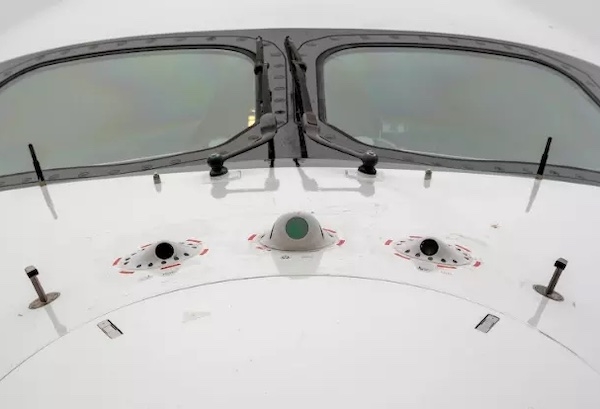
Airbus UpNext has started testing new, on ground and in-flight, pilot assistance technologies on an A350-1000 test aircraft. Known as DragonFly, the technologies being demonstrated include automated emergency diversion in cruise, automatic landing and taxi assistance and are aimed at evaluating the feasibility and pertinence of further exploring autonomous flight systems in support of safer and more efficient operations.
Isabelle Lacaze, Head of DragonFly demonstrator, Airbus UpNext commented: “These tests are one of several steps in the methodical research of technologies to further enhance operations and improve safety. Inspired by biomimicry, the systems being tested have been designed to identify features in the landscape that enable an aircraft to “see” and safely manoeuver autonomously within its surroundings, in the same way that dragonflies are known to have the ability to recognise landmarks.”
During the flight test campaign, the technologies were able to assist pilots in-flight, managing a simulated incapacitated crew member event, and during landing and taxiing operations. Taking into account external factors such as flight zones, terrain and weather conditions, the aircraft was able to generate a new flight trajectory plan and communicate with both Air Traffic Control and the airline Operations Control Centre.
Airbus UpNext has also explored features for taxi assistance, which were tested in real-time conditions at Toulouse-Blagnac Airport. The technology provides the crew with audio alerts in reaction to obstacles, assisted speed control, and guidance to the runway using a dedicated airport map.
In addition to these capabilities, Airbus UpNext is launching a project to prepare the next generation of computer vision-based algorithms to advance landing and taxi assistance.
These tests were made possible through cooperation with Airbus subsidiaries and external partners including Cobham, Collins Aerospace, Honeywell, Onera and Thales. DragonFly was partially funded by the French Civil Aviation Authority (DGAC) as part of the French Stimulus plan, which is part of the European Plan, Next Generation EU, and the France 2030 plan.
A new travel industry coalition is urging EU policymakers to adopt a balanced and proportionate approach to biometric travel, ensuring passengers can benefit from secure and seamless journeys while ma...
Emirates has officially inaugurated services to Helsinki, marking a significant milestone in connectivity between Finland and the United Arab Emirates. The new daily route is the only year-r...
Tecnam introduces the P2008JC NG to the United States market, bringing flight schools a certified, next-generation training aircraft designed to dramatically reduce operating costs while maximizing fl...
TRU Simulation + Training Inc. will showcase its Veris Virtual Reality Flight Training Device (FTD) for the Cessna Skyhawk at NBAA-BACE 2026, marking the simulator's first appearance at the indust...

