



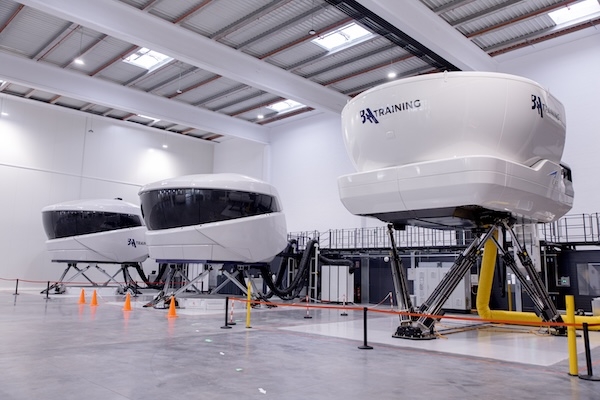
Saudi Arabia aviation sector is entering a new phase of expansion as airlines grow their fleets and strengthen regional connectivity. Much of this development is driven by narrowbody aircraft orders, which are expected to increase the demand for qualified pilots across the region. According to the Boeing Pilot and Technician Outlook, the Middle East will require more than 58,000 new pilots over the next two decades as airlines expand their fleets and networks. A significant share of this demand is expected to come from Saudi Arabia as the country accelerates the development of its aviation sector.
Global pilot demand is also rising across major aviation markets. CAE’s Aviation Talent Forecast indicates that North America may require more than 130,000 pilots by 2032, while the Asia-Pacific region could need more than 250,000. This simultaneous expansion across major aviation markets highlights the growing pressure on pilot training capacity worldwide.
Martynas Mazeika, Chief Growth Officer at BAA Training commented: “Saudi Arabia’s aviation sector is expanding rapidly, and with new aircraft entering fleets every year, the need for qualified pilots is growing just as quickly. To keep pace with this growth, airlines need scalable training solutions. Partnering with global training providers enables airlines to access the necessary simulator capacity, training expertise, and flexible programs required to support long-term operational expansion. The Middle East is not the only region expanding fleets at scale,” Mazeika said. “Airlines in North America, India, and Southeast Asia are also increasing aircraft orders, which means demand for pilot training is rising everywhere. Access to global training infrastructure is becoming an important factor in how airlines manage fleet growth."
Based on Boeing’s projection and typical flight training requirements of around 200 hours per pilot, training more than 58,000 new pilots in the Middle East would require approximately 11.6 million flight training hours. For comparison, a typical flight academy operating around ten training aircraft may generate approximately 12,000–15,000 flight training hours annually, illustrating how significant capacity expansion is required to meet global pilot demand.

In addition, pilot preparation will require around 1.1 million training hours on full flight simulators. With each simulator typically providing around 5,000–6,000 training hours per year, this further highlights the scale of infrastructure needed to support the industry’s growth. Simulator availability presents a similar challenge. Full flight simulators typically provide around 5,000–6,000 training hours per year, meaning large-scale pilot training demand requires substantial simulator infrastructure and global training networks.
According to Mazeika, the rapid expansion of airline fleets means training infrastructure must scale at a similar pace. As Saudi airlines continue expanding their narrowbody fleets, demand for type rating and recurrent training is expected to grow significantly. These programs allow pilots to transition to new aircraft types and maintain operational readiness as airline networks expand.
BAA Training supports airlines through a global pilot training ecosystem that includes type rating, recurrent training, and simulator-based programs, delivered through its international network of training centers and partners. As aviation growth accelerates across Saudi Arabia and the wider Middle East, scalable training capacity and international partnerships will play a critical role in ensuring pilot supply keeps pace with fleet expansion.

Azerbaijan Airlines (AZAL), part of AZCON Holding, has taken delivery of another Airbus A321neo, increasing its fleet to 31 aircraft as the carrier continues its long-term modernisation strategy. The...
On October 1, ATP Flight School will welcome nearly 500 aspiring airline pilots to its Arlington, Texas training center for an exclusive career expo featuring 20 airline and industry partners. Attende...
FLYONE Armenia, the country’s leading airline, has finalised an order with Airbus for two A321neo aircraft, marking a significant milestone in its fleet modernisation strategy. The agreement was...
Following the successful public flight demonstrations at Expo 2025 Osaka, SkyDrive announced plans to undertake a feasibility study exploring the conversion of Osaka City’s existi...

