



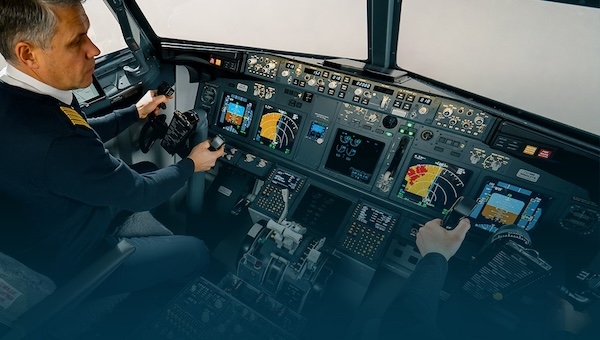
In the crucial transition from training cockpit to commercial flight deck, a set of skills stands out as the true differentiator between well-prepared pilots and those who merely hold a type rating: the disciplined, confident application of Standard Operating Procedures. While modern simulators can replicate the flight experience and technical knowledge can be memorized, it is procedural fluency—under pressure and in coordination with others—that ultimately determines a pilot’s readiness for airline operations. Across Europe, training organizations have identified that cadets face significant challenges not in the technical realm, but in adherence to SOP.
IATA Annual Safety Report 2024 revealed that 28% of flight path deviations and procedural incidents in CAT operations stem from non-adherence to SOPs or failures in crew coordination. EASA’s 2024 Safety Review also highlighted that errors in automation management and CRM disconnects are recurring deficiencies in new First Officers during initial line training evaluations, underscoring the need for procedural readiness before day one on the line. That’s why the most effective type rating programs treat SOPs not merely as checklists to learn, but almost as a language to master. The goal is not just memory, but instinctive reaction, creating a mental model so solid that cadets can act reliably even in critical, high-pressure situations.
Marcos Giner, Deputy Chief Flight Instructor for Type Rating at BAA Training, says that even cadets who “fly the plane correctly” often name procedural workload as their biggest hurdle.“When you’re in a full flight simulator, it becomes evident that flying is the easiest part; the challenging aspect is mastering all the other critical tasks. When the dynamics of the cockpit intensify, the real challenge lies in the mental capacity to execute procedures reflexively, without losing situational awareness. What distinguishes confident first officers from the rest? It’s their ability to perform flows and checklists under pressure, every time. That procedural fluency is not acquired solely through checklists. It is strengthened through structured practice, scenario immersion, and real-world experience. Without continuous exposure to SOP-centered training environments, cadets risk entering final simulator sessions still struggling to internalize timing, terminology, and flow logic. These habits may carry over into their real flights. “Training environments must go beyond showing cadets what SOPs look like. They need to let them live them. This means training in flow discipline, cockpit logic, and decision pacing, not just regulatory compliance. As cockpits become increasingly automated, the expectation isn’t doing less but doing the right thing at the right time. SOPs are essential for maintaining that timing precision. The confidence to act decisively under pressure is cultivated through constant exposure to the same procedural logic they will face in the line.”
The gap in procedural knowledge can lead to serious consequences. In Line-Oriented Flight Training environments and real-world operations, failures in SOPs can result in confusion during approach, omissions in checklists during non-normal situations, and delayed responses to ATC. Bridging this gap requires more than simply accumulating simulator hours; it necessitates deliberate procedural immersion required from day one of type rating, complemented by strategic reinforcement, explains Giner.
This involves integrating SOP-driven briefings and flows during ground school and FTD sessions, not just in final simulations. Additionally, it’s crucial to incorporate multi-crew flows and closed-loop communications into LOFT and non-normal situation drills.
While SOPs are designed to simplify and standardize tasks in the cockpit, they are not inherently intuitive, especially for cadets obtaining their type rating for the first time. In contrast to the more fluid dynamics of earlier training phases, SOPs require fixed sequencing, precise phraseology, and clear coordination. Giner emphasizes that for many cadets, this shift toward structured, multi-crew operations represents a significant challenge in both mindset and workload management.
SOP proficiency remains one of the clearest indicators of whether a cadet is ready for airline operations. It reflects their ability to manage complexity, adapt under pressure, and work in sync with their crew. Developing this skill requires more than exposure—it demands consistency, context, and guidance from instructors who understand both the procedures and the environment they support. For training organizations, the goal isn’t to produce compliant pilots, but capable ones; professionals who view SOPs not as a formality, but as the operational backbone of every flight.
Capital Jets, an aircraft management company and 14 CFR Part 135 aircraft operator, has expanded its operations with the addition of a Learjet 60XR. Based at Fort Lauderdale-Hollywood Internation...
Honda Aircraft Company announced first delivery of HondaJet Elite II in Brazil, marking a significant milestone in the company’s continued commitment to general aviation in South America. The de...
U.S. Federal Aviation Administration has granted Boeing an amended type certificate for the new 737-7 airplane, clearing it for commercial service. The smallest...
Avelo Airlines reached a major milestone, flying its 10 millionth Customer just five years after redefining affordable air travel in as America's most convenient airline. Since launching on April...

