



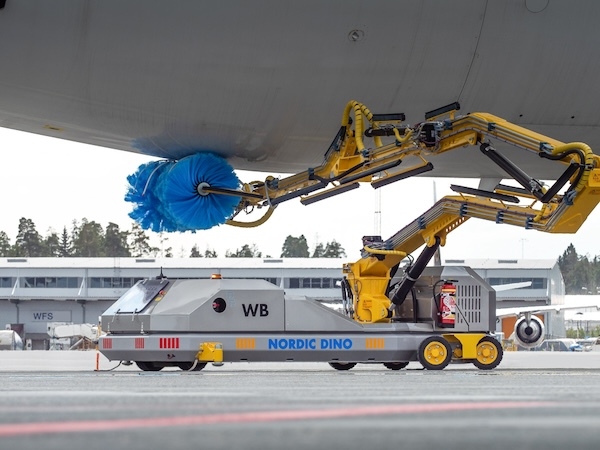
As the aviation industry goes through digitalization processes every year, the most recent advancements are being applied to different fields of this area. Computer-based intelligence systems help to handle large measures of information and upgrade automatization, which makes workforce more effective. One way to improve fleet maintenance is automated aircraft exterior cleaning, which has many benefits.
Keeping the aircraft fuselage clean is very important, because well-maintained aircraft can help to reduce fuel consumption, operational costs, and improve sustainability practices. Automated cleaning machines are designed to work effectively, reducing the number of staff needed, the time spent on the procedure, and increasing safety. They help to eliminate long hours of manual labor-intensive washing procedures. It is especially important for ground staff working at great heights. The aviation industry is also focusing on reducing negative impact on the environment. One of the goals is to minimize water usage. Aircraft washing robots can impressively reduce the amount of water used for cleaning the outside of aircraft.
According to Veronika Andrianovaite, CCO of Nordic Dino Robotics AB, the use of modern aircraft washing robots, such as the Nordic Dino, can help to reduce aircraft exterior cleaning times by up to 80%. For wide-body airliners like the Airbus A330 and the Boeing 777, the time spent on exterior cleaning can be dropped from 6 to 2 hours. Evaluating the effectiveness of narrow-body jets like the Boeing 737, the required aircraft on ground time is reduced from 3 to 1 hour. This is an impressive result that affects how long aircraft spend on the ground.
Veronika Andrianovaite commented: “More than 30% of water is saved when compared to the traditional methods. A single cleaning session could consume up to 11,300 liters of water. But the innovative automated washing systems are design to reduce water consumption by more than 80%, with each wash using approximately 1,800 litres of water.While the initial investment in automated systems can be substantial, the long-term benefits - both financial and environmental - far outweigh the initial costs."
Over the past few years, it has become more important to keep the exterior of an aircraft clean and well-maintained. Using an automated cleaning solution ensures that the cleaning is always done properly. This means that a company can optimize aircraft paint life and reduce corrosion. The automated solutions have had a significant impact on the field of aircraft maintenance. Now, using robots to clean aircraft exterior companies can lessen the cost of man-labor work.
A new travel industry coalition is urging EU policymakers to adopt a balanced and proportionate approach to biometric travel, ensuring passengers can benefit from secure and seamless journeys while ma...
Dutch flag carrier KLM, part of the Air France-KLM Group, has welcomed its first Airbus A350-900, marking a significant step in the airline’s long-haul fleet modernization strategy. The arrival...
TRU Simulation + Training Inc. will showcase its Veris Virtual Reality Flight Training Device (FTD) for the Cessna Skyhawk at NBAA-BACE 2026, marking the simulator's first appearance at the indust...
UH-60 Black Hawk helicopters operated by Helicopter Alliance played a vital role in combating wildfires across Central and Southern Europe during the aerial firefighting season that has now concluded....

