



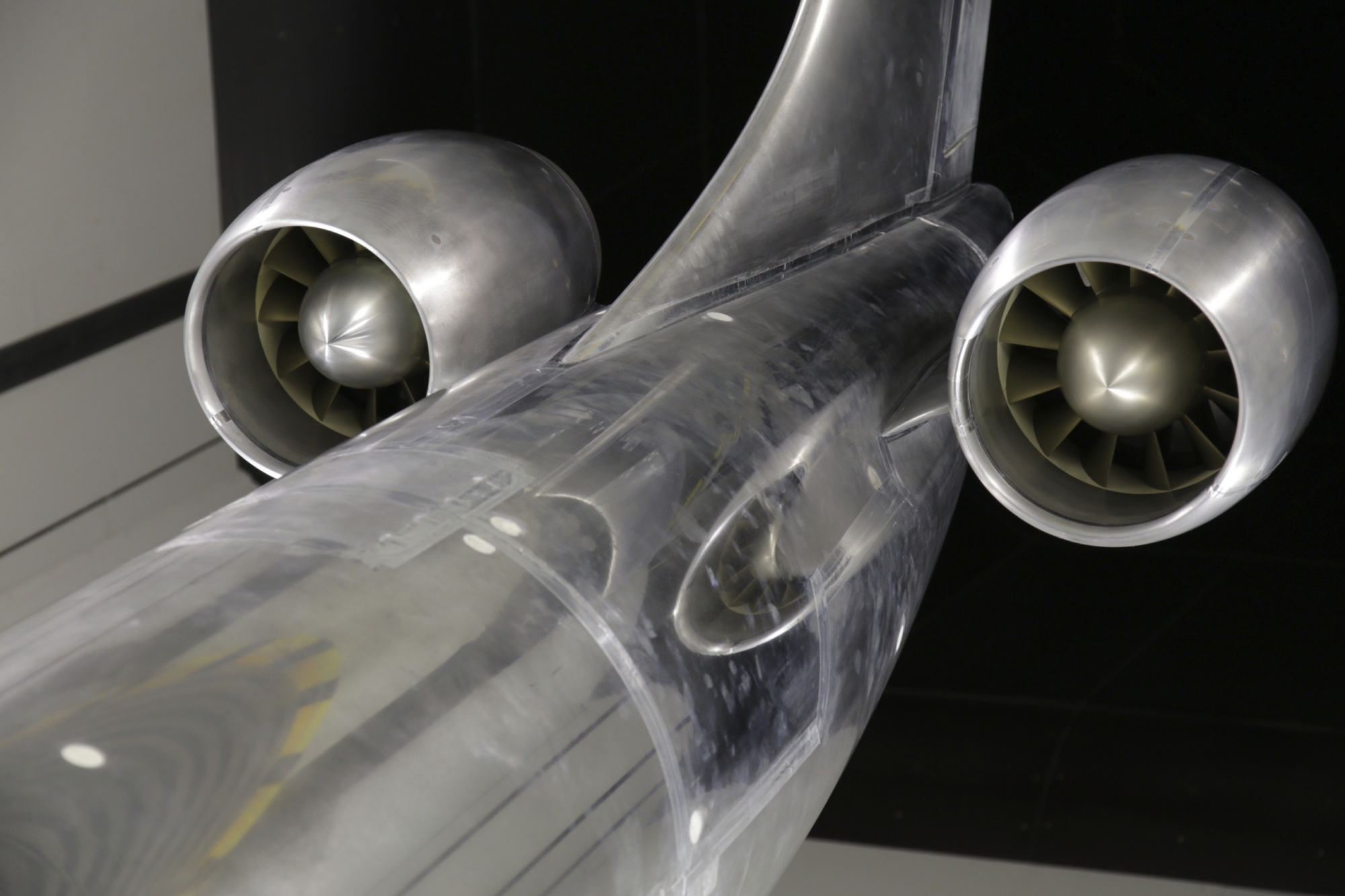
The ESICAPIA and LOSITA consortia, with RUAG Aviation as a member, have successfully developed and tested wind tunnel models for simulating emerging turbofan and propeller technologies. These research projects were performed in the frame of the Green Regional Aircraft ITD (GRA) of the European Clean Sky aeronautical research programs. Data generated from these research projects will be applied to reducing the ecological footprint of future aircraft.
The Clean Sky GRA programs ESICAPIA (Experimental Subsonic Investigation of a Complete Aircraft Propulsion system Installation and Architecture power plant optimisation) and LOSITA (LOw Subsonic Investigation of a large complete Turboprop Aircraft) projects aim to optimise the configuration, performance and alternative propulsion systems on two different experimental regional aircraft. RUAG Aviation is a member of two international consortia led by IBK Innovation of Germany, which were commissioned to develop models of the two GRA configurations and investigate their performance in tests at the RUAG Large Wind Tunnel in Emmen (LWTE). One model was equipped with propellers while the other featured a simulation of a modern turbofan system. Both systems were developed in-house by the RUAG Aviation department of aerodynamics.
“Simulations using propellers are standard for testing in the large wind tunnel,” says Andreas Hauser, Manager Department of Aerodynamics, RUAG Aviation. “However, the turbofan simulators developed for the ESICAPIA model were a first in our facility. The challenges this presented were an opportunity for the aerodynamics team to demonstrate their expertise and their reputation for finding innovative solutions.”

The RUAG engineers developed the power simulation systems building on existing RUAG hydraulic engine technology and know-how, and integrated them into the Green Regional Aircraft wind tunnel models. During subsequent wind tunnel testing, the propulsors performed sound. The Green Regional Aircraft model tests proved a complete success and generated a valuable aerodynamic database, including power effects and acoustic data. The experience gained from developing the turbofan simulator for ESICAPIA is already supporting the development of a new, smaller and higher performance turbofan simulator. Also, the RUAG wind tunnel testing portfolio has been expanded, adding new capabilities to the benefit of customers.
“Ultimately, this type of research brings benefits to everyone – in the form of a cleaner environment and a sustainable future for aviation,” says Andreas Hauser.
Emirates has officially inaugurated services to Helsinki, marking a significant milestone in connectivity between Finland and the United Arab Emirates. The new daily route is the only year-r...
Following the successful public flight demonstrations at Expo 2025 Osaka, SkyDrive announced plans to undertake a feasibility study exploring the conversion of Osaka City’s existi...
PAL-V has signed a Memorandum of Understanding with AVION, a specialist in advanced flight training devices, and FLYVE, a developer of FlyDrive ecosystems for professional and government operator...
UH-60 Black Hawk helicopters operated by Helicopter Alliance played a vital role in combating wildfires across Central and Southern Europe during the aerial firefighting season that has now concluded....

