



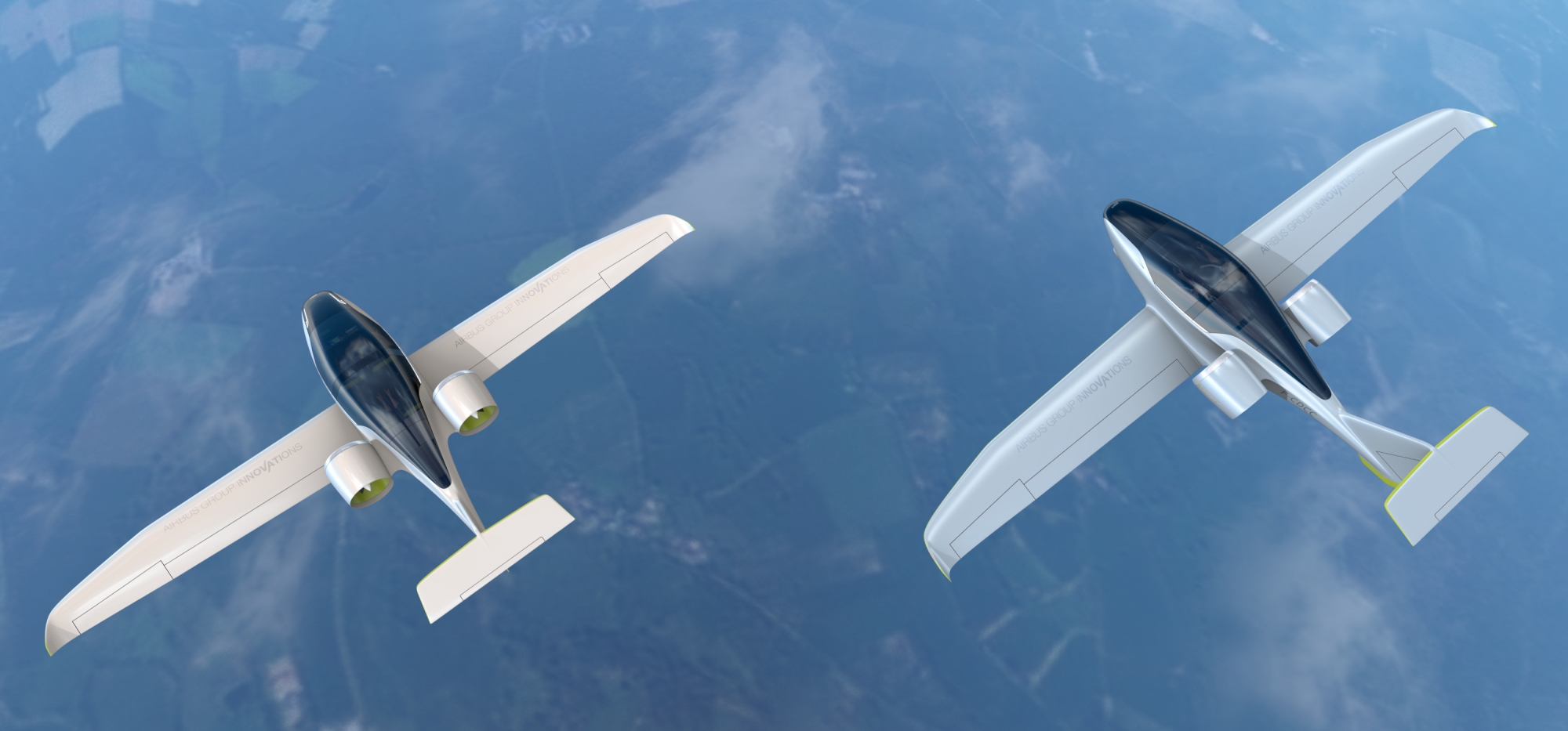
Citing the rapid progress in electric propulsion, Airbus has dropped plans to produce the E-Fan family of light aircraft and is working instead on a larger and more powerful aircraft, dubbed E-Fan X, that could fly within three years.
Originally Airbus planned to produce the two-seat E-Fan 2.0 trainer and four-seat E-Fan 4.0 tourer with electric-driven ducted fans. The company in 2014-15 announced that an Airbus subsidiary, Voltair, would work with French general-aviation manufacturer Daher-Socata to produce the E-Fan 2.0 at a new factory in south-west France, with deliveries to begin by early 2018.
But electric aircraft propulsion is developing rapidly. The E-Fan 1.0 technology demonstrator, first flown in March 2014, has two 30-kW (40-shp) electric motors driving dual ducted fans. In July 2016, motor developer Siemens flew an Extra 300 aerobatic aircraft with a 300-kW electric drive.

“That is a 10-times increase in our ability to deliver power in flight,” says Stefan Schaffrath, head of media relations for Airbus Commercial Aircraft. “Three years ago we kicked off the E-fan. Today we are evaluating if we could fly an E-Fan X in the next three years that would be 2 megawatts—another order of magnitude change.”
Airbus and Siemens signed a collaborative agreement in April 2016 to demonstrate the feasibility of hybrid-electric propulsion by 2020, as a precursor to developing a commercial aircraft with fewer than 100 seats that could enter service by 2030.
“For a single-aisle-scale aircraft with hybrid-electric propulsion we’re talking 20-40 megawatts of power,” Schaffrath says. “Whether this will take another three years to happen we don’t know, but for sure we need to build the 2-megawatt demonstrator and see how the technology turns out.”
Since launching the E-Fan 1.0, and flying it across the English Channel on battery power in July 2015, Airbus has upgraded the demonstrator to hybrid-electric power. The company has also launched two projects to demonstrate electric vertical-takeoff-and-landing urban air vehicles: the single-seat Vanaha at the end of this year and four-seat CityAirbus at the end of 2018.
“If we are reconsidering E-Fan now it is because we are shooting—as a leading aircraft manufacturer—for something more ambitious and timely, and the current E-Fan project would not have been able to scale up to this ambition,” Schaffrath says.
E-Fan X “is about preparing our future, coming out with the right answers at the right time. We are setting ourselves an ambition that goes well beyond E-Fan,” he says. “It is entirely conceivable that we could have hybrid electric single-aisle aircraft, we don’t know when though.”
flyadeal, the fast-growing low-cost carrier of Saudia Group and one of the GCC's largest budget airlines, has expanded its presence in India with the launch of non-stop flights between Riyadh and...
For the fourth consecutive year, Corsair is reaffirming its commitment to the fight against breast cancer by partnering with the association "Les Hôtesses de l’Air cont...
PAL-V has signed a Memorandum of Understanding with AVION, a specialist in advanced flight training devices, and FLYVE, a developer of FlyDrive ecosystems for professional and government operator...
Etihad Airways has signed an interline agreement with Nigerian airline Ibom Air, enabling travellers to connect seamlessly beyond Lagos and Accra to five destinations across Nigeria on a single t...

