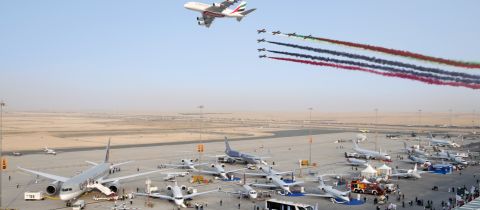
Dubai’s last major air show in 2013 set a high bar for order expectations. In the span of less than three hours on the first day of the show, Emirates, Etihad and Qatar Airways signed orders and commitments for a total of 225 777X aircraft.Etihad Airways added another order for 30 787-10s. Not least, Flydubai committed to buy up 100 737 Max and 11 737NGs. If any region could repeat such an epic haul of orders, it would be the Middle East.
But Boeing’s chief salesman John Wojick is careful not to raise expectations. Boeing enters the Dubai air show with no new products to launch, quite unlike the 2013 event with the formal unveiling of the 777X family and the recent launch of the 787-10 only five months earlier.
The Middle Eastern carriers are always capable of pulling last-minute surprises, but regional executives are also being careful about managing expectations. The most visible competition in the region – pitting the 787-10 against the Airbus A350-900 for an Emirates Airlines deal – will not be decided until next year.
The Dubai air show is never quiet on the orders front, but this year it will certainly be quieter than 2013.
The focus for Boeing sales team is instead on emphasizing the region’s long-term potential, despite a host of political, economic and security problems. After all, this is a region that invented a new business model, connecting passengers flying between Asia and Europe and Asia and North America, amidst a series of regional conflicts and wildly fluctuating fuel prices over the past three decades.
The 2013 show was the launchpad for the 777X, netting the airframer 225 orders
Boeing
“The whole marketplace that they’ve created is really quite phenomenal, connecting people from all over the world, creating traffic patterns that I don’t think anybody else has envisioned,” Wojick says.
The two years since the last Dubai air show have been typically eventful. Since 2013, the region has witnessed the rise of the Islamic State, a stand-off with Iran over nuclear weapons, a sharp reduction in oil prices and recent calls by US airlines to counter the rapid growth of Middle Eastern airlines with new restrictions on Open Skies trade deals.
In spite of all, Boeing’s optimism about the region’s future continues to grow. The company’s latest 20-year market forecast anticipates the region will buy 3,180 new aircraft worth $730 billion over the next 20 years. The Middle East region already has 1,052 aircraft on firm order already, including regional jets, according to Flightglobal’s Ascend Fleets online database.
The region’s role as an intercontinental connector is reflected in the fleet spit shown Boeing’s commercial market outlook, with 1,400 single-aisles along with 880 medium widebodies, 560 small widebodies and 300 very large aircraft.
The plunging price of oil over the past year has taken a toll on the oil and gas industry, but the effects on the airline industry have been more positive. Wojick suggests this is true even in the Middle East, despite economic systems heavily dependent on oil exports.
“It’s been a very positive thing for the airline industry. When the airlines are profitable they look at opportunities to expand new routes and travel opportunities for their customers,” Wojick says.
Archived
10 years ago
TRU Simulation + Training Inc. will showcase its Veris Virtual Reality Flight Training Device (FTD) for the Cessna Skyhawk at NBAA-BACE 2026, marking the simulator's first appearance at the indust...
Dutch flag carrier KLM, part of the Air France-KLM Group, has welcomed its first Airbus A350-900, marking a significant step in the airline’s long-haul fleet modernization strategy. The arrival...
Tecnam introduces the P2008JC NG to the United States market, bringing flight schools a certified, next-generation training aircraft designed to dramatically reduce operating costs while maximizing fl...
Following the successful public flight demonstrations at Expo 2025 Osaka, SkyDrive announced plans to undertake a feasibility study exploring the conversion of Osaka City’s existi...