



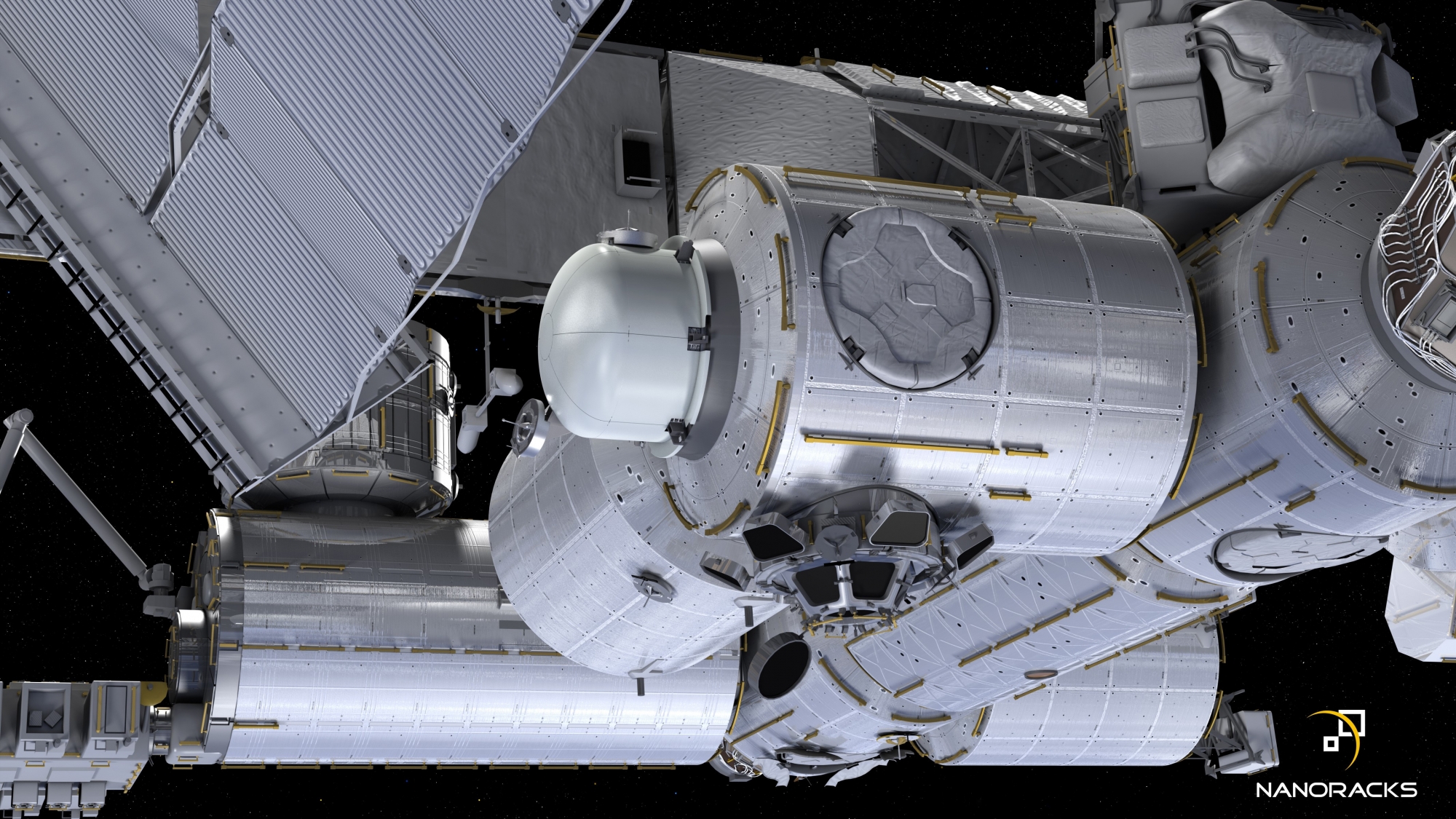
Boeing and NanoRacks LLC will partner to develop the first privately funded commercial airlock, enabling the United States to potentially triple the number of small satellites it can deploy from the International Space Station (ISS) during a single airlock cycle.
The NanoRacks Airlock Module, which is planned to be attached to the ISS U.S. segment in 2019, will increase the capability of transferring equipment, payloads and deployable satellites from inside the ISS to outside, significantly increasing the utilization of ISS.
ISS prime contractor Boeing will build and install the airlock’s Passive Common Berthing Mechanism, the hardware used to connect the pressurized modules of the ISS.
Currently, the United States utilizes the airlock on the ISS Japanese Experiment Module. This new commercial airlock will be larger and more robust to better handle increasing market requirements.
“The installation of NanoRacks’ commercial airlock will help us keep up with demand,” said Boeing International Space Station program manager Mark Mulqueen. “This is a big step in facilitating commercial business on the ISS.”
“We are entering a new chapter in the space station program where the private sector is taking on more responsibilities. We see this as only the beginning and are delighted to team with our friends at Boeing,” said Jeffrey Manber, CEO of NanoRacks.
UH-60 Black Hawk helicopters operated by Helicopter Alliance played a vital role in combating wildfires across Central and Southern Europe during the aerial firefighting season that has now concluded....
The International Aircraft Dealers Association (IADA) has released its 2026-2027 Current Market Portrait & Forecast, offering an in-depth analysis of the global preowned business av...
flyadeal, the fast-growing low-cost carrier of Saudia Group and one of the GCC's largest budget airlines, has expanded its presence in India with the launch of non-stop flights between Riyadh and...
Etihad Airways has signed an interline agreement with Nigerian airline Ibom Air, enabling travellers to connect seamlessly beyond Lagos and Accra to five destinations across Nigeria on a single t...

