



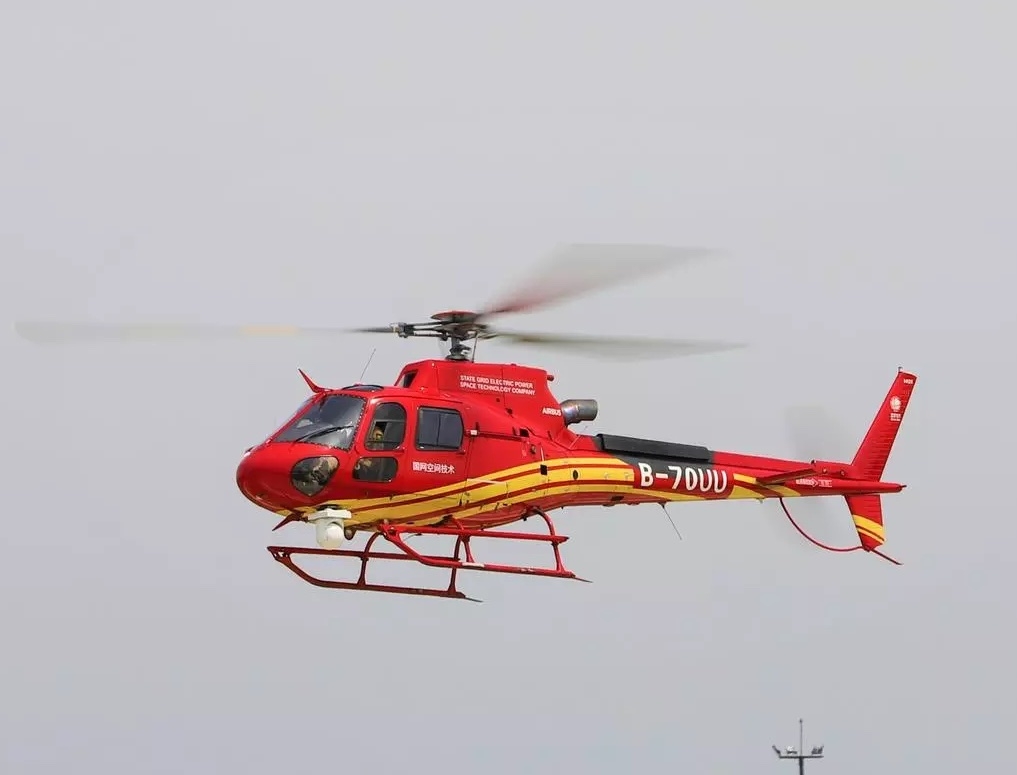
An Airbus H125 helicopter belonging to State Grid Space Technology has successfully used sustainable aviation fuel for a flight demonstration at Hefei Shiwan Airport in China. This is the first helicopter flight using SAF in China, marking an important milestone in the development of low-carbon aviation in Chinese aeronautics. The H125, which is powered by a Safran ARRIEL 2D engine, flew at a hybrid ratio of 40% of SAF provided by China National Aviation Fuel.
Du Guihe, Board Chairman of SGST, commented: “The success of this flight is of great significance to stimulate SAF promotion and its application. It makes a positive impact on the enterprises which are proactive on low-carbon general aviation development. It is also a breakthrough for China's general aviation industry to better implement carbon emission reduction in the post-pandemic era.”
Colin James, Managing Director of Airbus Helicopters in China, said: “I am proud that our customer, SGST, launched this noteworthy SAF flight with the H125, marking Airbus Helicopters as the first helicopter manufacturer to perform a SAF flight in China. In an effort to reduce carbon emissions and set a standard within the industry, we are working with our partners to use locally-produced SAF.”
Marc Delort, General Manager of Safran Helicopter Engines China, stated: “The takeoff of SAF-powered helicopters in China once again illustrates the achievements of Safran Helicopter Engines in terms of innovation and SAF application. We have a full engine portfolio certified to operate on up to 50% of SAF. We would like to recall hereby our willingness to play an active role in China by providing propulsion solutions. With our main partners SGST and Airbus Helicopters, we will make further contributions to promote our joint vision of green aviation.”
This milestone comes just a few weeks after Airbus and the CNAF signed a Memorandum of Understanding (MoU) to intensify Chinese-European cooperation on the production, competitive application and common standards formulation for SAF during the French state visit to China. SAF is an alternative aviation fuel made from feedstock ranging from used fat, oil and grease, to municipal and forestry waste. Compared to fossil jet fuel, SAF has been shown to result in up to 80 percent reduction in CO2 across the entire SAF lifecycle. This cooperation agreement between Airbus and CNAF aims to optimise the SAF supply chain by diversifying the sources and enhancing SAF production towards the ambition of using 10 percent SAF by 2030.
The use of SAF is one of Airbus Helicopters' levers to contribute to ATAG’s Scenario 3 outlook to NetZero in 2050. One of the main benefits of using this new fuel is that it allows the aircraft to minimise its carbon footprint while maintaining the same flight performance. Today, all Airbus helicopters are capable of flying with a blend of up to 50% of SAF mixed with kerosene, with the aim of having the aircraft operate with 100% SAF by 2030.
The International Aircraft Dealers Association (IADA) has released its 2026-2027 Current Market Portrait & Forecast, offering an in-depth analysis of the global preowned business av...
A new travel industry coalition is urging EU policymakers to adopt a balanced and proportionate approach to biometric travel, ensuring passengers can benefit from secure and seamless journeys while ma...
Emirates has officially inaugurated services to Helsinki, marking a significant milestone in connectivity between Finland and the United Arab Emirates. The new daily route is the only year-r...
Dutch flag carrier KLM, part of the Air France-KLM Group, has welcomed its first Airbus A350-900, marking a significant step in the airline’s long-haul fleet modernization strategy. The arrival...

