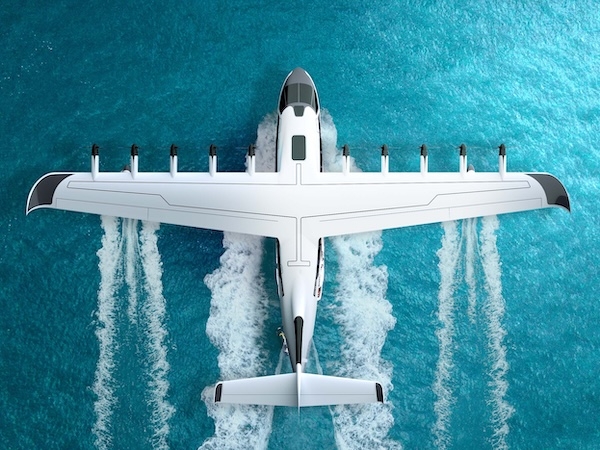
JEKTA has begun flight trials with a 1:9 scaled prototype of the PHA-ZE 100 amphibious flying boat. Using a distributed electric powerplant to draw energy from onboard batteries, testing will verify the aerodynamic and hydrodynamic configurations of the production aircraft. The remotely controlled model will generate data representative of the full-size aircraft to verify and confirm the results of computational modeling already completed.
Following on from digital simulations, real-world testing is expected to deliver valuable data on how the aircraft performs during landing, taxiing, and taking off from water. To optimize the full potential of flight testing, the 1:9 aerodynamic prototype will be used for initial verification work. Two amphibious flying boats are currently being modified as proof-of-concept aircraft and will be used subsequently to validate the combined digital and real-world data. The purpose-built ultralight test beds will further derisk the program and inform detailed design modifications ahead of full-scale prototype construction.
JEKTA CEO and co-founder George Alafinov commented: “After extensive virtual trials and simulations, our engineers are excited to begin flying the 1:9 prototype. The flight testing marks an important milestone on our journey to bring next-generation electric amphibious aircraft to operators globally. Flying the scaled models and modified ultralights moves JEKTA one step closer to flying a full-scale prototype of the PHA-ZE 100, confirming that we’re on track with plans to introduce our new aircraft to the global air transport network in 2030. Testing presents an excellent opportunity for us to showcase progress to date and the future potential of the PHA-ZE 100 to investors and customers.”
Flight testing of the 1:9 prototype is taking place at an undisclosed location and is scheduled to be completed in September. JEKTA’s team has already gained extensive experience with amphibious aircraft design through the production of more than 90 single-engine ultralight and twin-engine flying boats. Alafinov adds, “We are drawing on years of amphibious aircraft experience by basing our full-size test beds on ultralight aircraft of our design. That experience means our customers can be confident that the PHA-ZE 100 is built on solid foundations by engineers who understand how to trial the real-world application of amphibious aircraft design successfully.”
JEKTA PHA-ZE 100 already has more than USD$1 billion of forward commitments from customers and is scheduled to begin production at its Payerne facility in 2028/29.
Archived
1 year ago
Bombardier marked the 40th anniversary of its industry-leading Smart Services cost-per-flight-hour programs, which today support more than 1,500 enrolled aircraft and account for over 11 mil...
Electra has successfully completed the takeoff and landing of its hybrid-electric Ultra Short aircraft at Downtown Skyport in Lower Manhattan, in what is believed to be the first time a fixed-wing air...
MTU Maintenance and Garuda Indonesia have entered into a three-year agreement for the maintenance, repair and overhaul of the airline’s GE90-115B engines, which power its fleet of eight Boeing 7...
Affinity Aviation Group (AAG), a leading provider of business aircraft sales, acquisitions and charter solutions, has entered into a strategic collaboration with Austria’s AeronautX, reinforcing...