



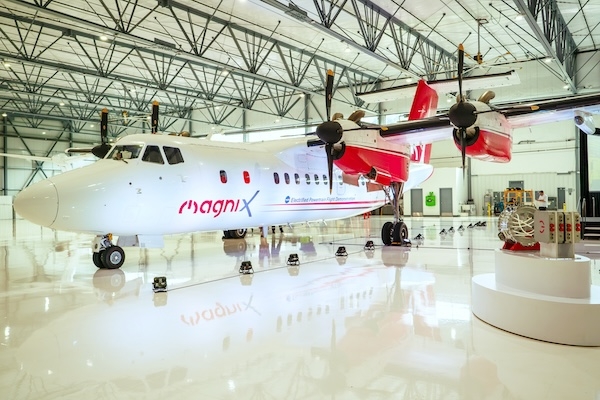
magniX launched the next phase in the NASAElectrified Powertrain Flight Demonstration program (EPFD) as it unveiled the De Havilland DHC-7 aircraft that will be retrofitted with magniX’s industry-leading electric powertrains.The aircraft, which was revealed at a ceremony in Seattle, Washington, featured the logos of magniX, NASA, and the provider of the Dash 7, Air Tindi. The unveiling is the latest development in the program that has achieved substantial milestones in 2024:
February: magniX successfully achieved the Preliminary Design Review (PDR), establishing the design for the retrofit of the Dash 7 with magniX’s electric powertrains
April: a magni650 electric engine completed the first phase of testing at the NASA Electric Aircraft Testbed (NEAT) facility in Sandusky, Ohio, confirming the magni650’s exceptional capabilities at altitudes of up to 27,500 feet
June: baseline flight tests for the Dash 7 concluded, generating important performance data before it is modified with magniX’s technology
Accelerating the shift to sustainable aviation
In the next phase of EPFD, one of the aircraft’s four turbine engines will be replaced with a magniX electric powertrain, with test flights planned for 2026. The following stage will see a second turbine engine substituted with another magniX powertrain. This configuration is expected to reduce fuel consumption by up to 40%.
Ben Loxton, magniX’s VP of EPFD and Electric Storage Systems commented: “magniX and NASA are demonstrating that sustainable flight can be realized with technology that we have available today. The EPFD program is accelerating its readiness for entry into service, prioritizing safety and the highest standards of performance.”
Reed Macdonald, CEO of magniX said: “As EPFD makes outstanding progress, magniX and NASA are proving the feasibility of electric propulsion for commercial flight. Integrating our game-changing electric powertrains into a regional airliner such as the Dash 7 represents a major step forward in bringing electric solutions into the business of aviation.”
Robert A. Pearce, associate administrator for NASA’s Aeronautics Research Mission Directorate stated: “We at NASA are excited about EPFD’s potential to make aviation sustainable and more accessible to more U.S. communities. Hybrid electric propulsion on a megawatt scale accelerates U.S. progress toward its goal of net-zero greenhouse gas emissions by 2050, benefitting all who rely on air transportation every day.”

As the first aviation company in Kansas to introduce state-registered youth apprenticeships through the Kansas Office of Apprenticeships, Textron Aviation is taking a leading role in workforce develop...
Boeing and Ethiopian Airlines have announced a new cargo fleet expansion agreement, with the African carrier ordering eight 777-8 Freighters and two additional 777 Freighters. The investment will enab...
Rising production rates and the launch of new aircraft programs are driving increased demand for manufacturing capacity across the aerospace industry. To support this growth, FACC plans to i...
flyadeal, the fast-growing low-cost carrier of Saudia Group and one of the GCC's largest budget airlines, has expanded its presence in India with the launch of non-stop flights between Riyadh and...

