



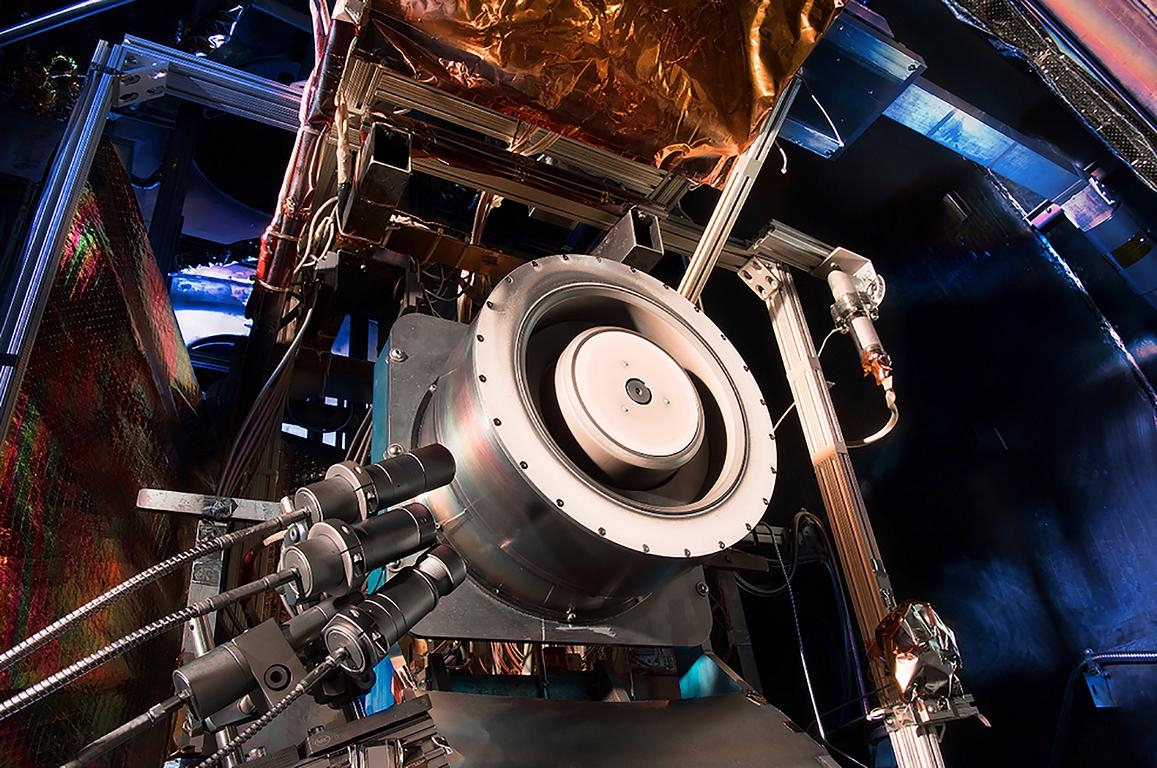
It wants super-efficient power for missions headed to asteroids and Mars.
In an effort to design more efficient spacecraft engines, NASA granted rocket manufacturer Aerojet Rocketdyne a three-year contract to develop advanced “solar electric propulsion” engines that could assist in deep space travel. The engines have the potential to be ten times more efficient than chemical engines, and have twice the thrust of the electric engines that are utilized now. They’ll help us travel further in our solar system and could even help send humans to Mars.
Solar electric engines aren’t a new idea. Electric engines have been in the works since the 1950’s, and since then NASA has pursued efficiency, working towards progressive solar electric technology.
Solar electric presently powers crafts exploring deep space as well as the International Space Station. NASA recently sent the record-breaking Dawn spacecraft to orbit both asteroid Vesta and dwarf planet Ceres between 2011 and 2015, and the probe was powered by a solar array. The International Space Station is currently powered by solar arrays that supply even more energy than the station requires at once.

As we probe deeper into our solar system, solar electric engines can help us get farther for less money since they provide thrust over a lengthy period of time. The recent contract signals NASA’s commitment to the efficient engines beneficial for deep space travel.
Depending on how well the new research goes, Aerojet Rocketdyne could deliver four of the super efficient units to fly in space. NASA has stated they’re working to snare an asteroid to orbit the moon during the next decade, and they would use the solar electric engines to do so.
NASA’s Space Technology Mission Directorate associate administrator Steve Jurczyk said, “Development of this technology will advance our future in-space transportation capability for a variety of NASA deep space human and robotic exploration missions, as well as private commercial space missions.”
Etihad Airways has signed an interline agreement with Nigerian airline Ibom Air, enabling travellers to connect seamlessly beyond Lagos and Accra to five destinations across Nigeria on a single t...
Skandia’s King Air 200/300 soundproofing kit has received final approval from Brazil’s ANAC, opening the door for wider adoption among operators across the country. The certifica...
British Airways has unveiled the next phase of its Heathrow lounge transformation programme, marking the beginning of a significant investment aimed at modernising every lounge across the airport in t...
Emirates has officially inaugurated services to Helsinki, marking a significant milestone in connectivity between Finland and the United Arab Emirates. The new daily route is the only year-r...

