



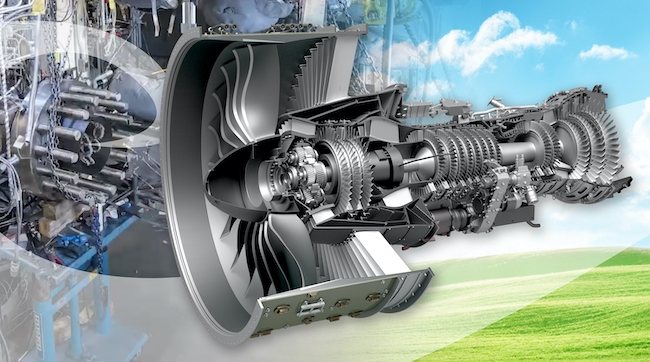
Pratt & Whitney was selected by NASA to develop advanced engine technologies to reduce fuel consumption and emissions for next generation single-aisle aircraft. The Hybrid Thermally Efficient Core (HyTEC) project is part of NASA’s Sustainable Flight National Partnership, which will enable breakthrough innovations in support of the aviation industry’s goal to significantly reduce CO2 emissions by 2050.
Through HyTEC Pratt & Whitney will demonstrate the compatibility of sustainable aviation fuels (SAFs) with advanced combustors for small core engines. The project includes developing and testing the fuel and air mixers for optimal efficiency and then measuring the emissions and noise emitted using Jet A fuel and high blends of SAF.
Geoff Hunt, senior vice president, Engineering and Technology, at Pratt & Whitney, commented: “Aviation is moving toward a greener, cleaner future. Our partnership with NASA on HyTEC will allow Pratt & Whitney engineers to explore new technologies that will help make future aircraft propulsion systems even more sustainable. The use of SAF blends is increasing today to 50% and will reach 100% within a few years. This is a key pathway to achieving the industry’s goal of net zero carbon emissions by 2050. Our engine technology continues to improve in efficiency – flying further, with more power and on less fuel. This award helps Pratt & Whitney continue to ensure we develop advanced propulsion technologies that will be ready for the next-generation aircraft in the next decade.”
In October 2021, NASA awarded Pratt & Whitney two contracts under the HyTEC project to develop technologies for a high-pressure turbine that will include next generation ceramic matrix composites (CMC) materials capable of operating at higher temperatures than current CMCs, environmental barrier coatings, and advanced cooling and aerodynamic approaches that will enable new component designs and efficiencies.

In the second phase of the HyTEC project, Pratt & Whitney plans to demonstrate a technology-infused core comprised of a high-pressure compressor, high-pressure turbine, and combustor leveraging successes from the first generation GTF core. This phase is planned for 2024 through 2027 and will provide critical learning and increased maturation of the core prior to the next program launch.
Collaboration between Pratt & Whitney and NASA has already led to several key advances in sustainable propulsion technologies in recent decades, including low-pressure-ratio fans, low-emissions combustors, and high-performance hot section. These collaborations have a vital role to play towards developing and maturing technologies that will ultimately help make aviation more sustainable environmentally and economically.
Etihad Airways has signed an interline agreement with Nigerian airline Ibom Air, enabling travellers to connect seamlessly beyond Lagos and Accra to five destinations across Nigeria on a single t...
The International Aircraft Dealers Association (IADA) has released its 2026-2027 Current Market Portrait & Forecast, offering an in-depth analysis of the global preowned business av...
Dutch flag carrier KLM, part of the Air France-KLM Group, has welcomed its first Airbus A350-900, marking a significant step in the airline’s long-haul fleet modernization strategy. The arrival...
For the fourth consecutive year, Corsair is reaffirming its commitment to the fight against breast cancer by partnering with the association "Les Hôtesses de l’Air cont...

