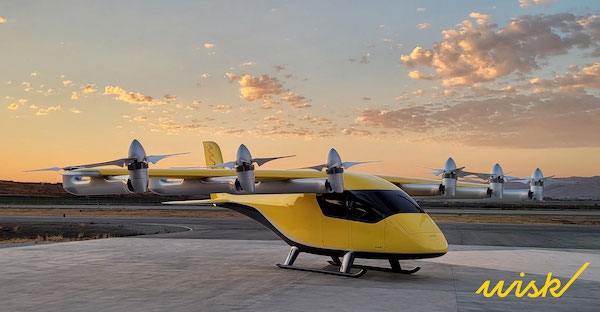
Wisk Aero has selected Safran Electronics & Defense to supply SkyNaute inertial navigation systems for its Generation 6 autonomous, all-electric air taxi. Based on a disruptive and mature Safran-patented technology, the HRG Crystal Hemispherical Resonator Gyroscope, SkyNaute combines high performance and reliability, in the most compact form factor on the market. With very high levels of integrity and accuracy, even when GNSS signals are absent or jammed, SkyNaute hybrid inertial navigation system is designed to ensure the precise trajectory of the Generation 6 self-flying air taxi, during all flight phases, leading to an optimum flight safety.
Brian Yutko, CEO of Wisk, commented: “Wisk is building and certifying the first commercial autonomous aircraft, and the high integrity avionics and software stack that enables it. We are thrilled to be deploying Safran’s HRG technology as part of this. Our initial testing has confirmed the SkyNaute technology is a step change in navigation system performance and we look forward to deploying it on our 6th Generation air taxi.”
Franck Saudo, Chief Executive Officer, Safran Electronics & Defense, said: “We are very excited to work with Wisk Aero. We share the same commitments to pushing the boundaries of innovation while maintaining the highest level of safety.By leveraging Safran Electronics & Defense's cutting-edge inertial technology with SkyNaute™, we will provide Wisk with the most advanced solution for their autonomous aircraft.”

Safran Electronics & Defense is a long-standing leader in inertial navigation, with over 70 years of expertise in all underlying technologies. Fully industrialized, the HRG technology has already demonstrated its capabilities for the most demanding civil and military applications in all environments: land, air, sea and space.
Wisk’s Generation 6 aircraft is the world’s first autonomous, all-electric, four-seat eVTOL air taxi designed for passenger transport. Through a multifaceted approach — including autonomous flight with human oversight, a simplified design with fewer moving parts, fully redundant systems, and no single point of failure — Wisk’s aircraft is being designed to meet or exceed the highest possible aviation standard.
Since 2010, Wisk has developed multiple generations of aircraft and conducted more than 1600+ test flights. In 2023, Wisk became a fully-owned subsidiary of Boeing. While Wisk operates separately, the relationship provides development, testing, certification collaboration, and more between Wisk and Boeing.

Archived
3 years ago
A new travel industry coalition is urging EU policymakers to adopt a balanced and proportionate approach to biometric travel, ensuring passengers can benefit from secure and seamless journeys while ma...
For the fourth consecutive year, Corsair is reaffirming its commitment to the fight against breast cancer by partnering with the association "Les Hôtesses de l’Air cont...
As the first aviation company in Kansas to introduce state-registered youth apprenticeships through the Kansas Office of Apprenticeships, Textron Aviation is taking a leading role in workforce develop...
Rising production rates and the launch of new aircraft programs are driving increased demand for manufacturing capacity across the aerospace industry. To support this growth, FACC plans to i...