



Wisk Aero has entered into a new five-year Non-Reimbursable Space Act Agreement with NASA. This agreement focuses on critical research led by NASA’s Air Traffic Management Exploration project aimed at advancing autonomous aircraft under Instrument Flight Rules in the National Airspace System. As an autonomous eVTOL air taxi, Wisk is working with NASA to help define the industry standards that will support the introduction of autonomous aircraft in the NAS. This research will help regulators consider future flight procedures and capabilities to accelerate U.S. leadership in automated aviation technology.
Since 2020, Wisk and NASA have collaborated to develop key guidance for the safe integration of autonomous aircraft systems for UAM operations under an initial Space Act Agreement. This expanded collaboration will focus on research using advanced simulation and Live Virtual Constructive flight environments that combine live flights with a simulated airspace to enable researchers to assess future operations. This work is instrumental in informing the development of:
Erick Corona, Director of Airspace Operational Integration at Wisk commented: “This new, long-term agreement with NASA is a significant step forward for Wisk and the broader UAM industry. With NASA’s simulation and LVC capabilities, we can accelerate the development of our Gen 6 autonomous systems to safely and efficiently integrate into the U.S. NAS before the end of the decade.”
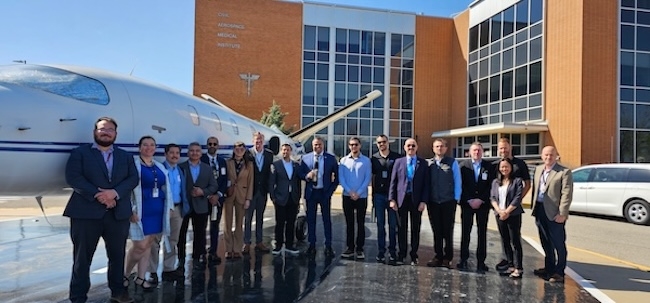
To initiate early work under this annex, the Wisk and NASA teams held a workshop last month at the Mike Monroney Aeronautical Center in Oklahoma City. The teams discussed how instrument flight procedures and advanced technologies would work hand-in-hand to enable safe and efficient autonomous passenger flight. Over the course of the five-year agreement, Wisk and NASA will continue to conduct the research testing necessary to inform requirements and procedures for future operations.
PAL-V has signed a Memorandum of Understanding with AVION, a specialist in advanced flight training devices, and FLYVE, a developer of FlyDrive ecosystems for professional and government operator...
For the fourth consecutive year, Corsair is reaffirming its commitment to the fight against breast cancer by partnering with the association "Les Hôtesses de l’Air cont...
UH-60 Black Hawk helicopters operated by Helicopter Alliance played a vital role in combating wildfires across Central and Southern Europe during the aerial firefighting season that has now concluded....
Tecnam has announced a landmark strategic partnership aimed at accelerating the growth of its P2012 aircraft family across the United States. Under the agreement, Finnoff has been appointed the exclus...

