




Lufthansa Group is accelerating the modernization of its fleet. New, highly cost and fuel-efficient aircraft are replacing older types on short, medium and long-haul routes. As a result, the Executive Board of Deutsche Lufthansa AG decided to buy ten long-haul aircraft: five Airbus A350-900s and five Boeing B787-9. The Supervisory Board approved the purchase today. These aircraft will be operated by Lufthansa Airline and strengthen the 5-star premium offer of the Group’s core brand.
As part of the long-standing fleet renewal program, a total of 175 new aircraft will be delivered to Lufthansa Group airlines this decade.
Carsten Spohr, Chairman of the Executive Board and CEO of Deutsche Lufthansa AG, said:
"Even in these challenging times, we are continuing to invest in a more modern, more efficient and a lower emission Lufthansa Group fleet. At the same time, we are pushing ahead with the modernization of our long-haul fleet even faster than planned prior to the coronavirus pandemic due to anticyclical opportunities. The new aircraft are the most modern of their kind. We want to further expand our global leadership role, among other things, with cutting-edge premium products and a state-of-the-art fleet – especially because we have a responsibility to the environment."
Airbus A350-900
The five newly ordered Airbus A350-900s will be delivered in 2027 and 2028. This brings the total number of firm orders for the A350-900 to 45 aircraft. The Lufthansa Group also agreed with Airbus on a restructuring of planned deliveries.
In addition to renewing its long-haul fleet, Lufthansa is also focusing on the latest technology, maximum efficiency and the highest level of customer comfort on short-haul routes. In the current year alone, Lufthansa will take delivery of a new, fuel-efficient Airbus A320 family aircraft for short- and medium-haul routes on average every month. Delivery of a further 107 Airbus A320 Family aircraft is planned until 2027.
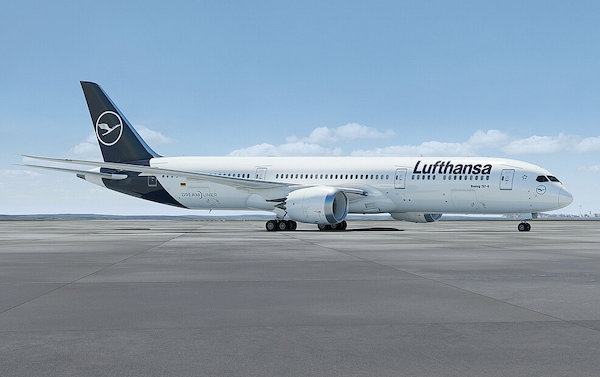
Boeing 787-9
The first Boeing 787-9 are scheduled to fly for Lufthansa as early as next winter, with others to follow in the first half of 2022. Today's decision brings the total number of firm orders for Boeing 787-9s and Boeing 777-9s to 45 aircraft.
Due to the dramatic impact of the coronavirus pandemic on global aviation, aircraft that had been ordered by some airlines could not be delivered in the past twelve months. Lufthansa held talks with Boeing and found a way to buy five 787-9 that were already manufactured. At the same time, the Group reached an agreement with Boeing on a restructured delivery plan.
With the Airbus A350-900, the Boeing 777-9 and the Boeing 787-9, the Luft-hansa Group will operate the most fuel-efficient long-haul aircraft in terms of kerosene consumption per passenger and 100 kilometers flown. On average, the new aircraft will only consume approximately 2.5 liters of kerosene per passenger and 100 kilometers flown. This is about 30 percent less than many current as well as previously operated long-haul aircraft models and will have an equally positive impact on the Group’s carbon footprint
The investment in new aircraft is in line with the framework agreement between the Economic Stabilization Fund of the Federal Republic of Germany (WSF) and Deutsche Lufthansa AG. The investments are also in line with the Group's policy of limiting annual capital expenditures to the level of depreciation and amortization and strictly focusing on increasing company value
Current plans call for an initial fleet reduction, while at the same time extensively modernizing it in the future. The Boeing 787-9 and Airbus A350-900 will essentially replace the four-engine A340 long-haul aircraft as part of this process. Plans call for reducing the number of four-engine aircraft in the Lufthansa Group long-haul fleet to less than 15 percent by the middle of this decade; before the crisis, the share was around 50 percent. The aircraft purchases are accelerating the reduction of fleet complexity for more efficiency. The new, fuel-efficient aircraft will reduce operating costs by around 15 percent compared with the models they replace.
Bristow Group Inc., in partnership with Electra, Avinor and the Norwegian Civil Aviation Authority (CAA Norway), will undertake a series of demonstration flights across five locations in Norway using...
Samson Sky has enlisted renowned Italian automotive designer Luigi Memola to develop the interior design of its Switchblade Flying Car, bringing world-class automotive styling expertise to the roadabl...
Cirrus Aircraft is celebrating the 10th anniversary of its Collier Trophy-winning Vision Jet at NBAA-BACE 2026, marking a decade of innovation that has continuously advanced the world&r...
Daher Aircraft will present its TBM and Kodiak aircraft families at next week’s NBAA Business Aviation Convention & Exhibition (NBAA-BACE), showcasing how their combination of performance, e...

