



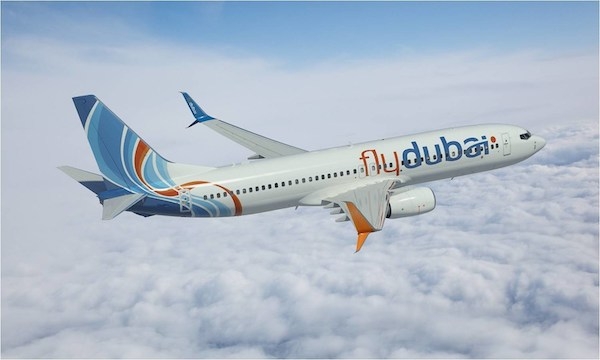
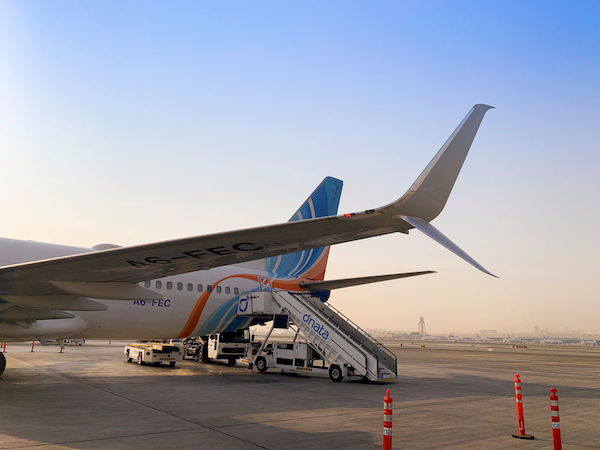
Dubai-based flydubai is the first operator in the Middle East of its latest Split Scimitar Winglet technology. flydubai completed the first installation of the Split Scimitar Winglets on one of its Next-Generation Boeing 737-800 aircraft late last month at Joramco in Amman, Jordan. flydubai intends to install the Split Scimitar Winglets on a majority of its Next-Generation Boeing 737-800 aircraft by October 2020. Aviation Partners' latest Winglet design, the Split Scimitar Winglet, uses existing Blended Winglet technology but adds new aerodynamic Scimitar tips and a large ventral strake, further increasing the efficiency of the airplane.
"The Split Scimitar Winglet System aligns with flydubai's commitment: focusing on maximum efficiency of its fleet through sustainable solutions without impacting its aircraft availability," says Aviation Partners Boeing director of sales and marketing Christopher Stafford. "After a thorough evaluation of the Split Scimitar Winglet System, flydubai clearly recognized the enhanced performance and improvement to the operating economics of the Next-Generation Boeing 737-800 fleet."
Commenting on the introduction of the Split Scimitar Winglets, Ghaith Al Ghaith, Chief Executive Officer at flydubai, said: "The Split Scimitar Winglets have been in use since 2013 and we have seen many airlines around the world benefit from this technology both financially and environmentally. Choosing to invest in the latest technologies and to retrofit our fleet is part of fulfilling our commitment to cost and operational efficiency and passing on the savings to our passengers."
The Split Scimitar Winglet modification reduces Boeing Next-Generation 737 block fuel consumption for flydubai by an additional 1.5% over the Blended Winglets. The Split Scimitar Winglet System will reduce flydubai's annual fuel requirements by more than 200,000 liters per aircraft, and their carbon dioxide emissions by over 510 tonnes per aircraft per year.
Since launching the Next-Generation Boeing 737 Split Scimitar Winglet program APB has taken orders and options for 2,300 systems, and over 1,200 aircraft are now operating with the technology.
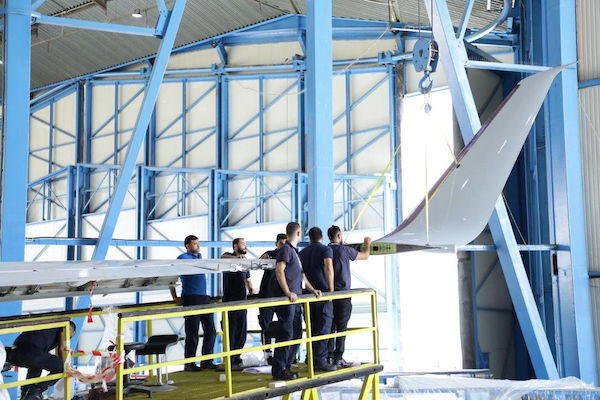
The flydubai retrofit programme is scheduled to coincide with the aircraft’s scheduled base maintenance checks. By installing the winglets during the periods of scheduled maintenance, the airline minimises the effect on aircraft availability and any disruption to its flying schedule.
When retrofitting an aircraft, the current Blended Winglets on the Next-Generation Boeing 737-800 aircraft are removed and a new aerodynamically shaped “Scimitar” winglet tip caps and a ventral strake are installed. The process takes up to four days per aircraft and the airline expects the programme to provide a return on investment in under three years.
flydubai operates a single fleet-type of Boeing 737 aircraft consisting of 43 Next-Generation Boeing 737-800 and 14 Boeing 737 MAX 8 and 9s, which continue to be grounded following the safety recommendation issued in March 2019.
Gogo has unveiled its long-term vision for the Galileo connectivity platform at NBAA-BACE 2026, outlining a roadmap designed to enhance and protect customer investments well into the mid-2030s and bey...
Cirrus Aircraft is celebrating the 10th anniversary of its Collier Trophy-winning Vision Jet at NBAA-BACE 2026, marking a decade of innovation that has continuously advanced the world&r...
The Tennessee Valley Authority is demonstrating the real-world value of the Tecnam P2012 Special Mission Platform (SMP), which has become a vital tool for monitoring and maintaining its...
Turkish Airlines has taken another major step in its fleet expansion strategy with the signing of a Memorandum of Understanding with CFM International for more than 300 LEAP-1B engines and a long-term...

