



Happy customers alone don’t make airlines profitable, the International Air Transport Association (IATA) has found.
During a special session on Cabin Trends during the recent IATA World Passenger Summit in Hamburg, Tim Jasper Schaff, Director Marketing and Sales for IATA, presented the results of a comprehensive passenger study, but could not prove any correlation between making passengers happy and keeping airlines in business.
The study looked at 75 individual passenger experience factors which influence passenger satisfaction, from crew, to services and products. It was based on a survey of 60,000 passengers at 30 major participating airlines in 39 hubs around the world, separated by market and by business or leisure passengers.
“Initially we thought this presentation may also include a link between passenger satisfaction and commercial success,” Schaff told attendees. “There is academic evidence, across various industries, where they found strong links that if your customers are happy, you’ll be successful. You can measure that, by share price and so on.”
Based on the assumption that the same would prove true for airlines, the group studied financial data from its chief economist, looking at a span of four years of data, to identify the degree to which satisfied passengers made airlines profitable.
“We saw there is no link,” Schaaf said. “We saw that airlines from certain regions were commercially more successful, where maybe, based on passenger satisfaction, on average, they may not have been so successful. But there were other things happening in the region, such as consolidation, that probably allowed them to be commercially successful. We couldn’t really prove that if your customers are happy you’ll be a commercially successfully airline.”
Part of the problem for airlines is that the bar is always being raised.
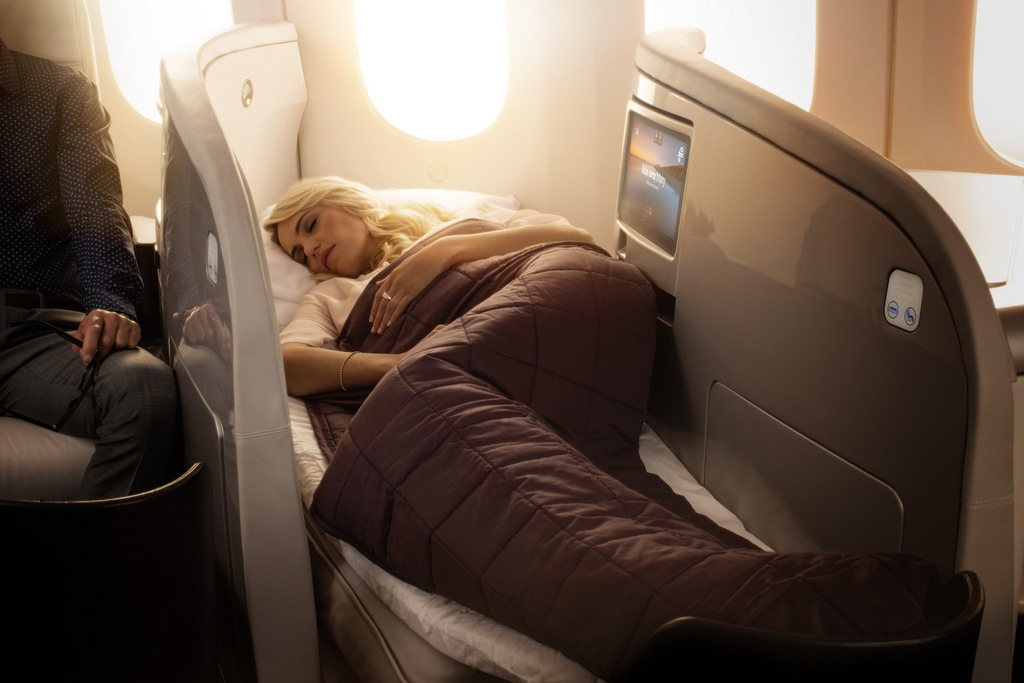
“The significance of [cabin] attributes moves all the time,” Schaaf said. “For example, flat bed in business class. If you had that 10 or 15 years ago, it was clearly causing passenger satisfaction and people were happy. Now they take it for granted. If you don’t have it, people will be unhappy. It has moved from driving passenger satisfaction to driving passenger dissatisfaction. It’s a given. Probably we will see similar effects for onboard Wi-Fi, etc. When it’s innovation, when it’s first introduced, it’s a wow factor. Then it’s taken for granted, and if you don’t offer it you’re in trouble. Some people would call it the spiral of spoilage going on in our industry.”
Because airlines must invest millions in cabin products–and have a long lead-time from development to delivery–news that all that work and investment may not result in happy customers is bad enough. Learning that it cannot then be correlated to financial success would appear to justify the strategy of ultra-low-cost and low-cost carriers, which design their cabin products around optimum equipment utilization.
Indeed, many full-service airlines have balanced their investments in cabin product for customer appeal, with strategies that yield better profits. Slimline seats which weigh less and use less fuel, increased cabin density in the Economy cabin, and converting many items previously included in the basic package to ancillary sales, such as with food and beverage service, are just some examples of how airlines are adapting to the low-return on investment for improved passenger experience products.
“You can look at it the other way around: that it doesn’t matter whether your customers are happy,” Schaaf said. “That’s not the message, but we couldn’t really prove this strongly.”
The study did find a correlation between strong branding and passenger satisfaction with product. Even on like-to-like product, airlines may generate more passenger satisfaction by developing strong brands.
Few infrastructure projects have the potential to reshape an island's future quite like the ongoing transformation of Nevis Airport. To gain deeper insight into this ambitious development and the...
Qantas Freight and Australia Post have entered the next chapter of their long-standing partnership with the arrival of the first of three additional Airbus A321 Passenger-to-Freighter (A321P2F) aircra...
The U.S. Federal Aviation Administration has certified the Boeing 737-10, the newest and largest member of the 737 MAX family, paving the way for Boeing [NYSE: BA] to begin customer deliveri...
AMAC Aerospace Group continues to experience strong business momentum, marked by new certifications, contract wins and rising demand across its maintenance, completion and aircraft modification activi...

