



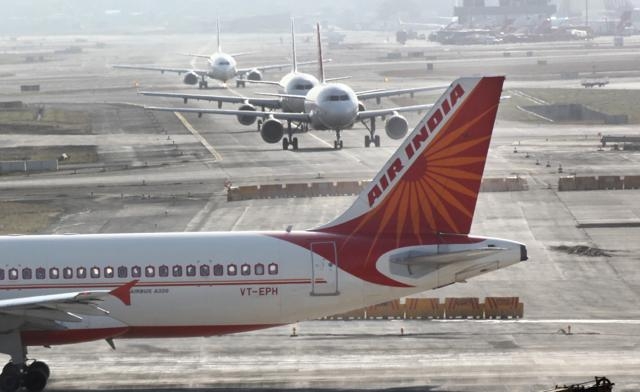
Severe capacity constraint and lack of infrastructure could come in the way India’s dream aviation story, warn airlines.
The result, airline sources say, would be higher fares as they can operate only limited flights to important airports during the morning and evening peak hours.
Key metro airports have no peak hour slots left while infrastructure constraints have resulted in limited operations at smaller ones, airlines told aviation officials at a recent meeting on the summer schedule as they spoke about the pathetic condition at Indian airports.
According to the minutes of the meeting accessed by HT, executive director of the Airports Authority of India accepted that “runway capacity at airports is the same as was during the past season”.
One of the fastest growing aviation markets in the world, India is tipped to displace United Kingdom as the third largest aviation market by 2026. Airlines, however, remain wary of how this can be achieved. “When you develop an airport, both terminal and runway capacity need to be increased. In India, we are building only new terminals resulting in severe congestion at all major airports,” said aviation expert Rajji Rai.
Almost all major airlines were vocal in their criticism of the severe infrastructure shortage. According to the minutes, IndiGo vice-president Rajat Kumar pointed out that “there had been no increase in slots and air traffic movements (ATM) at any of the major metro airports in the country commensurate to the growth in civil aviation sector”.
This was evident from the analysis of number of movements permitted per hour at the major airports since summer 2011, he said. “In fact, key airports such as Delhi advised decrease in per hour movements, from 67 to 58 per hour,” he said.
Severe infrastructure constraints and restrictions at defence airfields like Jammu and Srinagar had made it almost impossible to introduce new flights, Debashis Saha, associate vice president, SpiceJet said.
Pune, Saha said, had a limitation of only 94 movements between 6 am to 10.30 pm thereby limiting the possibility of expanding operations, he said.
Moreover, airports in J&K fall under the route dispersal guidelines (RDG) category, where airlines have to mandatorily operate flights to. “These constraints limit the airlines ability to mount capacity and going forward will also impact the adherence to the RDG,” Saha said.
Jet Airways’ Neville Mehta said Jammu, Madurai, Rajkot, Chandigarh, Varanasi, Patna and other smaller airports needed to have “longer watch hours as there would be a demand for late evening flights but gets restricted due to non availability of watch hours”.
AMAC Aerospace Group continues to experience strong business momentum, marked by new certifications, contract wins and rising demand across its maintenance, completion and aircraft modification activi...
Air Baltic Corporation AS , Latvia’s national airline and the leading carrier in the Baltic States, announced that airBaltic and its subsidiaries participating in the voluntary Ch...
Dassault will introduce the fourth-generation EASy IV flight deck on newly built Falcon 2000LXS aircraft, while also making the upgrade available as a retrofit across the entire Falcon 2000 EASy fleet...
Daher Aircraft announced the delivery of a Kodiak 900 to Swiss owners Roland and Claudia Primus, who plan to use the aircraft for adventure flying to remote and short-runway destinations. Their travel...

