




Tracking crowd movements through a passenger contagion map, as well as identifying contagious groups at an early stage, will be two powerful tools that airports can actively use to ensure they will be compliant with post-COVID19 travel regulations, and can give returning travelers some peace of mind.
The advice comes from scientific research by Xovis, the world's leading provider of people flow management systems in airports and was published in a whitepaper. The company believes that physical distancing will be a key challenge for airports to deal with once passenger numbers increase again over the coming weeks.
The data builds upon Xovis' years of algorithms analyzing crowd movements and measuring queues and groups in a dynamic environment. It highlights how crowd density needs to be understood in context of a contagion map whereby both absolute contagion risk (where person-to-person infection is most likely to happen) and relative contagion risk (where the contagion risk is highest for an individual) need to be analyzed. In airports, places of particular attention will, of course, be security lines, but also areas that are frequently used and touched by passengers such as self-service facilities or bathrooms.
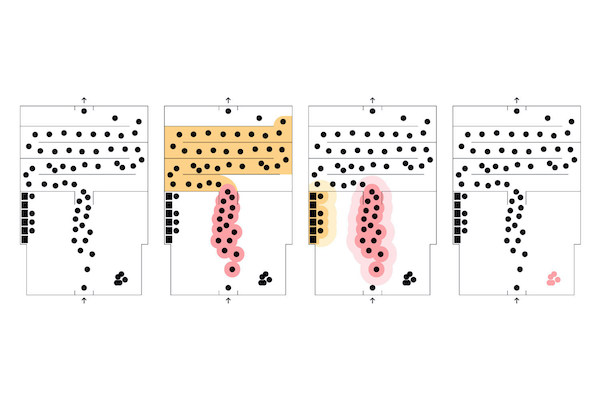
In addition, the detection of groups that violate physical distancing rules are another important factor for airports to consider.
Christian Studer, Co-Founder and Chief Product Officer of Xovis explains: "Using a high-precision people flow monitoring system is the most effective way for airports to ensure physical distancing regulations are met. The whitepaper builds the foundation for implementing exactly this, while protecting airport workers from unnecessary risks and maintaining passenger experience levels."
"We've been helping airports for a decade to manage crowds with our 3D stereovision sensors. We're glad that our unparallel accuracy and privacy compliant solution can now be adapted to serve new use cases that have emerged recently," adds Florian Eggenschwiler, Xovis' Managing Director Airports.
The complete scientific whitepaper is available for free PDF download here.

TFC Flight Training has become the first flight school in Germany to operate the Pipistrel Explorer following the delivery of two aircraft from Pipistrel, a Textron Inc. company and affiliate of Textr...
flydubai has expanded its Nepal network with the launch of daily direct flights between Dubai and Pokhara, marking the first-ever non-stop service linking Dubai with western Nepal. The new route makes...
On October 1, ATP Flight School will welcome nearly 500 aspiring airline pilots to its Arlington, Texas training center for an exclusive career expo featuring 20 airline and industry partners. Attende...
Airways International has entered into a new five-year partnership with the Civil Aviation Authority of Malaysia (CAAM), extending the use of its SureSelect air traffic control (ATC) candidate assessm...

