



One in four Canadians living in urban areas considers moving to more remote communities with the desire for a slower pace of life cited as the biggest reason, new research shows. The nationwide study by Horizon Aircraft found 25% of urban Canadians would consider moving out of more urban areas with a further 15% undecided. Among those considering a rural switch, the most popular reason for potentially moving was the desire for a better work life balance. Around half (47%) want to slow down, while 25% say the COVID-19 pandemic has made them reassess their lifestyle and what is important.
Roughly 17% of those questioned said they increasingly don’t like living in an urban environment, while 12% said their possible move came down to a desire to be nearer family and friends. Nearly a third (32%) of those considering a move say they plan to do so within two years, while 12% say any move is more than five years away. The research is not all good news for people planning to leave urban areas as highlighted by the 12% of those questioned who had made the reverse move from a more rural remote area to a town or city in the past five years.
The main reason given for the switch from rural to an urban location was work – around 40% said they had made the move to be nearer to jobs, while 31% cited personal reasons. Other motives for moving to urban areas included closer proximity to healthcare and medical services (10%) and 6% saying remote living had become too difficult for them.
Brandon Robinson, CEO of Horizon Aircraft, commented: “Substantial numbers of Canadians are considering quitting cities for a more rural lifestyle. Escaping the city can be an attractive proposition for some, but people do need to think carefully about the practicalities, including issues such as access to transport and healthcare.”
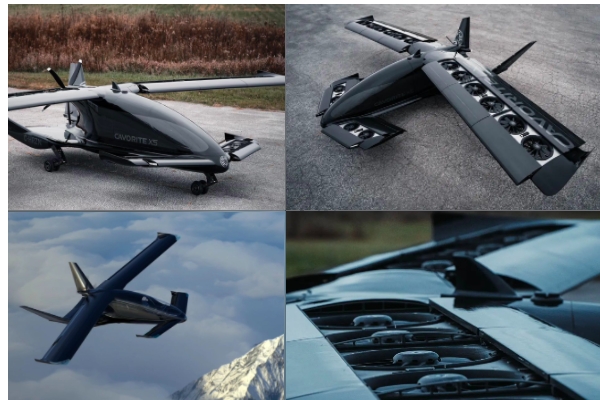
Horizon Aircraft is building hybrid eVTOL aircraft that will be used by business aviation travellers as early as 2026. Their “Cavorite X5” is an eVTOL built for longer-range regional passenger or cargo, as well as special missions. It will take off and land vertically like a helicopter but will fly almost twice the distance at a fraction of the cost. It will have a maximum passenger capacity of four plus a pilot, a payload of 500 kg and a range of 800 km with full fuel reserves.
Horizon’s innovative approach and technology allows its Cavorite X5 to fly 98% of its mission in a very low-drag configuration like a traditional aircraft. Flying most of the time as a normal aircraft is also safer and should make the aircraft easier to certify than other radical new eVTOL designs. The full-scale aircraft will also be powered by a hybrid electric system that can recharge the battery array in-flight while providing additional system redundancy. Continued rigorous testing of its 50%-scale aircraft will reduce technical risk moving forward as Horizon continues development of its full-scale aircraft. Horizon Aircraft, and its flagship Cavorite X5 design, has been attracting sigaward andnterest from within the industry having won several grants, a US Department of Defence advanced research and development contract award, and being ahead of its competitors with its large-scale prototype already flying.

AMAC Aerospace Group continues to experience strong business momentum, marked by new certifications, contract wins and rising demand across its maintenance, completion and aircraft modification activi...
Gulfstream Aerospace has enhanced the capabilities of its Customer Support Performance Analytics program, further strengthening its ability to transform aircraft data into actionable insight...
Daher Aircraft announced the delivery of a Kodiak 900 to Swiss owners Roland and Claudia Primus, who plan to use the aircraft for adventure flying to remote and short-runway destinations. Their travel...
Daher Aircraft will present its TBM and Kodiak aircraft families at next week’s NBAA Business Aviation Convention & Exhibition (NBAA-BACE), showcasing how their combination of performance, e...

