




With the final flight of the oldest flyable twin-engine Boeing airliner, the world has witnessed a little bit of aviation history.
Pilots Mike Carriker and Chad Lundy wrote the final chapter Tuesday in the story of Boeing's 247D.
They touched down for a smooth landing at Boeing Field outside Seattle's Museum of Flight in Washington.
Welcomed by aviation enthusiasts, the crowd broke out in applause as the plane -- sporting a mid-1930s United Air Lines livery -- went wheels down after a 15-minute hop from nearby Paine Field in Everett.
It certainly was a special delivery that was years in the making.
The ten-seat plane was undergoing restoration since 1979.
Of the 75 total 247s built, it's one of only four remaining 247Ds on the planet, the museum said.
From now on, it will be on display at the Museum of Flight as an example of one of the first modern airliners.
This is an important plane. It was one of the first airliners to have retractable landing gear, de-icing equipment and auto-pilot, Boeing said.
What really set this airliner apart when it debuted in the 1930s was its top speed: about 200 miles an hour.
With seven stops between New York and Los Angeles, the 247 could make the trip as quickly as 20 hours, cutting previous airliners' time by 7.5 hours, according to Boeing.
It was quieter, too.
The popular Ford Tri-Motor -- which debuted in 1928 -- had one more engine than the 247, but it could only muster a top speed of about 135 miles an hour.
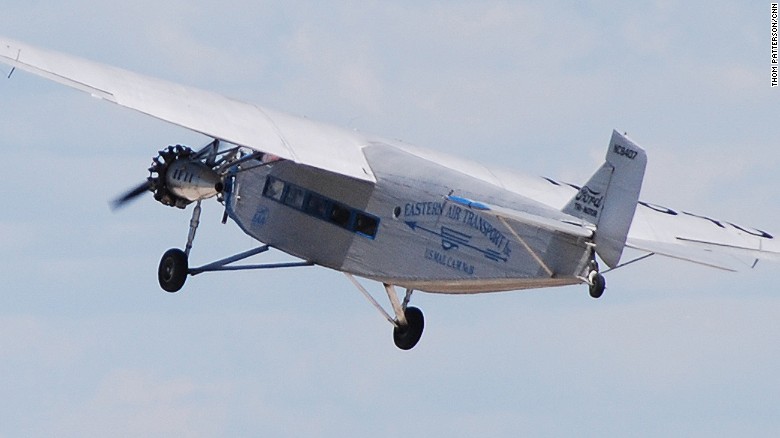
The Ford Tri-Motor was slower and louder than the Boeing 247.
The 247 was more comfortable and its aerodynamic design was sleeker, more modern, even revolutionary.
The Douglas Aircraft Corporation soon followed Boeing's 247 with the DC-2, and it wasn't long before the 247 was outmoded.
However, some of the 247s were still flying into the late 1960s, Boeing says.
The 247 -- along with its successors -- was among the pioneer airliners that started the travel industry on a path to where it is now -- carrying an amazing 3.6 billion people every year to points around the globe.
Qantas Freight and Australia Post have entered the next chapter of their long-standing partnership with the arrival of the first of three additional Airbus A321 Passenger-to-Freighter (A321P2F) aircra...
Gulfstream Aerospace has enhanced the capabilities of its Customer Support Performance Analytics program, further strengthening its ability to transform aircraft data into actionable insight...
Cirrus Aircraft is celebrating the 10th anniversary of its Collier Trophy-winning Vision Jet at NBAA-BACE 2026, marking a decade of innovation that has continuously advanced the world&r...
Bombardier marked the 40th anniversary of its industry-leading Smart Services cost-per-flight-hour programs, which today support more than 1,500 enrolled aircraft and account for over 11 mil...

