



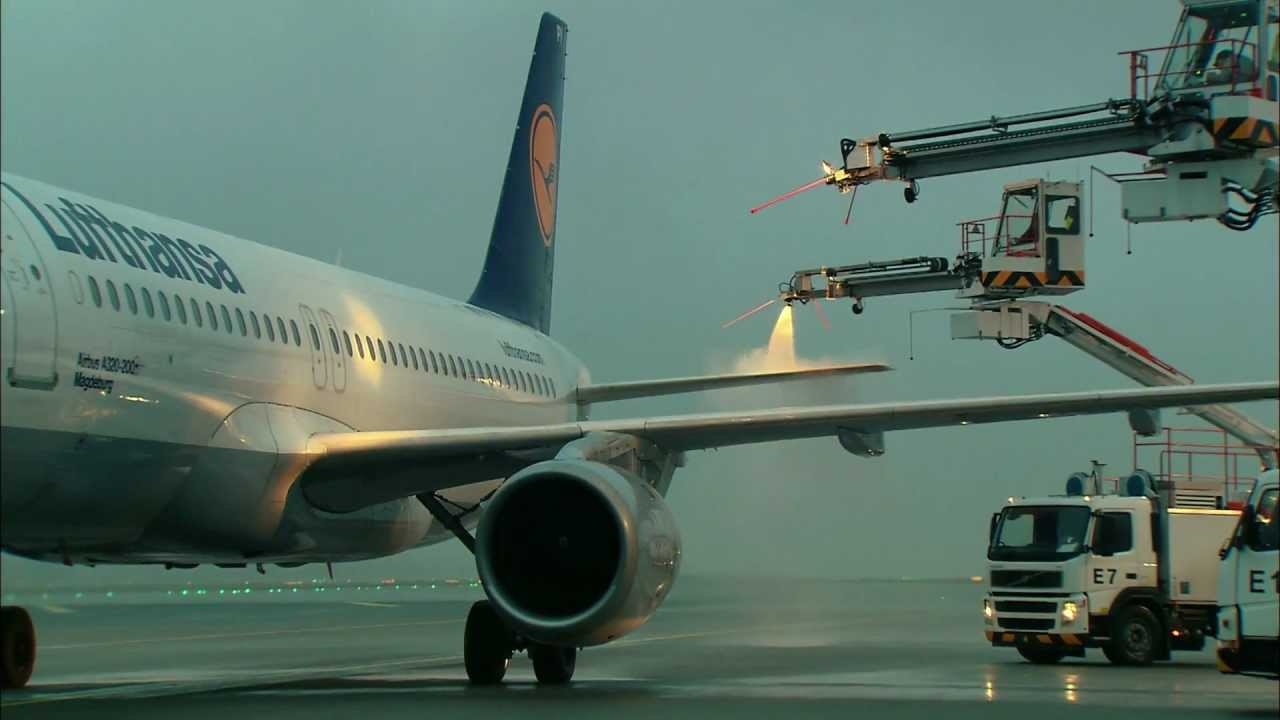
As the Northern Hemisphere’s winter season sets in, Europe’s regulator is cautioning industry about the harmful effects of organic, salt-based, aircraft-deicing fluids.
In a recent Safety Information Bulletin (SIB), the European Aviation Safety Agency (EASA) notes that although the fluid is not prevalent—it knows of no European airports that use it for aircraft—operators should be vigilant nonetheless. Most so-called Type 1 deicing and anti-icing fluids use glycol to keep aircraft surfaces clear of ice. In recent years, sugar-based fluids have come onto the market, and a few providers use fluids with organic salt, or alkali metal.
Salt-based fluids present several hazards to aircraft, EASA warns. Among them: residue from the fluids can cause glycol-based fluids applied later to break down prematurely, which can reduce the holdover time, or the maximum safe-time a deiced aircraft can sit in winter weather before departing.
The problem is exacerbated when the fluid types are mixed in a two-step process that first involves salt-based fluid for deicing of contaminated aircraft, followed by application of a different anti-icing fluid. “This effect has been proven by research, being its quantitative impact dependent on the particular anti-icing fluid used and on the salt and its concentration in the deicing fluid, but only low concentrations are required to decrease the anti-icing fluid thickening properties,” EASA explains. “This is an immediate effect with consequences potentially affecting safety.”
The Tennessee Valley Authority is demonstrating the real-world value of the Tecnam P2012 Special Mission Platform (SMP), which has become a vital tool for monitoring and maintaining its...
Gogo has unveiled its long-term vision for the Galileo connectivity platform at NBAA-BACE 2026, outlining a roadmap designed to enhance and protect customer investments well into the mid-2030s and bey...
Piaggio Aerospace will return to NBAA-BACE this October, bringing its flagship P.180 Avanti EVO to one of the most important gatherings of the global business aviation community while also highlightin...
Bristow Group Inc., in partnership with Electra, Avinor and the Norwegian Civil Aviation Authority (CAA Norway), will undertake a series of demonstration flights across five locations in Norway using...

