



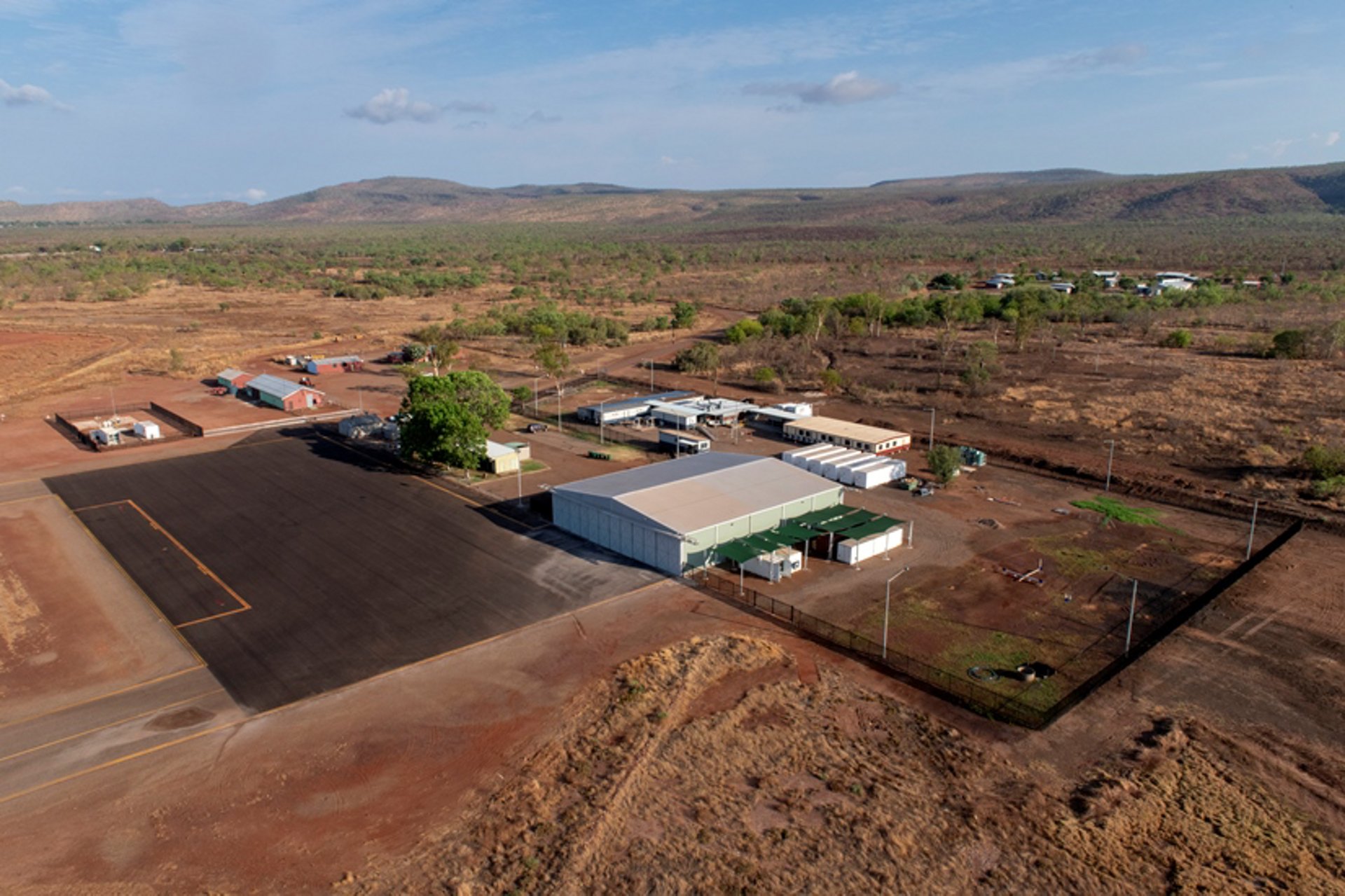
Airbus Defence and Space announced the opening of the world’s first High Altitude Pseudo-Satellite (HAPS) flight base serving as the launch site for the Zephyr UAV in Wyndham, Western Australia.
This site has been chosen due to its largely unrestricted airspace and reliable weather and is the result of significant investment by Airbus into its Zephyr programme.
Zephyr is the world’s leading, solar electric, stratospheric Unmanned Aerial Vehicle (UAV). It harnesses the sun’s rays, running exclusively on solar power, above the weather and conventional air traffic; filling a capability gap complimentary to satellites, UAVs and manned aircraft to provide persistent local satellite-like services.
“I am delighted to welcome the Airbus team and their Zephyr project to Western Australia. This is the culmination of almost a year of hard work by Airbus and my Government to bring this exciting and innovative technology to our state. The Zephyr aircraft provides new capabilities to commercial and military customers and will bring an economic boost to the East Kimberley region,” said Premier of Western Australia, Hon. Mark McGowan MLA.
“The official opening of the Airbus Wyndham launch site in Western Australia, the world’s first operational HAPS site, marks the start of a new era for Zephyr. We are proud to see Australia become part of the Zephyr operational network. The site is our gateway to the stratosphere and will be the main flight base for Zephyr going forward.” said Jana Rosenmann, Head of Unmanned Aerial Systems at Airbus.
Zephyr will bring new see, sense and connect capabilities to both commercial and military customers. Zephyr will provide the potential to revolutionise disaster management, including monitoring the spread of wildfires or oil spills. It provides persistent surveillance, tracing the world’s changing environmental landscape and will be able to provide communications to the most unconnected parts of the world.
About the Airbus Zephyr Programme:
The original target mission of the Zephyr is to provide local persistence at an affordable price with a re-usable solar-powered aircraft, providing a wide scope of applications, ranging for example from maritime surveillance and services, border patrol missions, communications, forest fire detection and monitoring, or navigation. Operating in the stratosphere at an average altitude of 70,000 feet / 21 kilometers, the ultra-lightweight Zephyr has a wingspan of 25 meters and a weigh of less than 75kg, and flies above weather (clouds, jet streams) and above regular air traffic, covering local or regional footprints.
Ideally suited for "local persistence" (ISR/Intelligence, Surveillance & Reconnaissance), the Zephyr has the ability to stay focused on a specific area of interest (which can be hundreds of miles wide) while providing it with satellite-like communications and Earth observation services (with greater imagery granularity) over long periods of time without interruption.
Textron Aviation has marked a key milestone in the development of the Cessna Citation CJ4 Gen3 with the rollout of the program’s first production aircraft. The achievement brings the next-g...
Dassault will introduce the fourth-generation EASy IV flight deck on newly built Falcon 2000LXS aircraft, while also making the upgrade available as a retrofit across the entire Falcon 2000 EASy fleet...
Velocity Maintenance Solutions, an FAA-certified provider of maintenance, repair and overhaul services, has announced a significant expansion of its facilities at Wilmington Airport (ILG) in Delaware,...
A Discover Airlines Airbus A330 has become the first Airbus aircraft worldwide to enter regular commercial service after undergoing a full-scale AeroSHARK retrofit, marking a signi...


