



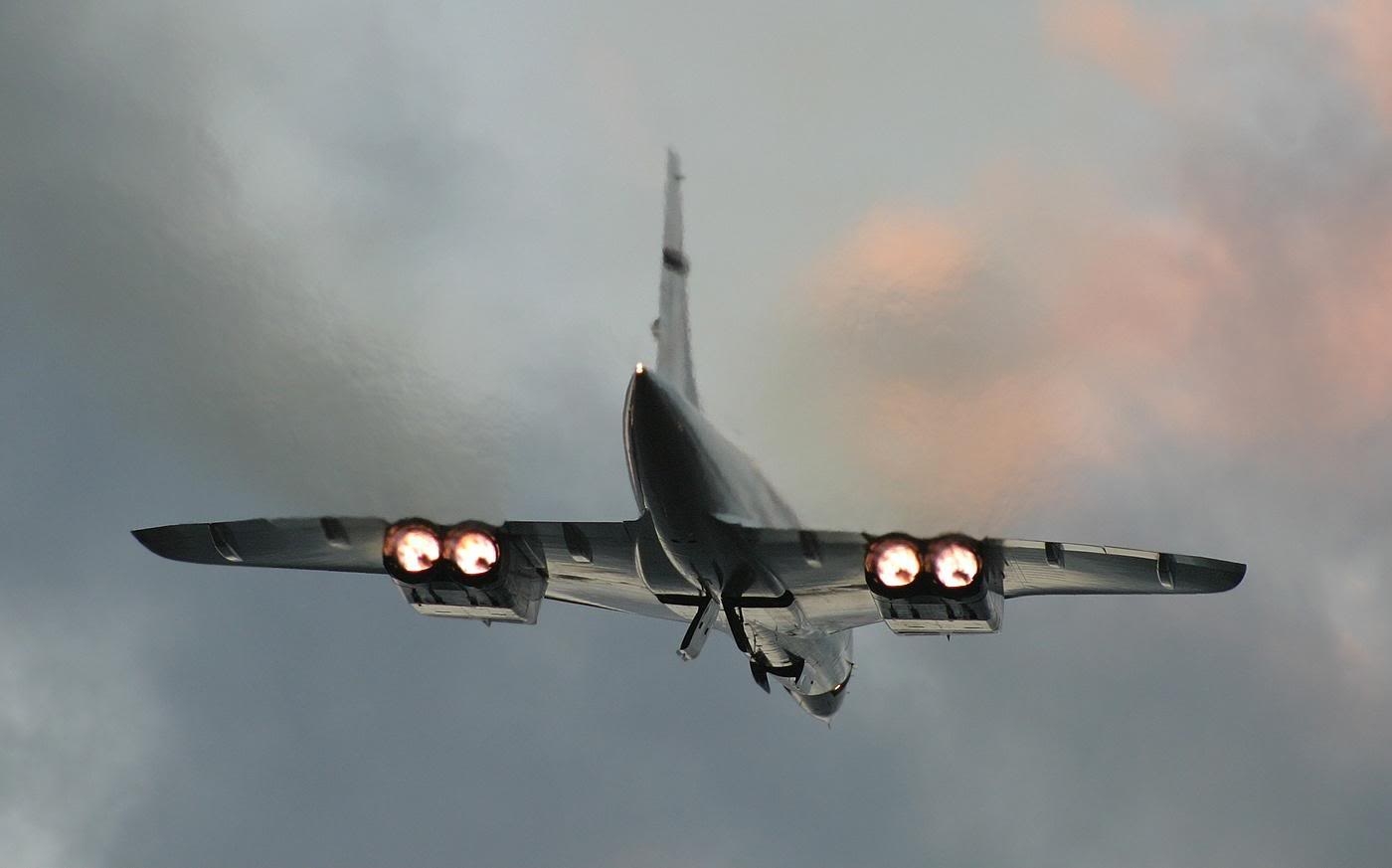
As a commercial venture, Concorde was a several-billion dollar failure. Between its introduction in 1976 and retirement 27 years later, the world’s only in-service supersonic airliner was only ever flown – as a loss-leader – by the national airlines of the two countries that led its development. Yet as a technological triumph and icon of aviation, it has never been surpassed, delivering the gift of time to travellers who could afford it, and the sort of jet-setting glamour that had not been seen since the early days of the jet age and which has never returned.
In the late morning of 21 January 1976, twin British Aerospace/Aerospatiale Concordes – G-BOAA and F-BVFA – lined up on Runway 28L at London Heathrow and at Paris Charles de Gaulle, poised for simultaneous take-offs on inaugural flights to Bahrain and Rio de Janeiro (via Dakar), respectively. There were high hopes that these sleek, revolutionary machines – the zenith of British and French aerospace achievement – represented a new era in air transport, for those who could afford the fares at least, and would be – albeit slowly – accepted by governments and blue-chip flag-carriers around the world.
Norman Todd, Concorde pilot and British Airways flight training manager
ANL/Rex Shutterstock
“Europe opened the supersonic age with a Houston-style countdown and a precision double launch that was technically and diplomatically immaculate,” wrote Flight International's then-editor Mike Ramsden, who was seated in the seventh row starboard window seat as one of a number of journalists invited to experience the inaugural. It was 11:35 in London and, as G-BOAA’s Rolls-Royce Olympus engines began to roar into life, he reported: “Capt Norman Todd, commander, Capt Brian Calvert and senior engineer officer John Lidiard are about to halve the size of the world at the same instant as Capt Pierre Dudal and his crew, Rio-bound out of Paris.”
As the clock ticked down for the Concordes’ synchronised departures at 11.38, Ramsden had spotted three Boeing 747s, three 707s and three Hawker Siddeley Tridents waiting at their 28L holding point. “Our countdown is for their era too,” he remarked poignantly. In an indication of how much of a political event the inaugural flights were, Ramsden described the choreography involved. If either aircraft hit a snag prior to take-off, the other commander was instructed to hold back. However, once the Olympuses began ramping up to full power, any further delay would have been down to the captains' discretion.
British Airways Concorde on inaugural flight from London to Bahrain
Library/REX Shutterstock
As it happened, the departures were stage-managed to perfection. Co-ordinated by London and Paris control towers linked by radio, both aircraft began to roll at 11.40 before lifting off 35sec later, to the delight of crowds lining the perimeter of both airports. The director of Concorde at the Department of Industry – such was the importance of the programme to the UK government that Concorde had its own senior civil servant – marked the moment with Churchillian rhetoric, intoning as the wheels left the ground: “It is the end of the beginning.”
The first 1h 19min of Ramsden’s flight was unremarkable, with G-BOAA taking off to the west before heading towards Venice and assuming a cruising speed of Mach 0.93 at 25,000ft. Then, with the Alps in view, came the moment passengers had been waiting for; at 12.59 the captain announced the start of transonic acceleration. “The surge is noticeable but I cannot detect, from where I am riding, the expected nudge of the reheat,” wrote Ramsden. “Noise level, or rather pitch, increases slightly and the low livelier airframe tells us that Concorde is in her supersonic element.”
There were some 100 passengers on board the flight: 30 who paid and 60 journalists, aviation executives and VIPs, including two of the fathers of Concorde: Sir George Edwards, head of the BAC aircraft division in the 1960s and now retired, and Sir Stanley Hooker, who led the development of the Olympus at Bristol Aero Engines. As the aircraft powered towards its destination over eastern European and Middle Eastern countries that had given the green light to supersonic overflights, Ramsden pondered the commercial implications of the “world’s mightiest power”, the USA, banning Concorde.
Concorde arrived as scheduled in Bahrain after 3h 38min, but as there were no seats on the return flight, Ramsden and other journalists flew back on a Boeing 747. “What a difference,” he remarked on the contrast between the spacious interior of the jumbo and the confined cabin of the Concorde: “The broad expanse of carpet, the staircase, the table laid with chrysanthemums, the butler greeting us in the hall.” The pressmen wondered what effect this would have on the appeal of the supersonic transport, until they realised, over Bulgaria with 3h 30min of the flight to go, that if they were on Concorde they would be in London by now.
First commercial flight of an Air France Concorde lands in Rio, Brazil
SIPA Press/REX Shutterstock
Even from the opulence of his first class cabin on the 747, Ramsden was convinced about the supersonic transport’s commercial prospects. “Each increasingly boring subsonic minute enhances our conviction that Concorde will sell,” he wrote. Contrary to British Airways television commercials of the time, “The appeal isn’t so much ‘speed, speed speed’…Most people are nervous of speed. Bishops preach against the speeding up of our already giddy world. Time is what Concorde has to sell, and time is everyone’s most precious possession.”
Precious possession or not, it never caught on in the way its originators hoped, and 40 years after those inaugural flights and more than 12 years since Concorde’s final grounding, we are well into the post-supersonic era. Today it takes twice as long to fly from London to Bahrain as it did on that 3h 38min journey in 1976. With only Aerion – a developer of a supersonic business jet concept – seriously pushing the lure of travelling from A to B faster than sound; efficiency, quietness and comfort have replaced speed as the holy grail of aircraft design. It is difficult to see whether there will be a serious need for that sort of speed again – at least not a big enough need to justify the many billions required to develop and operate a successor to Concorde.
Daher Aircraft announced the delivery of a Kodiak 900 to Swiss owners Roland and Claudia Primus, who plan to use the aircraft for adventure flying to remote and short-runway destinations. Their travel...
Samson Sky has enlisted renowned Italian automotive designer Luigi Memola to develop the interior design of its Switchblade Flying Car, bringing world-class automotive styling expertise to the roadabl...
Textron Aviation has marked a key milestone in the development of the Cessna Citation CJ4 Gen3 with the rollout of the program’s first production aircraft. The achievement brings the next-g...
Viasat has significantly expanded the capacity of its JetXP in-flight connectivity service across the United States, delivering up to five times more bandwidth for business aviation customers equipped...

