



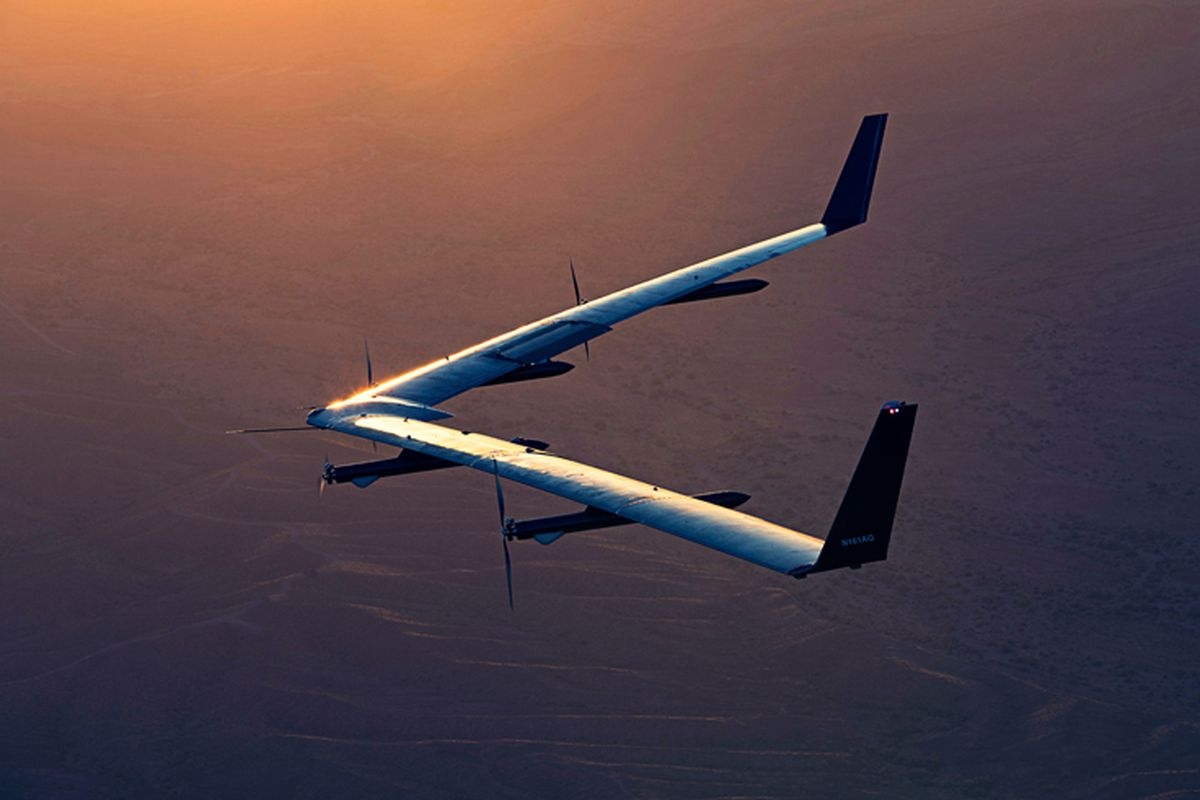
Facebook has completed its second test flight for its solar-powered, internet-beaming drone called Aquila.
The flight was conducted on May 22 in Yuma, Arizona and lasted for one hour and 46 minutes. Facebook said that the drone "landed perfectly on our prepared landing site."
An earlier version of Aquila was "substantially damaged" in a crash during its first test flight over Arizona last year, according to an investigation by the National Transportation Safety Board.
To avoid another crash, Facebook tweaked the design of Aquila by adding wing spoilers, a smoother exterior, and a "horizontal propeller stopping mechanism." The second version of the drone also includes hundreds of sensors to record details about flight performance.
Facebook plans to use Aquila to beam internet access to unconnected parts of the world. The drone is larger than a Boeing 737 and designed to stay aloft for months at a time at altitudes of roughly 60,000 feet. It's completely solar-powered and requires the same amount of energy to run as three blow dryers.
Aquila is one part of Facebook's multi-pronged effort to bring more people online around the world. With two billion users, the social network is nearing the limit of internet-connected people on earth it can currently reach.
Viasat has significantly expanded the capacity of its JetXP in-flight connectivity service across the United States, delivering up to five times more bandwidth for business aviation customers equipped...
Few infrastructure projects have the potential to reshape an island's future quite like the ongoing transformation of Nevis Airport. To gain deeper insight into this ambitious development and the...
Archer Aviation all-electric Midnight air taxi successfully completed several days of piloted flights across the San Francisco Bay Area as part of the company’s “No Roads” flight tou...
Dassault will introduce the fourth-generation EASy IV flight deck on newly built Falcon 2000LXS aircraft, while also making the upgrade available as a retrofit across the entire Falcon 2000 EASy fleet...

