




Garmin International has added the first light twin aircraft, the PA-30/39 Twin Comanche, to the expanding list of aircraft in flight test development for the GFC™ 500 autopilot. Intended for light piston aircraft, the GFC 500 delivers superior in-flight characteristics, self-monitoring capabilities and minimal maintenance requirements when compared to older generation autopilot systems. As Garmin continues to roll out GFC 500 autopilot supplemental type certification (STC) approvals at an increasing rate, spanning more than 200 aircraft models to date, the PA-30/39 Twin Comanche marks the first light twin aircraft currently in certification.
The GFC 500 autopilot in light twin aircraft will require Garmin’s GI 275 electronic flight instrument to provide ADAHRS information to the system. Integration with G500 TXi flight displays will also be supported when integrated with the GI 275 standby attitude indicator. The autopilot mode controller contains large dedicated keys and knobs, a control wheel that allows for easy adjustment to aircraft pitch, airspeed and vertical speed, and a Level Mode (LVL) that returns the aircraft to straight-and-level flight with the push of a dedicated button.
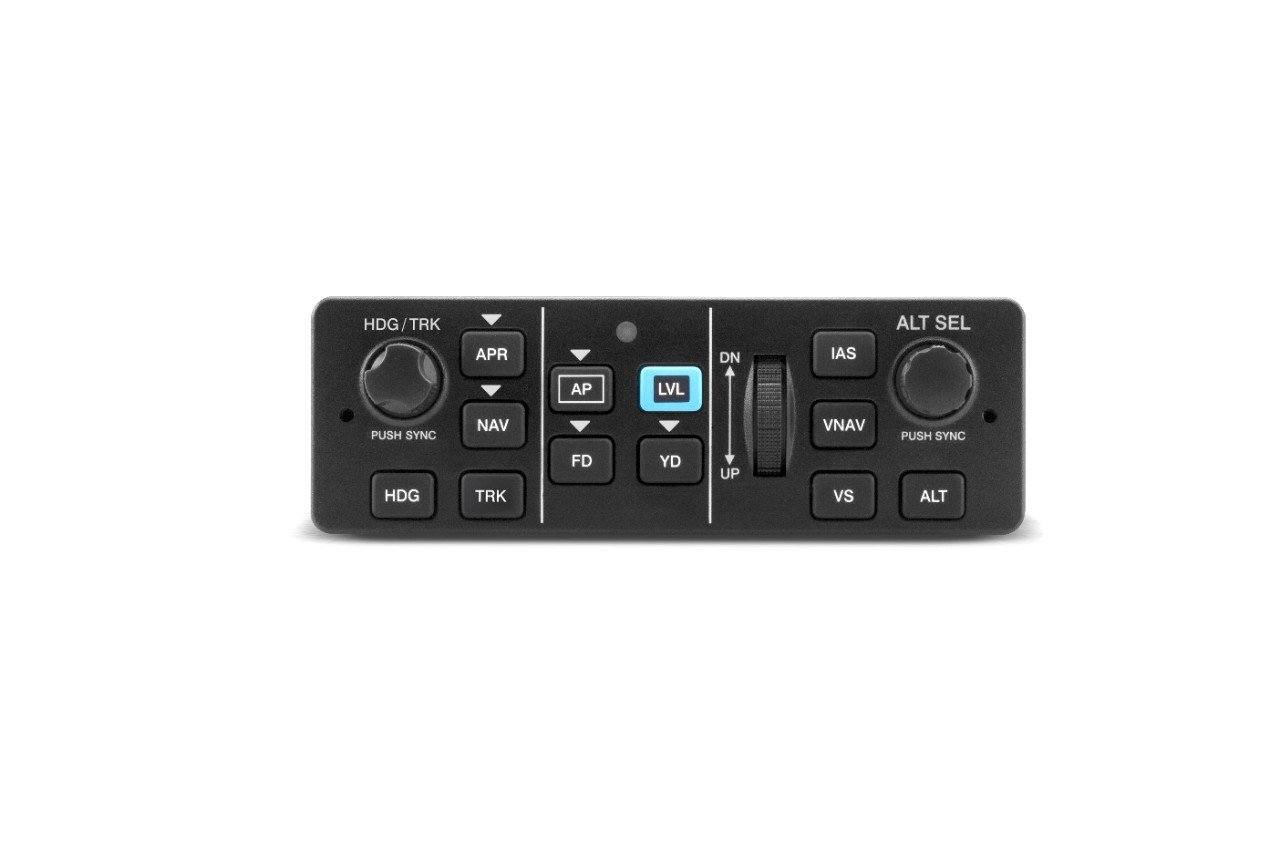
The full-featured GFC 500 autopilot provides a long list of existing general aviation aircraft with a simple, lightweight, cost-effective autopilot upgrade path. Incorporating solid state attitude with robust self-monitoring capabilities, the GFC 500 provides superior autopilot performance, greater reliability, and invaluable safety tools that are similar to those featured on the popular GFC 700 autopilot. In addition to traditional autopilot capabilities, such as altitude hold, vertical speed and heading modes, the GFC 500 also includes altitude preselect, VNAV2, underspeed and overspeed protection and more. Pilots can also select, couple and fly various instrument approaches, including GPS, ILS, VOR, LOC and back course approaches when paired with a compatible Garmin GPS navigator.
As a standard feature of the GFC 500, pilots receive Garmin Electronic Stability and Protection (ESP™), which works to assist the pilot in maintaining the aircraft in a stable flight condition. ESP functions independently of the autopilot and works in the background while the pilot is hand-flying the aircraft to help avoid inadvertent flight attitudes or bank angles by nudging the pilot to return the aircraft back to a safe flight attitude.
As Garmin continues to add additional aircraft models to the growing STC list for the GFC 500 autopilot, other light twin aircraft at or under 4750lbs maximum takeoff weight (MTOW) are also being considered. To view the most up-to-date aircraft STC list, to view certifications that are expected to being in the next 12 months, or to express interest in a specific aircraft make/model, visit www.garmin.com/GFC500.
Dassault will introduce the fourth-generation EASy IV flight deck on newly built Falcon 2000LXS aircraft, while also making the upgrade available as a retrofit across the entire Falcon 2000 EASy fleet...
A Discover Airlines Airbus A330 has become the first Airbus aircraft worldwide to enter regular commercial service after undergoing a full-scale AeroSHARK retrofit, marking a signi...
Cirrus Aircraft is celebrating the 10th anniversary of its Collier Trophy-winning Vision Jet at NBAA-BACE 2026, marking a decade of innovation that has continuously advanced the world&r...
Turkish Airlines has taken another major step in its fleet expansion strategy with the signing of a Memorandum of Understanding with CFM International for more than 300 LEAP-1B engines and a long-term...

