



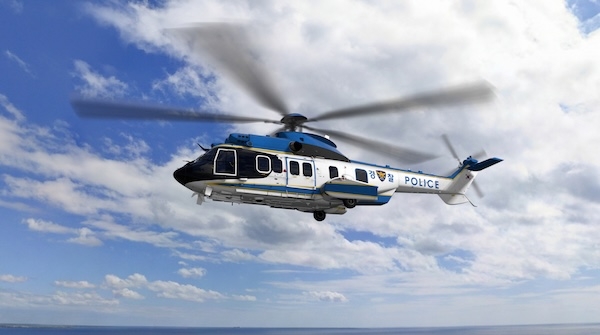
Korean National Police Agency has placed an order for one Airbus H225 helicopter, marking its entry as a new Airbus customer. The multi-purpose helicopter will serve as a vital platform for a wide range of public service operations, reinforcing national security and emergency response capabilities.
H225 will be deployed primarily for law enforcement and counter terrorism operations, while also supporting critical missions such as search and rescue, humanitarian relief, and disaster response.
Vincent Dubrule, Head of Asia-Pacific at Airbus Helicopters commented: “We are honoured to welcome the Korean National Police Agency to the Airbus family. The H225 has earned a global reputation as a reliable, multi-mission workhorse. We are confident it will become a cornerstone asset for the police agency, enabling them to carry out complex missions with precision and safety.”
As the latest addition to the Super Puma family, the H225 is recognised for its high performance in challenging conditions as well as its outstanding range and payload capacity. The aircraft’s state-of-the-art avionics and autopilot systems provide increased safety while reducing pilot workload.
There are more than 360 H225s and H225Ms in service around the world, totaling close to 980,000 flight hours. Military customers include Brazil, France, Hungary, Indonesia, Iraq, Kuwait, Malaysia, Mexico, the Netherlands, Singapore, and Thailand.
Boeing and Ethiopian Airlines have announced a new cargo fleet expansion agreement, with the African carrier ordering eight 777-8 Freighters and two additional 777 Freighters. The investment will enab...
A new era for German aerospace began today as Deutsche Aircraft officially opened its Final Assembly Line (FAL) at Leipzig/Halle Airport. Joined by senior government representatives Christian Hirte an...
flydubai has expanded its Nepal network with the launch of daily direct flights between Dubai and Pokhara, marking the first-ever non-stop service linking Dubai with western Nepal. The new route makes...
As the first aviation company in Kansas to introduce state-registered youth apprenticeships through the Kansas Office of Apprenticeships, Textron Aviation is taking a leading role in workforce develop...

