

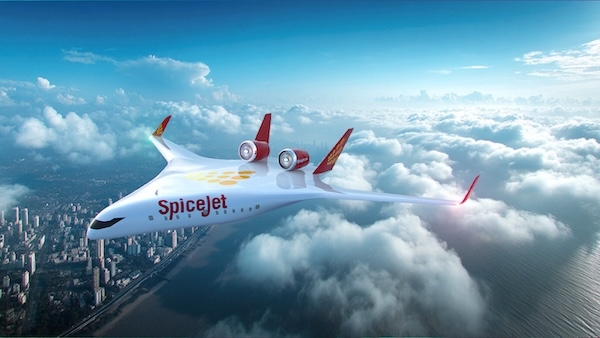
Natilus has entered the Indian market in partnership with SpiceJet. In keeping with its ethos of encouraging sustainability and innovation in the aviation space, SpiceJet has committed to work with Natilus in helping it to get certified for India. Once certified, SpiceJet plans to purchase 100 aircraft. Natilus's newly established subsidiary - Natilus India - will be headquartered in Mumbai and led by Ravi Bhatia, Regional Director, to support in-country operations.
Representing the largest and fastest-growing segment in India's travel market, domestic air travel has increased 10.2% year-over-year. Natilus sees ample opportunity to expand in India as carriers will require more than 2,200 new planes by 2040 to meet demand. Natilus India will prioritize the expansion of Natilus's family of BWB aircraft into Indian markets and position Natilus to explore sourcing manufactured parts from India. Natilus is currently pursuing Part 25 certification for HORIZON through the FAA and is working with the Indian Directorate General of Civil Aviation for HORIZON certification in India.
Ajay Singh, Chairman and Managing Director, SpiceJet commented: "In line with our commitment to encouraging innovation and sustainability in aviation, SpiceJet is proud to support Natilus in developing this next-generation aircraft. Once certified, the HORIZON, with its efficiency and compatibility with existing airport infrastructure, could be a strong fit for our future fleet."
Natilus CEO Aleksey Matyushev stated: "As an airline at the forefront of embracing technological innovation, SpiceJet is the ideal customer for HORIZON as we look to meet the needs of India's underserved market. With our new subsidiary, we look forward to exploring partnerships with premier Indian OEMs and bringing innovative new aircraft to valued customers like SpiceJet."
HORIZON is a blended-wing passenger aircraft with the high-capacity configuration able to transport 240 passengers. The innovative aerodynamic design of HORIZON offers carriers like SpiceJet 40% more interior space, while reducing fuel costs by 30%, carbon emissions by 50% and operational costs by 50%. On its path to widespread commercial adoption, Natilus is in talks with all major global airline carriers, lessors and integrators, with a commercial order book that sits at 570+ aircraft to date. Following the debut of Natilus's cargo aircraft, KONA, before the end of the decade, HORIZON is expected to enter the market in the early 2030s.
Textron Aviation has marked a key milestone in the development of the Cessna Citation CJ4 Gen3 with the rollout of the program’s first production aircraft. The achievement brings the next-g...
Turkish Airlines has taken another major step in its fleet expansion strategy with the signing of a Memorandum of Understanding with CFM International for more than 300 LEAP-1B engines and a long-term...
TARMAC Aerosave has set a new industry benchmark by becoming the first company in the world to secure Aircraft Fleet Recycling Association (AFRA) accreditation across all three scopes of aircraft disa...
Archer Aviation all-electric Midnight air taxi successfully completed several days of piloted flights across the San Francisco Bay Area as part of the company’s “No Roads” flight tou...